Ugandan women are increasingly taking centre stage in entrepreneurship, building businesses from scratch, creating jobs and contributing to household incomes. But as more women enter business, a bigger question is emerging: can they turn entrepreneurship into lasting wealth when cultural and structural barriers still limit their ownership of key assets?
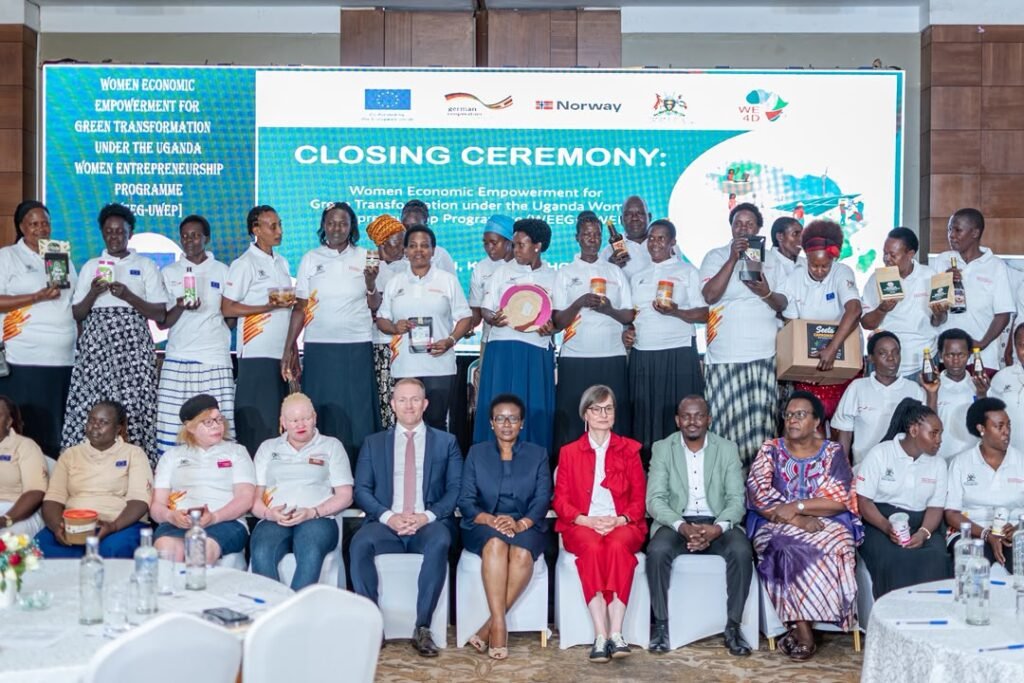
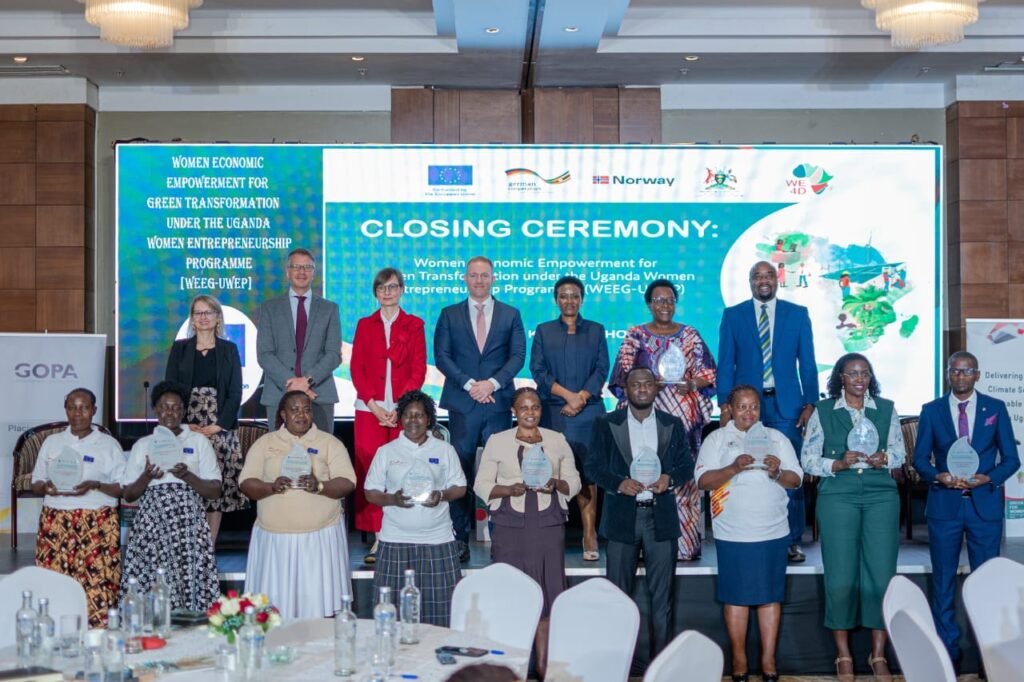
The question was highlighted during the closing ceremony of the Women Economic Empowerment for Green Transformation project under the Uganda Women Entrepreneurship Programme (WEEG-UWEP) in Kampala.
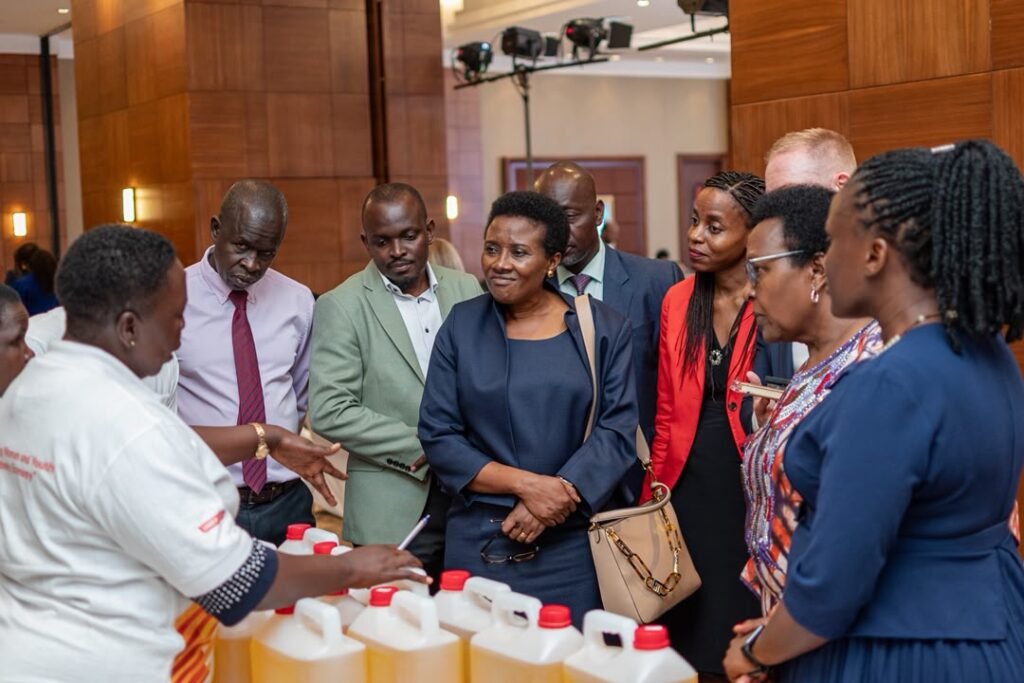
The nearly two-year programme, organised by the Ministry of Gender, Labour and Social Development, supported women with business skills, financial support and opportunities to develop green enterprises.
The Government of Uganda has reaffirmed its commitment to empowering women through increased investment in women-led SACCOs and entrepreneurship programmes aimed at reducing gender inequality, creating jobs and improving household incomes.
Speaking at the ceremony, State Minister for Gender, Labour and Social Development in charge of Culture, Mary Kamuli Kuteesa, said women remain economically disadvantaged despite their significant contribution to the country’s economy.
She said government is laying a foundation for women’s economic independence by investing in their businesses and supporting women-led SACCOs, which can help them create employment and improve family incomes.
But Kuteesa said financial support must be accompanied by cultural transformation, particularly around women’s ownership of land.
She questioned why many women still do not own land despite their contribution to the economy, arguing that unequal land ownership continues to hinder women’s development and reinforce cultural practices that limit their economic potential.
That raises an important distinction in Uganda’s women empowerment agenda: there is a difference between earning an income and building wealth.
A woman can own a shop, run a farming enterprise, operate a tailoring business or participate in a green enterprise and generate income. But if she does not own or control productive assets such as land, her ability to expand that business, access larger financing and accumulate wealth can remain limited.
Land is particularly important because it can provide economic security and, in some circumstances, strengthen access to financing. Limited ownership therefore does not only affect where a woman lives or farms; it can affect her ability to grow her business and build assets for the future.
Kuteesa called on government and development partners to prioritise increasing women’s access to capital, saying stronger financial support would help women expand their enterprises and build social and economic resilience.
Women-led SACCOs are an important part of this effort because they can provide women with avenues for saving, borrowing and investing collectively.
However, access to finance alone cannot solve every barrier facing women entrepreneurs.
A woman may receive a loan and business training, but scaling a business requires more than start-up capital. It requires access to markets, productive assets, technology, networks and the ability to make decisions about how income and assets are used.
This is where cultural expectations become an economic issue. If women have limited control over land, property or household resources, their businesses may remain small even when they have the skills and determination to grow them.
The result can be a cycle where women are supported to start businesses but struggle to graduate from small enterprises into businesses capable of generating significant wealth and employment.
Beneficiaries of the WEEG-UWEP programme shared testimonies of how the initiative had improved their livelihoods through business skills, financial support and access to green enterprise opportunities.
Their experiences demonstrate the value of programmes that help women participate more actively in the economy.
But the longer-term question is whether such programmes can help women move from economic participation to asset ownership and wealth creation.
The beneficiaries urged government to sustain and expand similar initiatives so that more women across the country can benefit.
For Uganda, that may require broadening the definition of women’s economic empowerment.
Success should not only be measured by how many women receive training, loans or business support. It should also be measured by whether women are able to grow sustainable enterprises, acquire productive assets, create jobs and build wealth that can benefit their families and future generations.
The green economy could provide another opportunity. By supporting women in enterprises linked to sustainable agriculture, waste management, clean energy and other emerging sectors, Uganda can help women participate in new markets while strengthening household resilience.
But participation alone is not enough. The real test is whether women can own a meaningful share of the economic value they create.
Uganda’s women are already proving that they can build businesses. The next challenge is ensuring that cultural practices, unequal access to assets and limited financing do not prevent those businesses from becoming pathways to lasting wealth.
Because true economic empowerment is not simply about helping women earn money. It is about giving them the opportunity, ownership and power to turn that income into wealth that lasts.