A UGX3 billion partnership between Stanbic and France is backing entrepreneurs turning environmental challenges into businesses, with 106 enterprises completing the first year of an accelerator programme focused on investment readiness, jobs and sustainable growth.
Uganda’s transition towards a greener economy is increasingly moving beyond policy commitments and climate discussions into the world of business, where entrepreneurs are developing commercial solutions to problems ranging from waste and energy to agriculture and resource use.
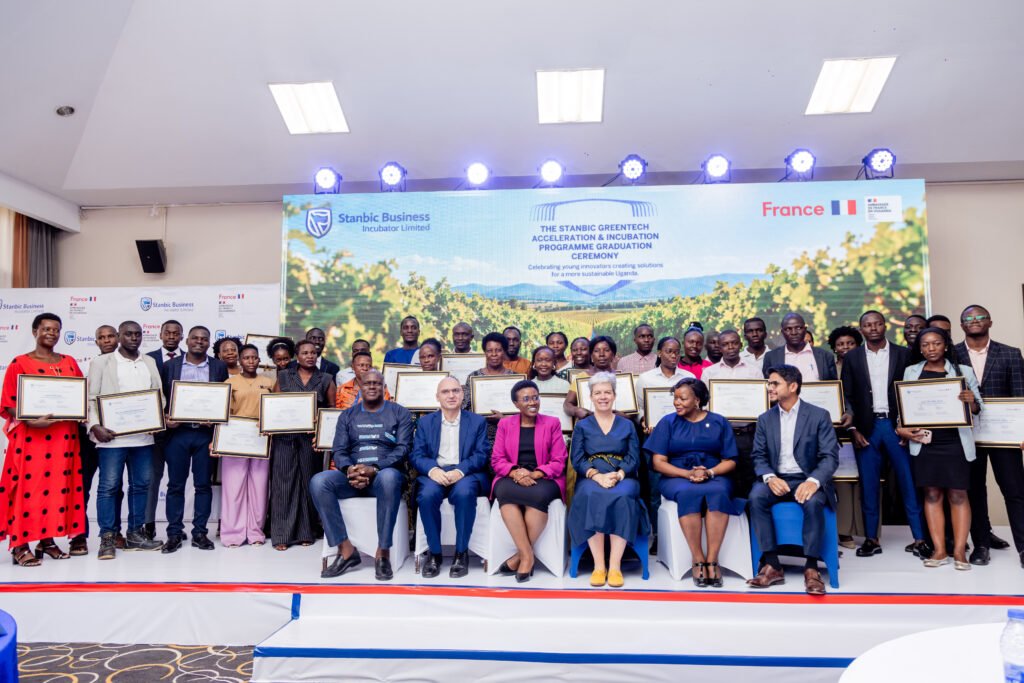
That shift was on display in Kampala on Friday when 106 entrepreneurs graduated from the Stanbic GreenTech Accelerator and Incubation Programme, a year-long initiative supported by the Embassy of France in Uganda and Stanbic Business Incubator Limited (SBIL), a subsidiary of Stanbic Uganda Holdings Limited (SUHL).
For the organisers, however, the programme is about more than celebrating entrepreneurs who have completed an incubation cycle. It reflects a broader attempt to build businesses that can move from promising ideas to commercially viable enterprises capable of attracting capital, creating employment and contributing to Uganda’s economic transformation.
Speaking as Guest of Honour, Minister of State for Gender and Culture Hon. Mary Kuteesa Kamuli linked that ambition to Uganda’s wider economic goals, arguing that the country’s target of achieving tenfold economic growth by 2040 will depend in part on expanding productive opportunities for women and young people.
“To achieve the growth we aspire to, we must expand economic opportunities for women and youth,” Kuteesa said, commending Stanbic Uganda and the French Embassy for providing practical support to entrepreneurs working on environmental and economic challenges.
The programme was launched in November 2025 with a target of reaching up to 200 enterprises across the Kampala Metropolitan Area and the Albertine Region. More than 60% of participating enterprises are led by women and young people, placing groups that often face barriers to finance and business growth at the centre of the initiative.
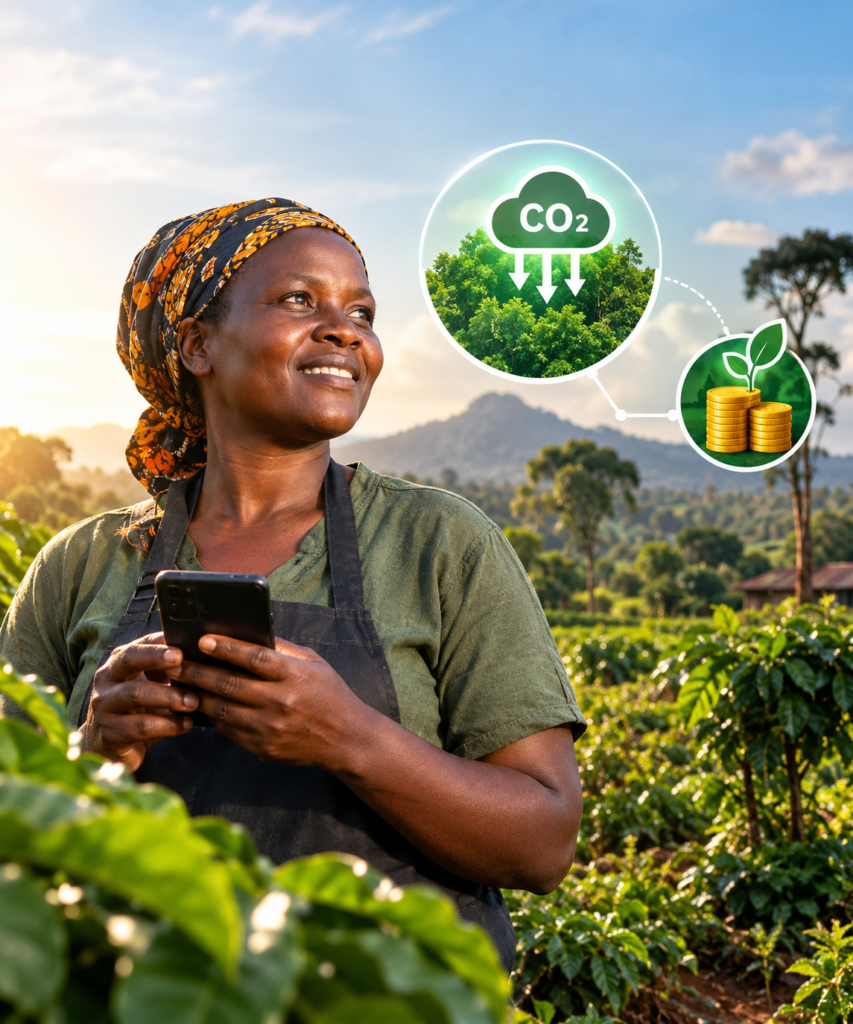
The businesses operate across areas including sustainable agriculture, renewable energy, waste management and circular economy solutions. These are sectors where Uganda faces significant development challenges, but also where environmental pressures are creating new commercial opportunities.
The challenge for many of these enterprises is not necessarily the absence of ideas. It is the difficult transition from an innovative concept into a business with a tested model, paying customers, appropriate financing and the capacity to grow.
That is the gap the accelerator has sought to address.
SBIL Chief Executive Catherine Poran said the entrepreneurs spent the past year strengthening their business models, validating their solutions and preparing for growth, with the ultimate objective of making them more attractive to investors and better equipped to compete in the market.
The approach also fits into Stanbic Uganda’s wider sustainable livelihoods agenda. The bank has pledged to mobilise up to UGX1 trillion by 2028 to support sustainable livelihood opportunities for women, youth and farmers, and had raised UGX440 billion by June 2026, according to the institution.
For Stanbic, therefore, green enterprise development sits within a much larger question about how finance can support productive economic activity.
Mark Ocitti Ongom, Chief Executive of SUHL, said the partnership with the French Embassy reflected a shared interest in Uganda’s long-term sustainable growth.
“The Embassy of France is interested in sustainable growth for Uganda. We, on the other hand, call Uganda home and are committed to driving her growth,” he said.
The French partnership brings another dimension to the initiative, particularly around connecting Ugandan entrepreneurs to international experience and networks.
French Ambassador to Uganda Virginie Leroy said the enterprises demonstrate that environmental sustainability and economic growth do not have to be competing objectives.
“The solutions being developed by these businesses show that sustainability and economic growth can go hand in hand,” she said, adding that Uganda’s green transition would depend on innovators capable of turning environmental challenges into practical and commercially viable solutions.
That commercial test will become increasingly important as the programme enters its second phase.
The graduation ceremony also marked the signing of an agreement between the Embassy of France and SBIL to extend the programme for another year and open applications for a new cohort of green entrepreneurs.
The partnership will also give 10 outstanding entrepreneurs from the inaugural cohort an opportunity to travel to France for an exposure visit involving innovation hubs, green enterprises and potential business partners.
For the graduates, the immediate opportunity is to convert the knowledge, networks and business support gained during the programme into growth. For the programme itself, the longer-term measure will be whether those businesses can attract investment, expand their operations and create sustainable employment.
That distinction matters because Uganda’s green economy will ultimately be built by enterprises operating beyond accelerator programmes.
A waste-management business must find a viable market. A renewable-energy company must be able to finance expansion. A sustainable agriculture enterprise must build reliable value chains. A circular-economy business must demonstrate that its model can generate sufficient commercial returns to attract capital.
The UGX3 billion Stanbic-France partnership is therefore best understood as an attempt to strengthen that pipeline, from entrepreneurial ideas to investment-ready businesses.
As the second phase begins, more entrepreneurs will enter the programme. The bigger test will be what happens after they leave it: whether Uganda can turn a growing generation of green innovators into businesses that endure, employ people and contribute meaningfully to the economy.
For a country seeking faster economic transformation while responding to climate and environmental pressures, that is where the green-enterprise opportunity becomes much more than an incubation programme.