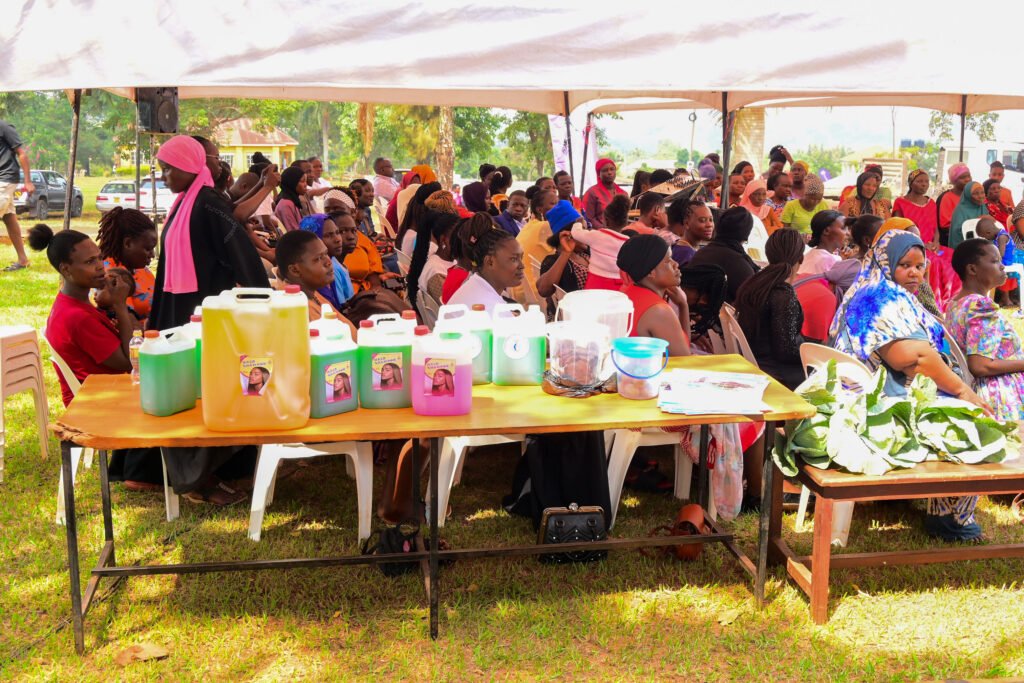
When the Busoga Kingdom, the Gates Foundation and Stanbic Uganda Holdings Limited launched the Women’s Economic Empowerment (WEE) Programme in Jinja this week, the announcement was about far more than a new financing initiative. Designed to reach more than 30,000 low-income women entrepreneurs across the Busoga sub-region, the programme combines affordable financing with entrepreneurship training, financial literacy, digital skills, mentorship, insurance, savings solutions and market linkages. In doing so, it signals an important shift in how Uganda approaches women’s enterprise development.
Representing His Majesty William Wilberforce Gabula Nadiope IV, the Kyabazinga of Busoga, the Kingdom’s Prime Minister, Dr. Joseph Muvawala, said empowering women economically goes beyond supporting individual businesses because it strengthens entire families and communities. He noted that while many women work tirelessly to support their households, they continue to face significant barriers in accessing finance and business opportunities. According to him, the partnership gives women the tools, knowledge and confidence to build sustainable enterprises while complementing government efforts to improve livelihoods through an integrated approach that combines affordable financing with practical business development support.
His remarks reflect a reality that extends far beyond Busoga. For decades, access to finance has been viewed as the principal obstacle facing women entrepreneurs. Governments, banks and development partners have introduced numerous credit schemes intended to help women start or expand businesses. While these initiatives have opened doors for many entrepreneurs, they have also revealed an uncomfortable truth: access to credit alone rarely translates into sustainable business growth.
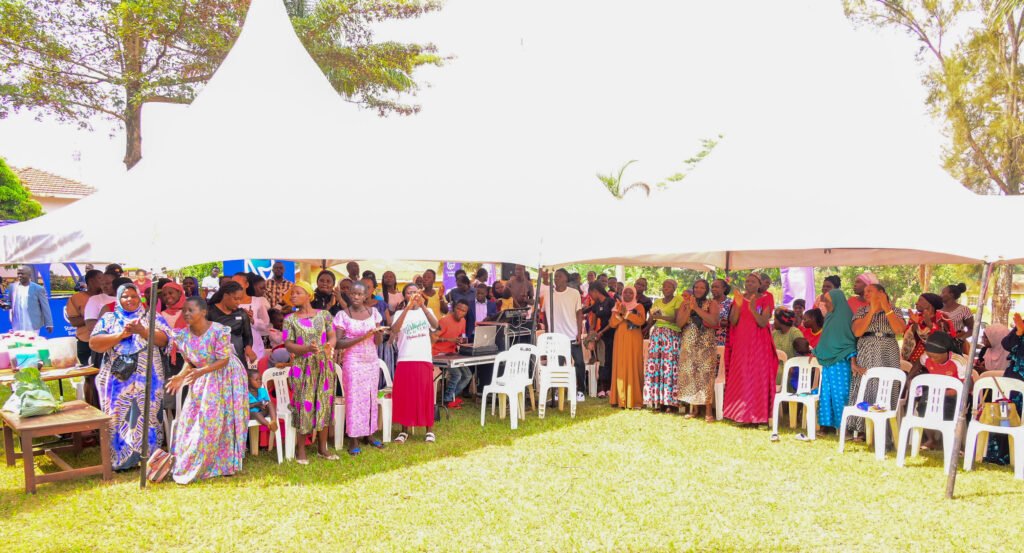
Uganda’s economy is powered by millions of micro and small enterprises, many of them owned and managed by women. From market vendors and produce dealers to tailors, food processors and retailers, women play a critical role in generating household incomes and sustaining local economies. Yet despite their contribution, many businesses remain small and vulnerable, not because their owners lack determination, but because they often lack the broader support systems needed to grow.
A market vendor who secures a loan but lacks bookkeeping skills may struggle to separate business income from household expenses. A tailor may invest in new equipment but fail to attract more customers because she lacks market access or digital marketing skills. A food processor may increase production only to discover she has no reliable distribution network. Without the knowledge, mentorship and business systems needed to manage growth, even affordable financing can become a burden rather than a catalyst for success.
This is precisely the gap the Women’s Economic Empowerment Programme seeks to address. Rather than treating finance as a standalone solution, the initiative integrates enterprise development with financial inclusion.
Stephen Segujja, Stanbic Bank Uganda’s Head of the Economic Enterprise Restart Fund, said the programme reflects the bank’s purpose of driving Uganda’s growth by expanding economic opportunities for underserved communities. He said women entrepreneurs will gain access not only to affordable financing but also to the business skills, digital capabilities and market connections needed to build resilient enterprises.
“We are investing in businesses that will create jobs, strengthen communities and contribute to Uganda’s long-term prosperity,” he said.
Segujja noted that the programme builds on Stanbic’s broader enterprise development experience. Through the Economic Enterprise Restart Fund, the bank has mobilised partnerships worth US$40 million and extended more than UGX370 billion in financing to over 8,000 SACCOs. Its Stanbic For Her programme has also supported more than 10,000 women entrepreneurs with over UGX200 billion in financing alongside financial literacy, governance support, bookkeeping and market access. The new initiative contributes to Stanbic’s Positive Impact Agenda, under which the bank has committed to mobilise up to UGX1 trillion through strategic partnerships supporting women, youth and farmers.
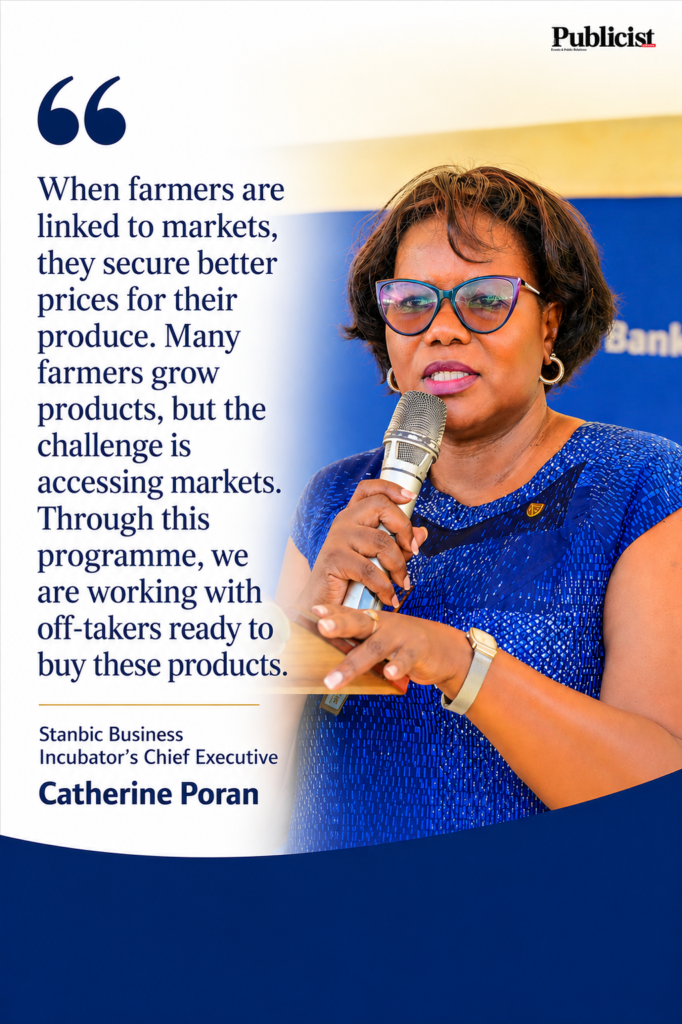
Enterprise development remains at the heart of the programme. Catherine Poran, Chief Executive of Stanbic Business Incubator Limited, argued that while finance creates opportunity, sustainable businesses are built through knowledge. She said the incubator will equip women entrepreneurs with practical business skills, financial management capabilities, digital literacy and mentorship, enabling them to build enterprises that create jobs, increase household incomes and contribute meaningfully to Uganda’s economy.
Her remarks underscore an important lesson for Uganda’s entrepreneurship ecosystem. Many women operate within the informal economy where access to finance remains constrained by limited collateral, low financial literacy and financial products that are often not designed around their realities. Yet even when financing becomes available, many entrepreneurs still require guidance to manage debt, keep proper financial records, embrace digital commerce and identify new markets.
Digital inclusion has therefore become just as important as financial inclusion. As Uganda’s economy becomes increasingly digitised, entrepreneurs who cannot use digital payment systems, online marketplaces or digital financial services risk falling behind. Building these capabilities enables women to compete more effectively while improving business efficiency and expanding market opportunities.
The programme’s collaborative structure also offers lessons for development. The Busoga Kingdom provides trusted community leadership and mobilisation. The Gates Foundation brings global expertise in advancing financial inclusion. Stanbic contributes financing, enterprise development and business incubation. Together, the partnership demonstrates how public, private and development institutions can combine their strengths to address structural barriers facing women entrepreneurs.
For beneficiaries such as Safinah Namukose, a trader from Buwenge, the initiative represents more than another credit programme. She said many women have the determination to succeed but lack affordable financing and the practical skills needed to expand their businesses. She believes the programme gives women renewed hope that they can improve their incomes, support their families and create opportunities for others.
Ultimately, the success of the Women’s Economic Empowerment Programme will not be measured simply by the number of loans disbursed. It will be reflected in businesses that survive and grow, entrepreneurs who formalise their enterprises, jobs created and household incomes improved.
If the Busoga initiative achieves those outcomes, it will offer more than a successful regional programme. It could provide a blueprint for how Uganda supports women entrepreneurs nationwide, not by simply extending credit, but by building the complete ecosystem of finance, skills, mentorship and opportunity that enables businesses to thrive for generations.