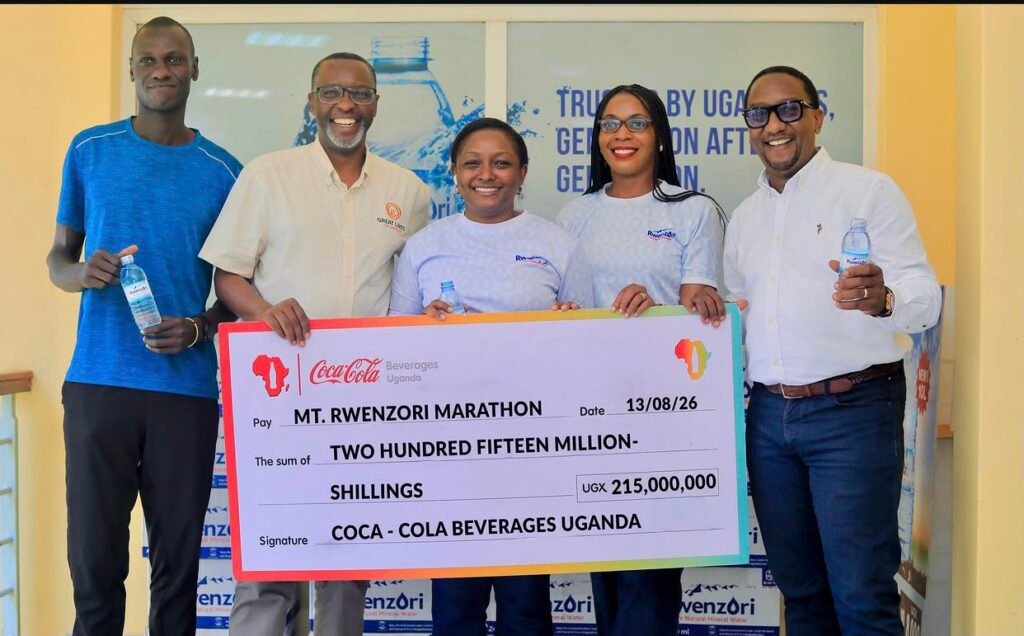
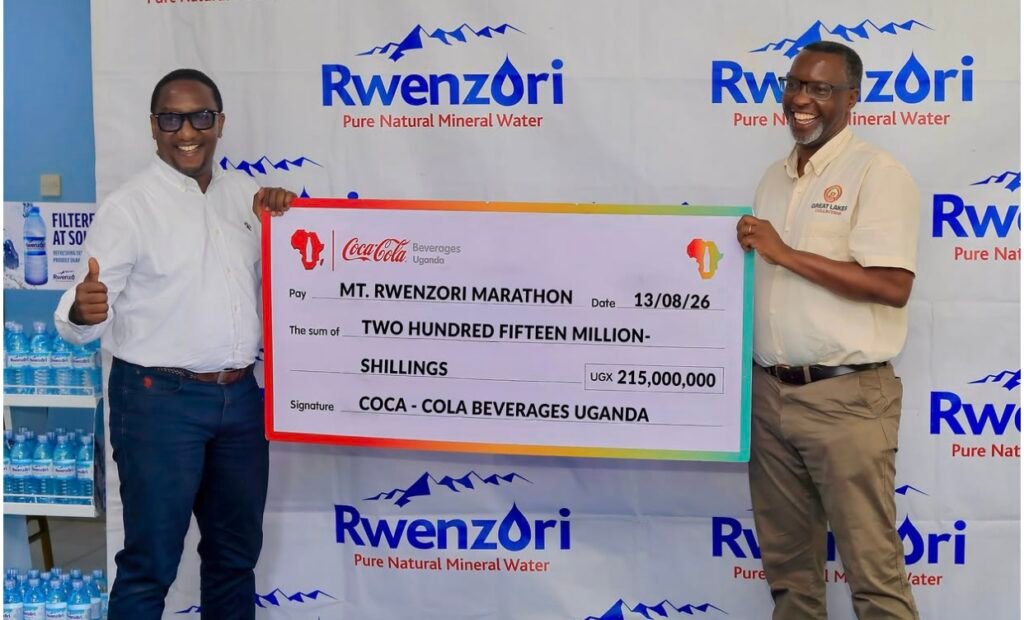
Coca-Cola Beverages Uganda has put UGX 215 million behind this year’s Tusker Lite Rwenzori Marathon. Behind the cheque is a bigger business story: an event that started with 800 runners is becoming one of Uganda’s most valuable sports-tourism properties.
A UGX 215 million cheque attracts attention. But the more interesting story behind Coca-Cola Beverages Uganda’s (CCBU) latest investment in the Tusker Lite Mount Rwenzori Marathon is what it signals about the commercial value the event is starting to generate.
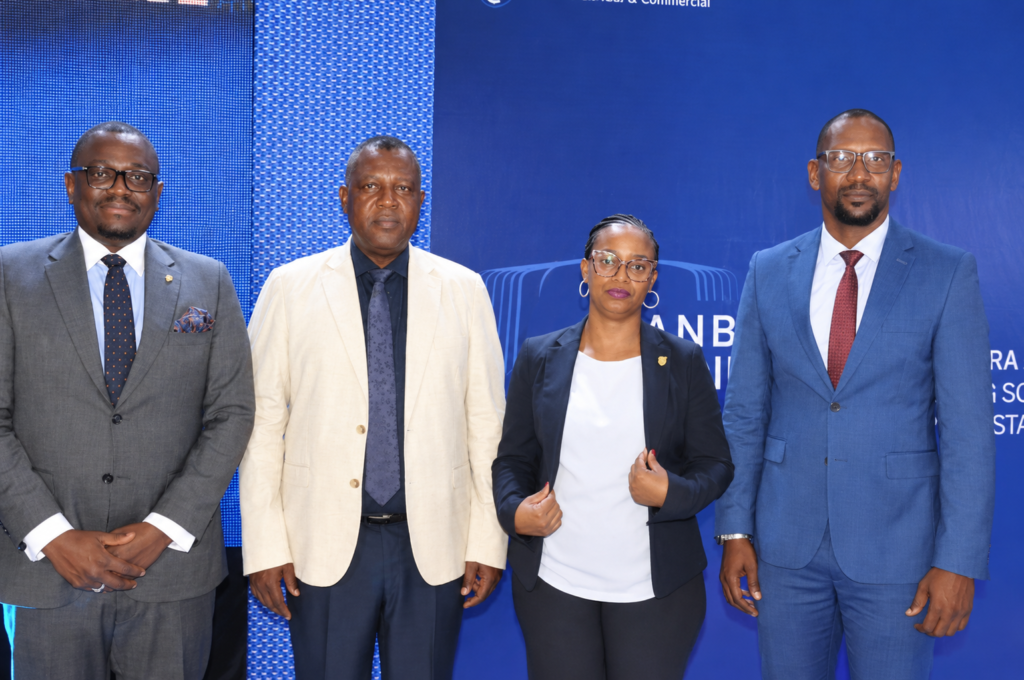
CCBU has renewed its position as the marathon’s Official Hydration Partner for the fifth consecutive year, committing UGX 215 million to the 2026 edition, scheduled for 22 August in Kasese. Through Rwenzori Pure Natural Mineral Water, the company will provide hydration across the marathon’s 42km, 21km, 10km and 5km categories.
The timing matters. The event started with about 800 runners from four countries in 2022. Participation rose to roughly 2,200 runners from 17 countries in 2023, 4,000 from 33 countries in 2024, and 6,000 from 36 countries in 2025. Organisers are now targeting around 8,000 runners in 2026, numbers that begin to explain why corporate investment is following the runners.
For CCBU Managing Director Emmy Hashakimana, the marathon’s value increasingly extends beyond sport:
“The Tusker Lite Mount Rwenzori Marathon has become an important platform for bringing people together, creating economic opportunities and showcasing the beauty and potential of the Rwenzori region.” he said.
Thousands of people travelling to Kasese create demand for hotel rooms, restaurants, transport, entertainment, retail, tour services and other businesses. Organisers say hotel capacity in Kasese has grown from about 500 rooms to more than 2,000 since the event began, alongside rising investment in local businesses and infrastructure. The marathon increasingly looks like an economic platform built around sport, rather than simply a sporting event, and that changes the proposition for sponsors.

For a hydration brand, the connection is direct: thousands of runners need hydration before, during and after the race, letting the brand move beyond conventional advertising into actual consumer experience. This year CCBU introduced a 350ml Rwenzori Water bottle for the event, replacing the previous 500ml format after runners said they wanted something easier to carry. A small product decision, but one that illustrates a larger point, sponsorship can become a place where companies observe consumers, respond to them, and put products directly into their hands.
The commercial opportunity extends beyond the sponsors. Marathon Team Lead Amos Wekesa has argued that Uganda needs to think more deliberately about what happens to the money international visitors bring into Kasese. Foreign runners at the 2025 marathon, he said, had the capacity to spend around US$2,000 each, yet some struggled to spend even US$600 because there weren’t enough products and experiences to buy.
His challenge to Ugandan entrepreneurs is straightforward: “When the world comes to Uganda, opportunities come.”
That may be one of the most important economic lessons emerging from the Rwenzori Marathon. Getting thousands of visitors into Kasese is one achievement. Building enough accommodation, restaurants, tours, entertainment, merchandise, transport and cultural experiences to capture their spending is the next, and that is where sports tourism starts turning into a local economy.
CCBU’s involvement fits into a broader philosophy Hashakimana has articulated about the company’s role in Uganda. Writing about his leadership approach after taking the helm of CCBU, he argued that successful companies cannot be built around products and profits alone, but also around “people” and “purpose.” That thinking is visible in how CCBU frames the marathon partnership: “At Coca-Cola Beverages Uganda, we are committed to doing business the right way by supporting initiatives that create shared value for communities while delivering a positive and memorable experience for consumers,” Hashakimana said when announcing this year’s investment.
The language of shared value is deliberate. Rather than treating community impact and commercial return as separate objectives, it suggests companies increasingly see platforms like the Rwenzori Marathon as places where brand visibility, consumer engagement, tourism and local economic activity reinforce each other.
The commercial stakes are rising for another reason: the Tusker Lite Mount Rwenzori Marathon is now a World Athletics Label Road Race, strengthening its international credentials. Its geography adds an advantage that’s hard to replicate — the full marathon crosses the Equator against the backdrop of the Rwenzori Mountains, selling a race and a destination at once.
That makes the marathon potentially valuable not only to beverage companies, but to airlines, banks, telecoms, insurers, hospitality operators, tourism businesses and consumer brands chasing audiences across East Africa and beyond. The stronger the international participation gets, the more valuable that audience becomes.
There is one question PublicistEA believes is worth putting directly to Coca-Cola Beverages Uganda: five consecutive years as Official Hydration Partner, and UGX 215 million committed this year, what is CCBU seeing in the Rwenzori Marathon that makes the platform worth continuing to invest in, and how does the company measure the value it gets from that investment?
The answer would move the conversation beyond sponsorship announcements toward understanding how major Ugandan companies are beginning to value sports, tourism and experience-led marketing as commercial platforms.
The most interesting number in this story may not ultimately be the UGX 215 million. It could be the 8,000 runners expected to descend on Kasese, and what Uganda manages to sell to them while they’re there.
The marathon has moved from 800 runners to thousands of participants from dozens of countries in just a few years. Hotel capacity has expanded. Corporate investment is growing. International recognition is rising. And businesses in Kasese are being exposed to a market that arrives at their doorstep.
For corporate Uganda, the lesson may be just as important: some of the country’s next valuable marketing properties may not be traditional advertising platforms at all. They may be Ugandan experiences capable of attracting the world, and giving brands a credible reason to come along.