
Uganda has secured an international buyer for its crude oil, but the bigger test will begin when the first sales are made: ensuring that the money generated benefits the national economy.
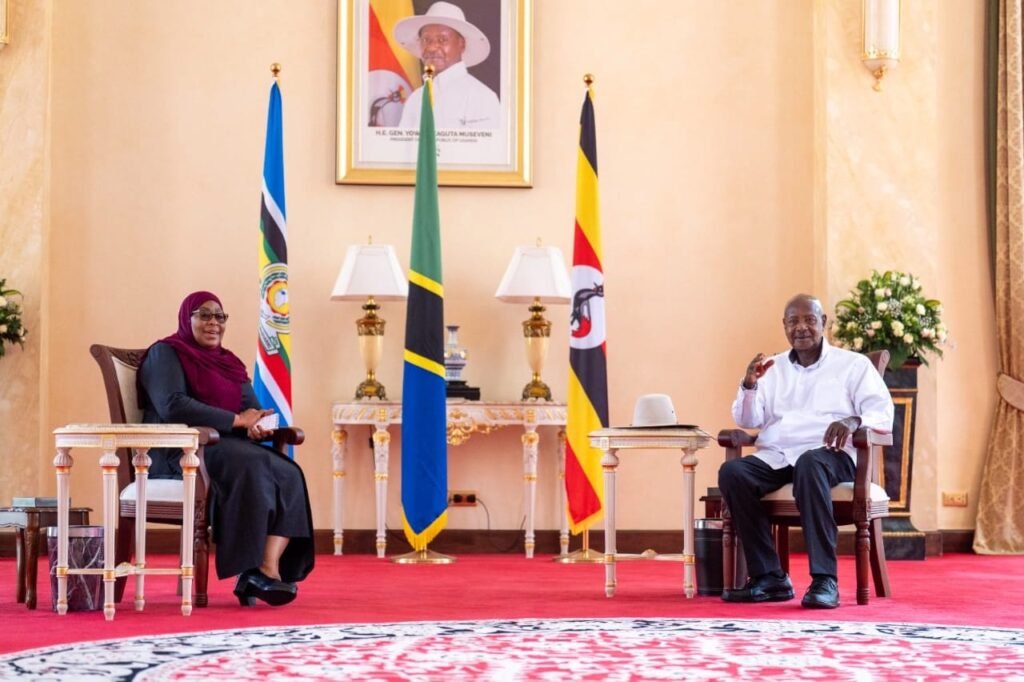
On November 20, 2026, the Uganda National Oil Company (UNOC) and the Ministry of Energy and Mineral Development signed a 10-year crude oil marketing agreement with international energy trader Vitol at State House, Entebbe. The agreement gives Vitol responsibility for marketing Uganda’s Pearl Sweet crude internationally, identifying buyers and helping secure competitive prices.
President Yoweri Museveni, who witnessed the signing, said UNOC would retain oversight of transactions and must know who purchases the country’s oil. “Whoever they sell to must be known to UNOC. UNOC must be satisfied with who has bought the oil and why,” he said.
Energy Minister Dr Monica Musenero said Vitol would initially work alongside UNOC, providing technical guidance, training and access to international buyers as the national company develops its own trading capacity.
The agreement comes as Uganda prepares for commercial production before the end of June 2027. The country has an estimated 6.5 billion barrels of oil in place, of which 1.4 billion to 1.7 billion barrels are recoverable. Production from the Tilenga and Kingfisher projects is expected to reach a combined peak of approximately 230,000 barrels per day.
The scale of potential earnings is significant, but the value of exported oil will not be the same as government revenue. Under petroleum production-sharing arrangements, companies recover eligible exploration, development and operating costs before the remaining profit oil is shared with government. The state also receives royalties and taxes, while UNOC participates in the projects through a 15 per cent interest.
The Ministry of Finance’s FY2026/27 fiscal framework projects oil revenues, including capital gains tax, at Shs1.849 trillion. The projection rises to Shs5.608 trillion in FY2027/28, Shs6.670 trillion in FY2028/29 and Shs9.580 trillion by FY2030/31.
These are budget estimates, not guaranteed receipts. Actual earnings will depend on production volumes, international oil prices, recoverable costs and the pace at which the fields reach capacity. The latest production delay also makes the timing of revenue collection important.
The Petroleum Fund provides an indication of the financial arrangements already in place. According to the Ministry of Finance’s FY2025/26 Annual Macroeconomic and Fiscal Performance Report, the fund had a preliminary closing balance of Shs428.63 billion at June 30, 2026, following revenue deposits of Shs296.25 billion during the financial year. No withdrawals were reported during that period.
Under the Public Finance Management Act, 2015, petroleum revenues are deposited into the Petroleum Fund, with provisions for transfers to the national budget and investment of savings through the Petroleum Revenue Investment Reserve.
The law also provides that 6 per cent of petroleum royalties be shared among eligible local governments in the oil-producing and exploration areas, with the central government retaining 94 per cent. The local government allocation is intended for development expenditure.
The challenge will be ensuring that petroleum revenue strengthens the wider economy rather than creating dependence on an exhaustible resource.
The Bank of Uganda’s Director of Research and Policy, Dr Adam Mugume, told Daily Monitor that more than Shs1.8 trillion was projected from oil-related non-tax revenues in FY2026/27. He said the expected inflows could help reduce domestic government borrowing by more than Shs2 trillion.
However, independent analysis by the Natural Resource Governance Institute (NRGI), in a July 2025 report by Paul Bagabo and Thomas Scurfield, cautioned that Uganda’s future oil earnings remain uncertain. Its analysis presented average annual revenue scenarios of approximately US 1.9billion under as lower global energy transition and US1 billion under a moderate transition scenario.
The researchers recommended stronger safeguards on recurrent expenditure, greater investment in economic diversification and clearer rules for managing petroleum savings. Their findings underline why Uganda cannot base long-term spending commitments on optimistic oil price and production assumptions.
For businesses in the Albertine region, the benefits will also depend on whether oil development creates opportunities beyond temporary construction contracts. EACOP and the associated oil projects have generated employment and demand for local suppliers, but the next challenge is building Ugandan companies capable of participating in the wider energy industry.
Vitol’s Regional Head, Michael Balint, described the marketing agreement as the next chapter in the company’s relationship with Uganda, while the government says the partnership will help build UNOC’s commercial expertise.
That capacity will matter as Uganda seeks to understand international crude pricing, scrutinise marketing costs and independently assess whether its oil is being sold at competitive prices.
The agreement with Vitol gives Uganda a route to the international market. What follows will determine whether the country can turn its petroleum resources into accountable public revenue, productive investment and economic opportunities that outlast the oil fields.