Uganda’s economic growth is creating opportunities beyond Kampala, with regional cities such as Arua, Gulu and Lira supporting growing populations, businesses and demand for financial services. The opportunity for banks is to ensure that businesses in these markets can access the finance and services they need to expand.
Uganda’s economy grew by an estimated 6.4% in the 2025/26 financial year, reaching a nominal value of Shs250.4 trillion, according to the Uganda Bureau of Statistics (UBOS). The country’s population also reached 45.9 million in the 2024 Census, expanding the market for goods, services and investment across the country.
Regional cities are part of this growth story. Arua recorded a census-night population of 380,824 in 2024, while Lira had 246,437 and Gulu 232,723. Their daytime populations were considerably higher, reflecting the movement of people into these commercial centres for work, trade and other economic activities.
The figures point to substantial markets beyond the capital, where businesses need reliable payment systems, financing and other services to serve customers and grow.
This is the context in which Stanbic Bank Uganda recently took its 35th anniversary customer engagements to Lira, Arua and Gulu. Held under the bank’s annual October Love Month, the forums brought together leaders from its Commercial, Business and Personal Banking segments to gather customer feedback and discuss how banking services could better respond to their needs.
For Mark Ocitti Ongom, Chief Executive of Stanbic Uganda Holdings Limited, the bank’s 35-year journey has been shaped by partnerships with individuals and businesses contributing to Uganda’s economic development. The Northern Uganda engagements offered an opportunity to strengthen those relationships in markets with distinct commercial needs.
Uganda’s business economy extends well beyond the formal corporate sector concentrated in Kampala. UBOS’s Uganda Business Inquiry found that businesses generated Shs93.1 trillion in gross output and Shs58.5 trillion in value added. Manufacturing accounted for Shs19.2 trillion in gross output, followed by trade at Shs16.6 trillion and real estate and business services at Shs10.2 trillion.
Employment figures reveal another important dimension. UBOS estimates that informal establishments employed 7.35 million people, compared with 2.37 million in formal establishments. Services accounted for the largest share of employment in both categories.
These figures illustrate the importance of businesses operating outside the large corporate sector, including traders, service providers and small enterprises that support household incomes and local economies.
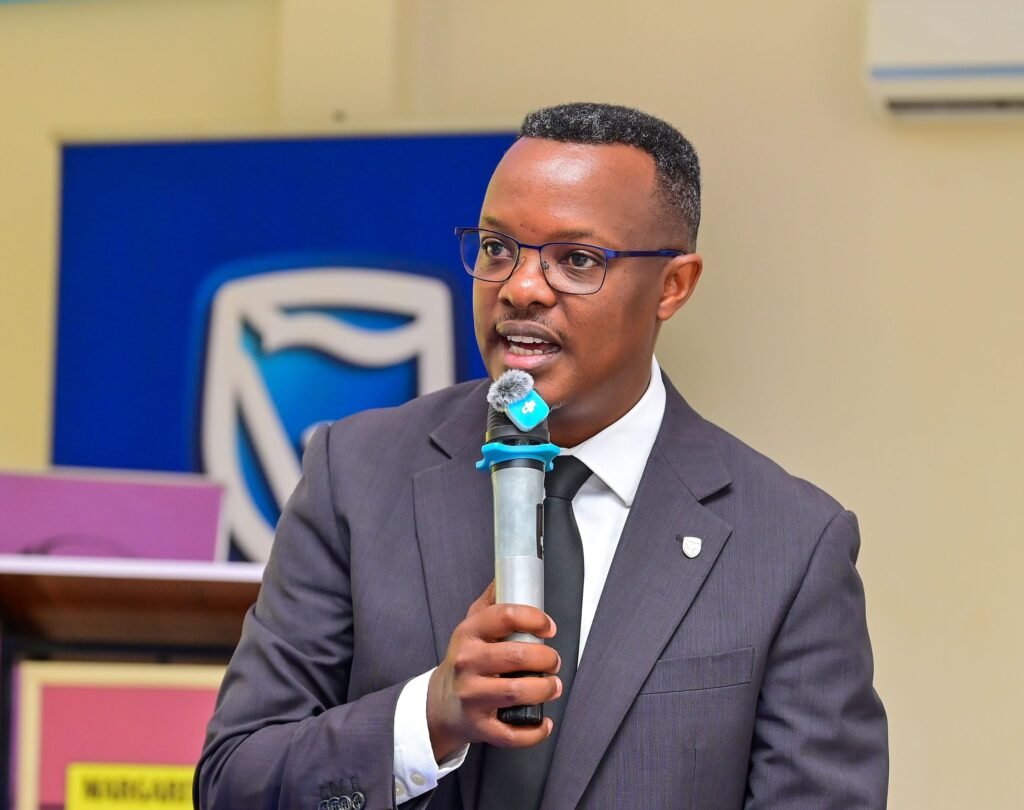
For banks, serving this market requires an understanding of how businesses operate, how they receive and spend money, and what prevents them from expanding. Samuel Bulenzi, Stanbic’s Head of Client Coverage, told customers during the Northern Uganda engagements that the bank recognised the contribution of self-employed people and business owners to employment and household livelihoods.
“We want to make the banking journey easier for you, whether you are a salaried individual or a self-employed customer,” he said.
The challenge is to make financial services accessible and useful to customers whose incomes, business cycles and financing needs may differ from those of salaried workers and established companies.
For a business owner in Arua, Gulu or Lira, access to banking involves more than having a branch nearby. It includes the ability to receive payments, deposit sales proceeds, manage cash flow, obtain working capital and protect the business against financial risks.
Stanbic says customers along the Northern Corridor can access its services through ATMs, cash deposit machines, agent banking and its contact centre, providing alternatives to conventional branch visits.
Sam Fredrick Mwogeza, Stanbic Bank Uganda’s Executive Director and Head of Personal and Private Banking, said maintaining customer relationships and investing in accessible banking channels remained important to the bank’s approach.
“As Stanbic, our purpose is clear: Uganda is our home, and we drive her growth. But we drive that growth together with our clients,” he said.
The approach aligns with Uganda’s wider financial-inclusion agenda. The Bank of Uganda’s National Financial Inclusion Strategy II, covering 2023–2028, prioritises expanding access to financial services through physical and digital channels, particularly in underserved communities.
However, access alone does not guarantee business growth. An enterprise may accept digital payments but still struggle to secure affordable credit. Another may have a viable business but lack the financial records or collateral needed to qualify for a loan. Others may need insurance, savings products or investment options suited to irregular cash flows.
The next opportunity for regional banking is to connect access with these practical business needs, helping enterprises manage daily transactions while building the capacity to invest, expand and employ more people.
Arua, Gulu and Lira represent distinct economic markets rather than smaller versions of Kampala.
Arua serves West Nile, a sub-region with 3.9 million people in the 2024 Census. Gulu is a major commercial and services centre in Acholi, which recorded 2.05 million people, while Lira anchors much of the Lango economy, home to 2.57 million people.
Together, the three sub-regions account for more than 8.5 million people. Their populations support demand for food, housing, transport, healthcare, education, retail and business services, creating opportunities for enterprises across different sectors.
Their economic needs also vary, meaning financial institutions must understand local supply chains, customer spending patterns and the businesses driving activity in each market.
During the Stanbic engagement, Arua City Mayor Alionzi Lawrence Dangote called for continued collaboration between financial institutions, businesses and local government to support entrepreneurship, job creation and economic opportunities.
Turning that potential into sustained growth will require more than expanding banking access. Businesses need the capacity to formalise, demonstrate their financial performance, access capital and respond to changing markets.
Stanbic says it is expanding its banking touchpoints while offering financing, insurance and investment solutions. Through SBG Securities, it also provides investment options, including multi-currency unit trusts and treasury bills.
Such services can become more valuable as businesses move beyond daily transactions towards building reserves, investing in equipment and managing financial risks. Their impact, however, will depend on affordability, suitability and whether businesses can meet the requirements for accessing them.
Kampala will remain central to Uganda’s economy, but the country’s expanding population and regional commercial centres create opportunities for a broader distribution of business growth.
The 2024 Census projections cited for Lira City and Gulu City indicate annual population growth rates of 6.2% and 6.1%, respectively. Continued urban growth is likely to increase demand for essential services and create opportunities for businesses able to meet those needs.
For financial institutions, the opportunity is to develop services that respond to these markets rather than treating regional expansion simply as a matter of opening more branches. Businesses need accessible payments, appropriate financing, savings, insurance and investment services that reflect their circumstances.
Stanbic’s 35th anniversary engagements in Northern Uganda provide an example of a bank taking its customer engagement beyond the capital. The wider economic question is whether financial institutions, businesses and local governments can work together to turn the region’s commercial activity into more productive, resilient enterprises.
Uganda’s next business growth story does not depend on Kampala becoming less important. It depends on more businesses across the country gaining the capacity to grow, create jobs and serve expanding markets.
Some of those businesses may be built in Arua, Gulu and Lira, where the opportunity lies in connecting a growing regional customer base with the finance and infrastructure needed to turn economic activity into lasting growth.