In Europe, the euro became the visible symbol of decades of economic integration. But the currency itself was not the beginning of that journey. It was the result of years of cooperation, deeper trade links, stronger institutions and the creation of a shared economic space.
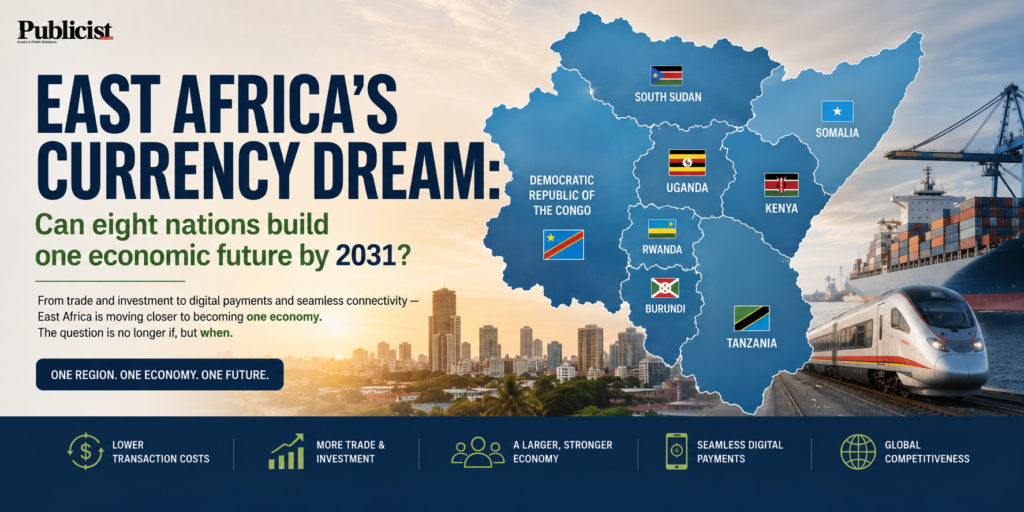
East Africa now stands at a similar crossroads. Across eight countries, trade is expanding, businesses are increasingly operating across borders, capital is becoming more mobile and regional supply chains are beginning to take shape. The question facing the region is no longer whether East Africa can cooperate. It is whether it can evolve into one economy, and whether a common currency will become the natural outcome of that transformation.
For more than a decade, East Africa has pursued an ambitious dream of a single currency connecting more than 300 million people across the region. But unlike Europe’s journey, East Africa’s path has been slower, more complex and shaped by different economic realities.
After missing its first deadline, the region is now asking whether 2031 could finally become the moment when economic cooperation evolves into true integration.
From the ports of Mombasa and Dar es Salaam to the commercial centres of Kampala, Kigali and Nairobi, East Africa is one of Africa’s most interconnected regions. Yet despite rising trade, shared markets and freer movement of people, one major piece of integration remains unfinished: a common monetary system.
But the debate is not simply about replacing national currencies with a new regional banknote. It is about whether East Africa can build the institutions, markets and confidence required to function as one economic space.
The ambition behind an East African Monetary Union is enormous: a shared monetary system that could reduce transaction costs, simplify cross-border business and strengthen the region’s global competitiveness.
The East African Community (EAC) Monetary Union Protocol, signed in 2013, represented one of the region’s most ambitious economic commitments. The agreement established a framework for creating a single currency after member states achieved greater economic convergence.
The logic was straightforward. A common currency could eliminate exchange costs, reduce currency risks and make it easier for businesses operating across multiple markets. A company expanding from Uganda into Kenya, Tanzania or Rwanda would no longer have to manage multiple currencies, fluctuating exchange rates and costly financial transactions.
However, the original roadmap targeted the establishment of the currency by 2024, a deadline that passed without the required conditions being achieved. The delay exposed a fundamental reality: monetary union is not simply about printing new money. It requires economies to move together.
Member states were expected to meet convergence criteria, including maintaining inflation below 8%, ensuring foreign exchange reserves equivalent to at least 4.5 months of import cover, controlling fiscal deficits and aligning broader economic policies.
While progress has been made, differences in economic structures, policy priorities and levels of development have slowed the process. The challenge is not creating a currency. The challenge is creating an economy strong enough to sustain one.
If governments strengthen regional institutions, align fiscal and monetary policies, deepen financial markets and create confidence among businesses and citizens, the common currency will become less an ambitious political project and more the natural outcome of integration.
Trade has often been at the centre of conversations around East African integration. But the real opportunity goes much further. A monetary union could transform how investment and capital move across the region.
A more integrated financial system would give investors access to a larger market with fewer currency risks. Regional companies could raise capital more efficiently, expand across borders with greater confidence and build supply chains that treat East Africa as one production base rather than eight separate economies.
For manufacturers, this could unlock economies of scale. A company producing goods in one country could source raw materials from another, access regional markets and distribute products across borders with fewer financial barriers.
For agribusinesses, integration could create larger markets for farmers and processors. For technology companies, it could expand opportunities to serve millions of consumers across the region. For tourism operators, it could make movement between destinations easier and more attractive.
Banks could deepen regional lending, capital markets could become more connected and pension funds could diversify investments across partner states with fewer monetary restrictions.
The prize is not simply cheaper transactions. The prize is a larger, more competitive regional economy.
The future of East African integration may not begin with a new banknote. It may begin with digital infrastructure.
Across the region, governments and financial institutions are already working towards stronger payment connections through initiatives such as the EAC Cross-Border Payment System Masterplan. The goal is to make regional payments faster, cheaper and more secure by improving interoperability between financial systems.
This could create immediate benefits for businesses and citizens. A trader in Uganda selling goods to Kenya, a Tanzanian company paying suppliers in Rwanda or an entrepreneur accessing customers across borders could eventually operate with fewer financial barriers. In many ways, seamless digital transactions may create the experience of a single economy before a physical currency exists.
For banks, fintech companies and payment providers, regional financial integration represents a significant opportunity to innovate, expand services and build new digital markets.
Governments can create frameworks for integration, but they cannot build a regional economy alone. The real test will be whether businesses begin thinking beyond national borders.
Are banks prepared to finance regional expansion rather than only domestic growth? Are manufacturers building supply chains that stretch across East Africa? Are investors evaluating the region as one investment destination rather than eight separate markets? A successful monetary union will depend on businesses behaving as though borders matter less.
The private sector must become an active participant in integration, not simply a beneficiary of government agreements. Ultimately, monetary union succeeds when companies, investors and citizens begin experiencing the region as one economic space.
However, building one economy is not only an economic challenge. It is also a political one. National currencies represent more than money. They represent sovereignty, national identity and a government’s ability to respond independently to economic shocks. The central question is whether countries are willing to exchange some degree of monetary independence for the benefits of deeper integration. Would a country facing recession still have the flexibility to adjust interest rates? Could one monetary policy effectively serve economies with different levels of development? How would voting power and decision-making authority be shared?
These questions have challenged currency unions around the world and remain central to East Africa’s debate.
Monetary unions require more than shared currencies. They require strong institutions, political trust and mechanisms for managing economic differences. Questions around the location of a regional central bank, representation among member states and responses to economic shocks will require careful negotiation.
Economic integration ultimately requires countries to surrender not only monetary tools but also a measure of policy autonomy in pursuit of collective prosperity.
East Africa’s diversity is both its opportunity and its challenge. Kenya has one of the region’s largest and most sophisticated economies, driven by services, finance and technology. Tanzania has built strength around natural resources, tourism and infrastructure. Uganda remains a major agricultural and trade hub. Rwanda has positioned itself as a services and innovation economy. Newer members such as South Sudan bring significant opportunities alongside development challenges.
Creating one monetary framework across these economies requires ensuring that smaller or more vulnerable economies are not disadvantaged. The success of the project will depend not only on economic indicators but also on trust.
Regional institutions must become stronger. Decision-making must become more transparent. Member states must increasingly prioritise collective interests alongside national priorities.
At the 29th Ordinary Meeting of the EAC Monetary Affairs Committee held in Kampala, central bank governors and monetary authorities reviewed progress towards establishing a single East African currency by 2031.
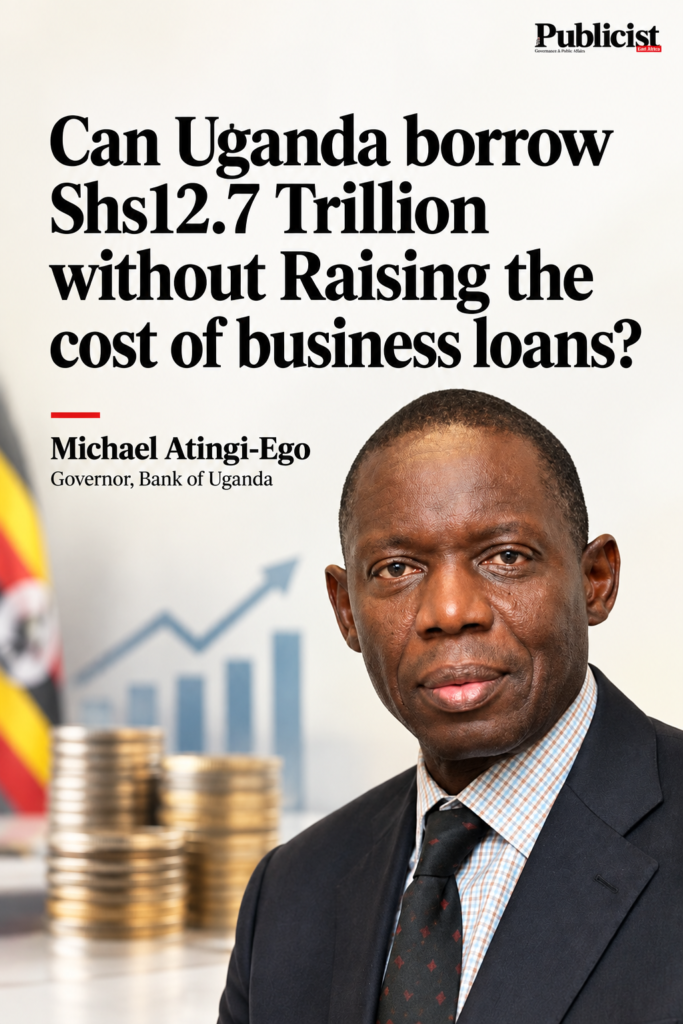
The meeting, chaired by Bank of Uganda Governor Dr. Michael Atingi-Ego, reaffirmed commitment to accelerating implementation of the East African Monetary Union roadmap, strengthening macroeconomic convergence and improving policy coordination.
The renewed optimism comes as the region’s economic outlook improves. The EAC economy is projected to grow by 5.2% in 2026, ahead of the projected Sub-Saharan Africa average of 4.3%. Inflation has also eased, falling to 6.7% from 9.6% in the previous financial year, offering policymakers renewed confidence that some of the pressures affecting earlier efforts are beginning to moderate.
But economic numbers alone will not determine success. The real measure will be whether East Africa can build the institutions, trust and shared ambition required to operate as one economy.
The debate over a common currency is ultimately not about replacing the Ugandan shilling, Kenyan shilling or Tanzanian shilling with a new regional currency. It is about whether East Africa is prepared to function as a single economic space.
If governments strengthen regional institutions, align fiscal and monetary policies, deepen financial markets and create confidence among businesses and citizens, the common currency will become less an ambitious political project and more the natural outcome of integration.
The East African Monetary Union is therefore not the beginning of integration. It is the culmination of it. The real work is not printing one currency. The real work is building one economy. When that economy exists, the currency will simply make visible what has already been achieved.