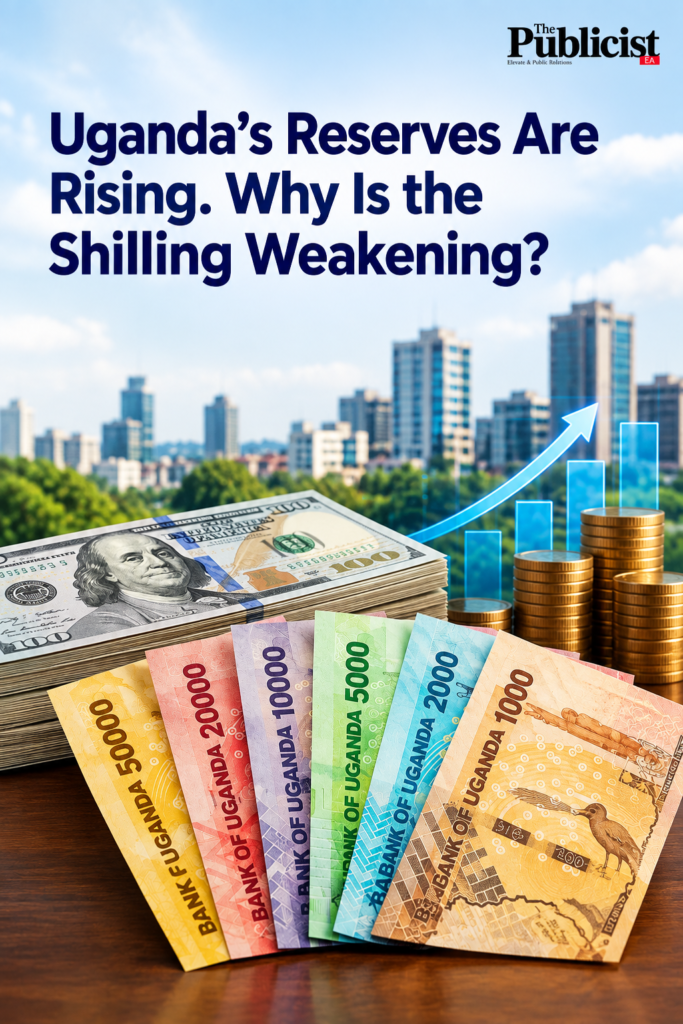
Uganda’s external position is improving, but the shilling is telling a more complicated story. In the 12 months to June 2026, Uganda recorded a US$2.39 billion balance-of-payments surplus, more than double the US$1.03 billion recorded a year earlier. International reserves also rose by about US$2.4 billion to roughly US$6.7 billion, equivalent to about 3.7 months of import cover.
Yet the shilling has continued to face pressure. In July, the shilling averaged Shs3,704.51 per US dollar, before weakening to an average of Shs3,730.25 in August. The Ministry of Finance attributed the August depreciation to increased foreign-currency demand from the energy and manufacturing sectors, which outweighed inflows from commodity exporters, NGOs and remittances.
By September 18, market reports put the shilling at around Shs3,930 per dollar, compared with about Shs3,740 at the end of August.
At first glance, the numbers appear contradictory. They are not. Uganda can accumulate more foreign-exchange reserves while the shilling faces short-term pressure because the two indicators capture different parts of the economy. Reserves reflect the country’s broader external position and official foreign-exchange holdings. The exchange rate reflects conditions in the foreign-exchange market, where demand for dollars can rise sharply at particular times.
That distinction is becoming increasingly important as Uganda’s economy expands.
The balance of payments captures Uganda’s transactions with the rest of the world over a period. The exchange rate, meanwhile, responds to the balance between foreign-currency supply and demand in the market.
Exporters, remittance recipients, investors and other sources bring dollars into the economy. Importers need dollars to pay for fuel, machinery, raw materials and other goods.
The pressure was particularly visible in August.
The Ministry of Finance reported that the shilling weakened during the month as foreign-currency demand from petroleum and manufacturing companies outweighed inflows from commodity exporters, NGOs and remittances.
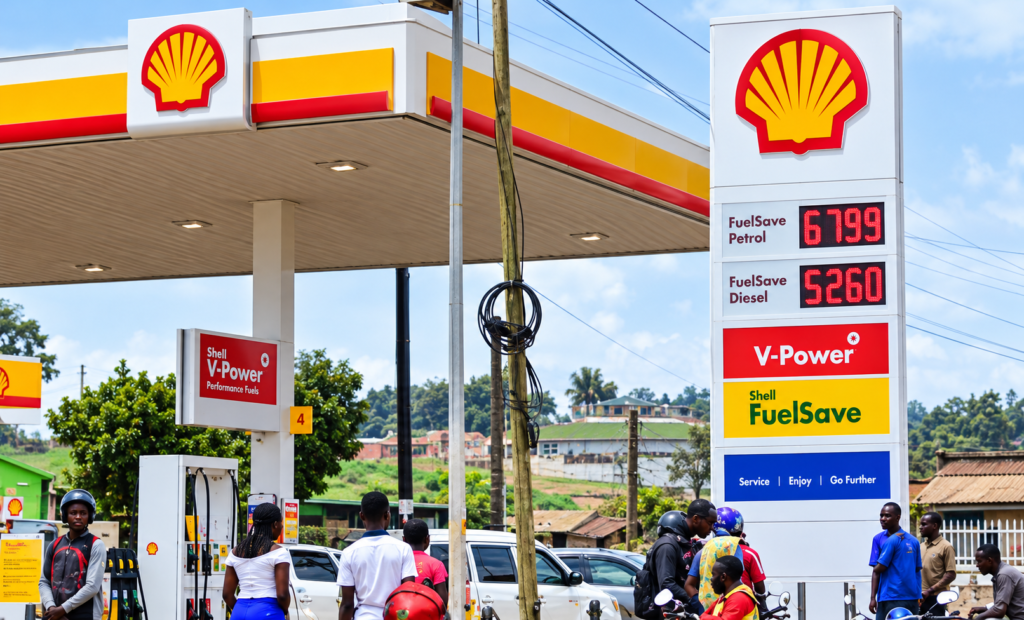
Petroleum companies needed dollars to finance fuel imports, while manufacturers and other businesses required foreign currency for raw materials, machinery and intermediate goods.
This does not explain every movement in the shilling across the year. It does, however, illustrate how a stronger external position can coexist with short-term currency pressure.
Uganda’s merchandise import bill remains significant. In July 2026, imports rose 25.4 percent year-on-year to US$1.61 billion, according to the Ministry of Finance. The increase was driven largely by formal private-sector imports, including petroleum products and other goods required by businesses.
The picture is therefore one of an expanding economy in which foreign-exchange inflows are improving, but demand for dollars is also increasing.
Domestic credit is expanding alongside economic activity. Private-sector credit growth reached 16.1 percent in June, while outstanding private-sector credit stood at about Shs28 trillion in July, according to recent economic data. The average shilling lending rate was 17.32 percent in July, down from a year earlier.
The growth in financing matters because credit supports investment, trade, construction and other economic activity. Where businesses rely on imported machinery, fuel and intermediate goods, stronger domestic activity can also generate additional demand for foreign currency.
That connection is worth watching, but it should not be overstated. The available data show that credit is growing, imports are rising and demand for foreign currency is elevated. They do not, by themselves, establish that recent credit growth caused the shilling’s depreciation.
Instead, they point to a broader economic relationship: as businesses invest and production expands, some of that activity requires imports, creating additional demand for dollars.
The effect of a weaker shilling is not limited to the foreign-exchange market. Sustained depreciation can increase the shilling cost of imported fuel, machinery and other dollar-priced inputs, potentially adding to inflationary pressure.
Uganda’s annual headline inflation rose to 4.0 percent in July, from 3.7 percent in June. Energy, Fuel and Utilities inflation was 14.9 percent in July.
By August, headline inflation had increased further to 4.1 percent, while Energy, Fuel and Utilities inflation eased slightly to 14.3 percent.
These figures cannot be used to attribute August or September inflation directly to the latest exchange-rate movements. They do, however, show why exchange-rate movements matter for an economy that imports substantial quantities of fuel and other inputs.
Uganda’s economy grew 6.4 percent in FY2025/26, while the Bank of Uganda projects growth of 7.0–7.5 percent in FY2026/27, supported by oil production, investment and exports.
That creates a more complicated currency story. Faster growth can generate more exports, investment and foreign-exchange earnings. But it can also increase demand for imported fuel, machinery, raw materials and other goods.
The central question is therefore not simply how much foreign exchange Uganda is attracting. It is what that foreign exchange, alongside expanding domestic credit and investment, is financing.
If investment expands productive capacity and generates additional export earnings, stronger growth could gradually improve Uganda’s ability to meet its foreign-exchange needs.
If imports and demand for dollars continue to grow faster than foreign-exchange earnings, however, the shilling can remain under pressure even while reserves and the broader external position improve.
Uganda’s rising reserves and a weaker shilling are therefore not necessarily contradictory. They reflect different parts of the economy.
The reserves story is about Uganda’s broader external position. The shilling story is about the balance between dollar supply and demand in the market at a particular point in time. For Uganda, the challenge is whether rising foreign-exchange inflows can keep pace with the demands of a faster-growing, increasingly investment-driven economy.