By Publicist East Africa
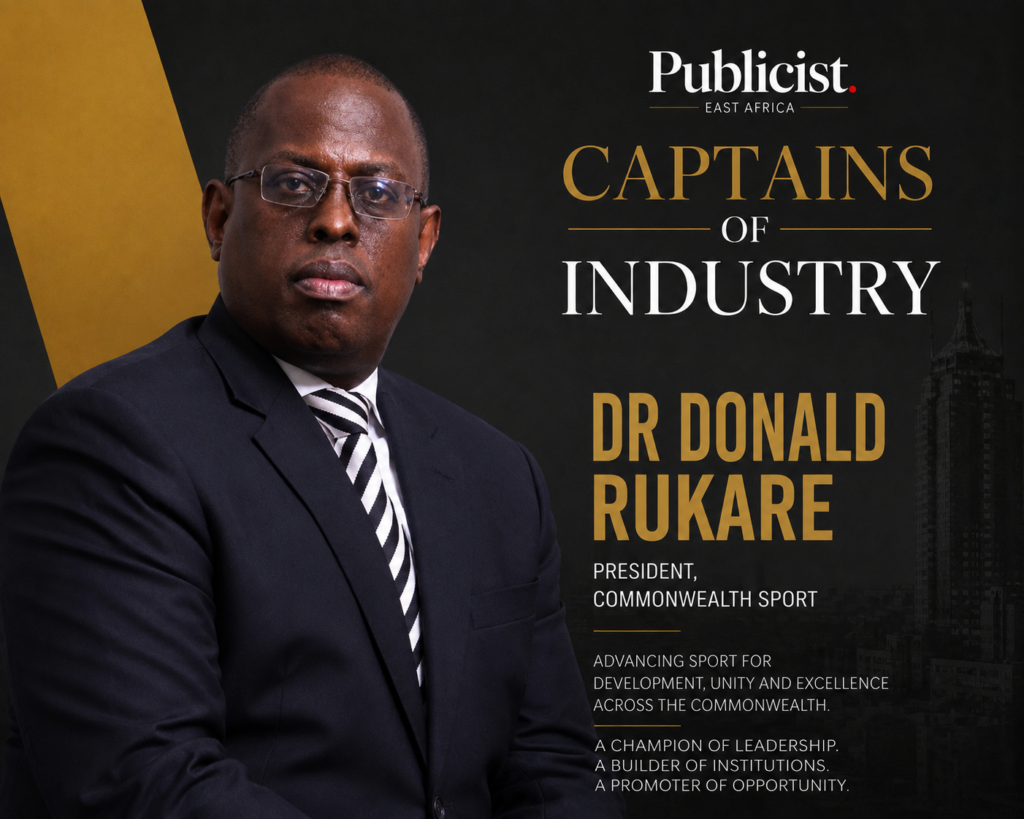
Editorial Note: Publicist East Africa previously recognised Dr Donald Rukare as a Captain of Industry for his contribution to sports governance and institutional leadership. His election as President of Commonwealth Sport represents a defining new chapter in that journey, one that places a Ugandan at the helm of one of the world’s oldest and most influential sporting movements.
As Uganda returns to Glasgow for the 2026 Commonwealth Games, history is repeating itself in more ways than one. Twelve years after Moses Kipsiro’s memorable gold medal in the Scottish city, Team Uganda has returned with a delegation of 55 athletes competing across ten disciplines, including five para-athletes. Women account for the majority of the team, reflecting the country’s growing commitment to inclusion and diversity in sport.
Yet Uganda’s most consequential presence in Glasgow may not be found on the athletics track, in the boxing ring, or on the netball court. It is found in the boardroom, where Dr Donald Rukare now presides over the institution responsible for guiding the Commonwealth sporting movement.
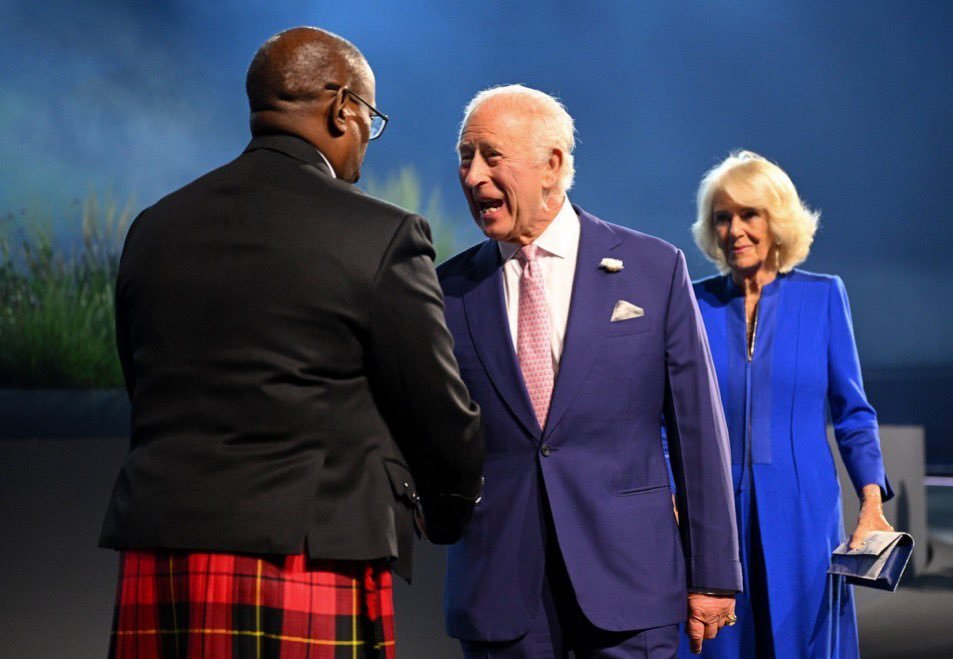
When Rukare was elected President of Commonwealth Sport in November 2025, he became the first African to lead the organisation in its history. For Uganda, the appointment marked more than a personal milestone for one of its most accomplished sports administrators. It signalled a shift in the country’s role within global sport, from competing on the international stage to helping shape the institutions that govern it.
That distinction is important.
For generations, Uganda’s sporting achievements have been measured through medals, records, and remarkable individual performances. Rukare’s presidency introduces another dimension to that story. It demonstrates that influence in international sport is not exercised only by athletes, but also by those who build, govern, and reform the institutions upon which sport depends.
His journey to the presidency has been anything but accidental. A lawyer by training and a sports administrator by vocation, Rukare has spent more than three decades working at the intersection of governance, diplomacy, athlete development, and institutional reform. Through leadership roles with the Uganda Olympic Committee, World Aquatics, and several international sporting bodies, he earned a reputation for thoughtful leadership, consensus building, and a deep understanding of the evolving challenges facing modern sport.
Those qualities made him a compelling choice at a time when Commonwealth Sport itself was entering one of the most significant periods in its history.
The Commonwealth Games movement has faced growing questions about its long-term sustainability. Escalating hosting costs, changing commercial realities, and increasing pressure on governments to justify large infrastructure investments have forced sporting organisations to rethink how major events are financed and delivered. The traditional model of hosting multi-sport events is becoming increasingly difficult to sustain, particularly for smaller economies.
Rather than defend an ageing model, Rukare has embraced reform.
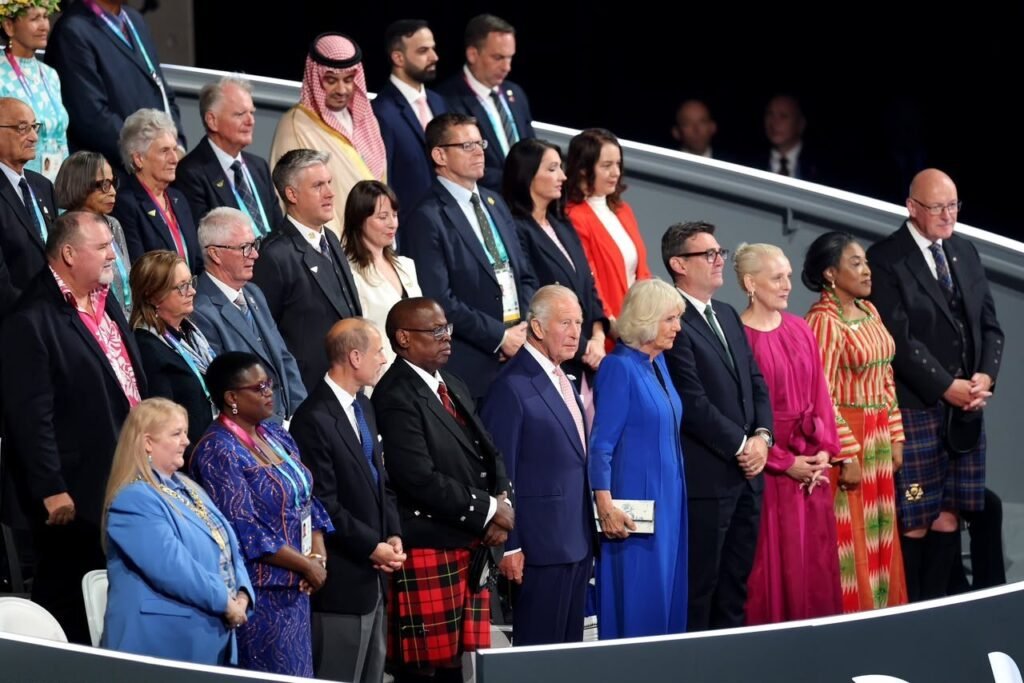
His leadership has been closely associated with the Commonwealth Sport Games Reset, an ambitious strategy that seeks to make future Games more flexible, financially sustainable, and accessible to a wider range of host nations. Glasgow 2026 is the first major expression of that vision, making these Games significant not only as a sporting event but also as a test of whether one of the world’s oldest multi-sport movements can successfully reinvent itself for a new generation.
This is where Rukare’s contribution extends beyond sport.
The challenge before him is not simply organisational. It is strategic, commercial, diplomatic, and institutional. Success will be judged not only by the quality of competition but also by whether the Commonwealth Games continue creating lasting value for athletes, host communities, broadcasters, sponsors, and member nations. That requires balancing financial sustainability with social purpose, preserving tradition while embracing innovation, and ensuring that the Games remain relevant in an increasingly competitive global sporting landscape.
Throughout his career, Rukare has consistently argued that athletes must remain at the centre of every decision. Under the broader Commonwealth Sport agenda, programmes such as GAPS and eqUIP have expanded opportunities for athlete development, youth leadership, inclusion, and institutional capacity-building across member associations. These initiatives reflect a philosophy that sees sport not merely as competition, but as a vehicle for education, leadership, social inclusion, and economic opportunity.
That philosophy resonates strongly with Uganda’s own sporting ambitions.
The presence of para-athletes within Uganda’s Glasgow delegation reflects an evolving understanding that inclusion is no longer simply a moral principle but an essential component of modern sport. Beyond medals, sport increasingly creates opportunities in coaching, sports medicine, event management, media, technology, tourism, and the wider creative economy. For developing countries, investment in sport has become an investment in human capital.
There is also a broader diplomatic significance to Rukare’s presidency. Commonwealth Sport brings together seventy-four nations and territories with diverse histories, cultures, and political systems under a shared institutional framework. Leading such an organisation demands more than administrative competence; it requires diplomacy, consensus-building, and the ability to unite differing interests around a common vision.
For Uganda, having one of its own occupy that position represents an important form of international influence. It reinforces the country’s growing reputation for producing leaders capable of contributing beyond national borders and demonstrates that global leadership is increasingly defined by expertise rather than geography. In an era where soft power matters as much as economic size, Rukare’s presidency places Uganda in conversations that extend well beyond the sporting arena.
The true measure of his leadership, however, will not be Glasgow alone. It will be whether Commonwealth Sport emerges stronger, more relevant, and more sustainable by the end of his tenure. With the Commonwealth Youth Games in Malta and the Centenary Commonwealth Games in Ahmedabad already on the horizon, his presidency will help determine how the movement adapts to changing economic realities, embraces digital transformation, expands opportunities for women and para-athletes, and remains meaningful to future generations.
When Publicist East Africa first recognised Donald Rukare as a Captain of Industry, we celebrated his contribution to sports governance and institutional leadership within Uganda and across the international sporting community. His election as President of Commonwealth Sport has elevated that contribution to an entirely new level.
Great athletes inspire nations through performance. Great institution builders create the systems that enable generations of athletes to succeed.
Donald Rukare belongs to the latter category.
His presidency is more than a personal achievement. It is a reminder that Uganda’s growing influence in the world will increasingly be measured not only by the excellence of its competitors, but also by the calibre of the leaders it contributes to global institutions. As Team Uganda competes in Glasgow, another Ugandan is helping shape the future of the Games themselves.
That may ultimately become Donald Rukare’s greatest legacy—not simply leading Commonwealth Sport, but demonstrating that African leadership can help redefine one of the world’s most enduring sporting institutions.
This feature forms part of Publicist East Africa’s Captains of Industry Revisited series, highlighting leaders whose continued achievements demonstrate that true leadership is not measured by titles alone, but by the institutions they strengthen, the opportunities they create, and the lasting influence they leave behind.