For years, Africa’s carbon potential has largely been viewed through the lens of what the continent could offer the world, forests that absorb carbon, renewable energy projects that reduce emissions and natural ecosystems capable of generating carbon credits for companies seeking to offset their environmental footprint.
But that conversation is beginning to change. The question facing African countries is no longer simply how many carbon credits they can produce. It is whether they can build carbon markets that protect national interests, attract credible investment and ensure that communities at the heart of climate projects benefit from the value being created.
Kenya’s introduction of a new carbon market framework marks an important moment in that transition. The country has unveiled rules governing carbon trading and placed limits on the volume of credits that can be authorised for international buyers, reflecting a growing effort to ensure that carbon markets support national climate priorities rather than becoming simply an export channel for environmental assets.
The move signals a broader shift across Africa: carbon is increasingly being recognised not only as an environmental instrument but as a strategic economic opportunity.
The early growth of carbon markets was driven by global demand. Companies seeking to reduce their emissions looked to carbon credits as a mechanism for meeting climate commitments, while African countries with significant natural resources emerged as attractive destinations for carbon projects.
However, the rapid expansion of the market has also exposed challenges around transparency, accountability, pricing and whether communities hosting carbon projects receive a fair share of the benefits.
Kenya’s new framework reflects a move towards stronger carbon governance. By creating clearer approval processes and greater oversight over international credit transfers, the country is seeking to ensure that carbon trading aligns with national priorities and delivers measurable climate value.
This represents a significant evolution in how African countries view carbon assets. Rather than allowing carbon markets to develop primarily through private transactions, governments are increasingly seeking a stronger role in shaping how these markets operate.
The development also raises an important question for the region: how prepared are East African countries to participate in the emerging carbon economy?
Uganda, like Kenya, possesses significant climate assets. Its forests, wetlands, agricultural landscapes, biodiversity resources and renewable energy potential provide opportunities to develop carbon projects that support both environmental protection and economic development.
But the opportunity is not simply about generating carbon credits.
The bigger opportunity lies in building a credible carbon ecosystem that connects climate action with investment, technology, community development and economic transformation.
For countries such as Uganda, success will depend on answering fundamental questions around ownership, measurement, verification and benefit sharing. Who owns the carbon asset? How are communities compensated? How can investors trust that credits represent real and measurable climate impact?
These questions will determine whether Africa becomes merely a supplier of carbon credits or whether it becomes a leader in shaping the future of climate finance.
The future of carbon markets will be determined by trust. As concerns grow globally around the quality and credibility of carbon credits, investors and buyers are increasingly demanding stronger evidence that projects deliver genuine environmental benefits.
Countries that develop transparent systems, reliable data and robust verification mechanisms will be better positioned to attract high-quality investment.
Technology will play a central role in this transformation. Satellite monitoring, artificial intelligence, digital registries and remote sensing tools are changing how carbon projects are measured and verified, improving confidence in everything from forest conservation to sustainable agriculture.
For Africa, this presents an opportunity to build modern climate infrastructure that does more than support carbon trading. It can help create a new foundation for climate investment, enabling countries to demonstrate impact and attract global capital.
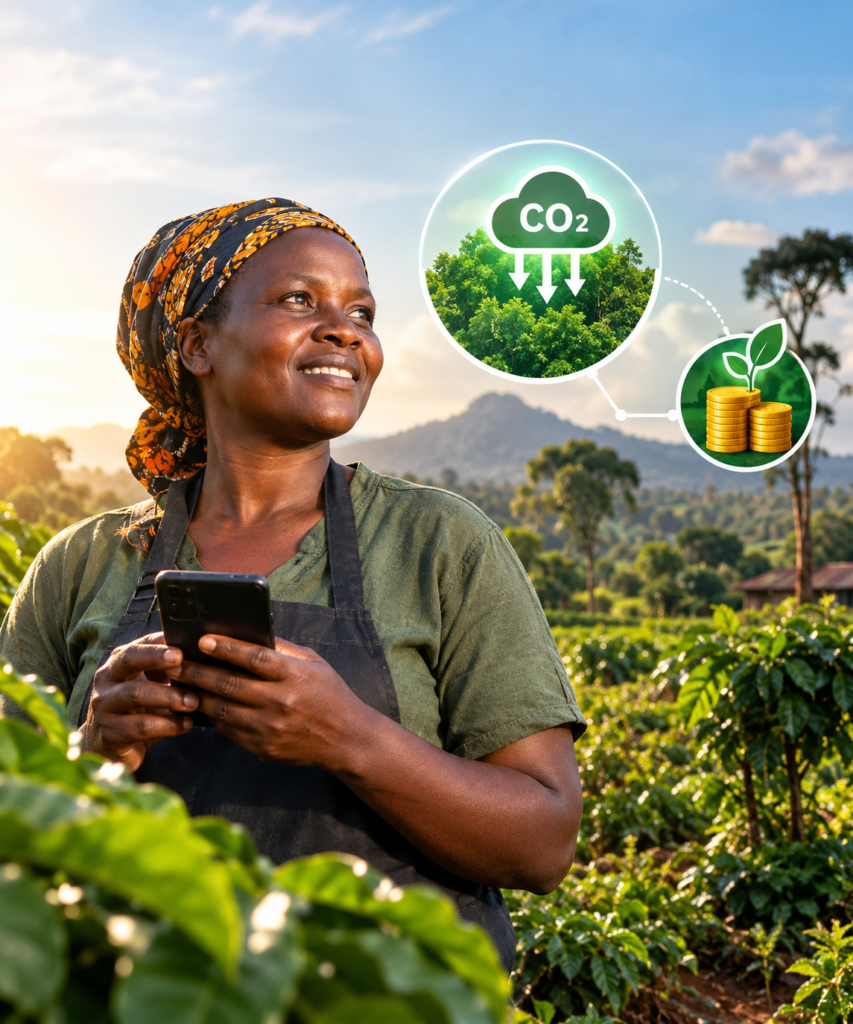
The significance of carbon markets extends beyond the sale of credits. For farmers, carbon projects can create additional income streams through sustainable agricultural practices and improved land management. For businesses, they can support climate strategies and strengthen competitiveness in a global economy increasingly shaped by environmental expectations. For financial institutions, carbon markets represent a growing opportunity to develop climate finance solutions linked to sustainability and resilience.
This is why carbon markets are becoming an important part of Africa’s economic conversation. The challenge is ensuring that value remains within African economies and reaches the communities whose landscapes and livelihoods make these markets possible.
Kenya’s new framework provides an important lesson for the region. Natural resources alone do not create a successful carbon market. What matters is the ability to build trust, establish credible systems and create investment-ready projects that deliver real climate impact.
Africa’s climate story has often been defined by vulnerability: droughts, floods and the growing pressure of a changing environment. Carbon markets offer a different possibility. They provide an opportunity for the continent to transform its environmental assets into sources of sustainable finance and economic growth.
The next major resource opportunity may not be found beneath Africa’s soil, but in the carbon stored within its forests, farms and ecosystems. The question now is whether African countries can build the systems needed to capture that value on their own terms.