Nearly UGX 200 billion mobilised from more than 130,000 savers is an impressive start for NSSF’s Smartlife Flexi. But another number may matter even more: 97% of those savers are using mobile money. As NSSF renews its partnership with Airtel Money, the question is shifting from whether Ugandans will embrace digital saving to how cheaply and widely it can be scaled.
Ugandans have accumulated nearly UGX 200 billion through the National Social Security Fund’s Smartlife Flexi product, an extraordinary acceleration for a voluntary savings scheme launched less than two years ago.
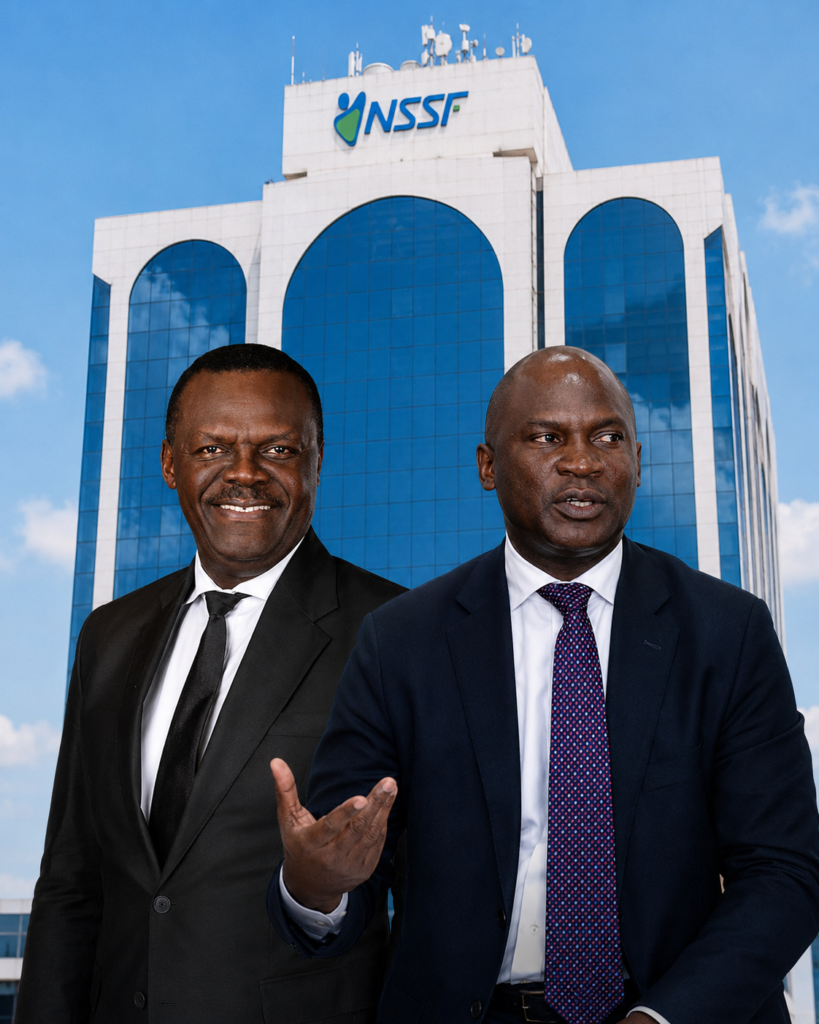
More than 130,000 people have signed up to the product, according to figures shared by NSSF Deputy Managing Director Gerald Paul Kasaato, but the number that perhaps says more about where Uganda’s savings market is heading is 97%.
That is the proportion of Smartlife Flexi savers who are putting money aside through mobile money. NSSF has also paid out more than UGX 50 billion since the product was introduced, with 92% of those payments going through mobile money accounts.
Those numbers put the mobile phone firmly at the centre of NSSF’s push beyond the traditional employer-and-payroll model of social security.
Speaking at the launch of the Fund’s renewed partnership with Airtel Money, Kasaato said transaction costs have remained one of the barriers for people using voluntary savings products, and that the collaboration should make it easier and cheaper for members to save.
“We believe that this partnership has actually come in handy to reduce the transactional costs,” Kasaato said.
That acknowledgement is significant. If 97% of Smartlife Flexi customers are accessing the product through mobile money, the cost of moving money is no longer peripheral to the savings proposition. It becomes part of the economics of saving itself.
This matters particularly for people putting aside relatively small amounts. A transaction charge that appears negligible on a large transfer can look very different to someone trying to build a habit of saving small amounts every few days or weeks.
NSSF appears to recognise that reality. Kasaato said the minimum Smartlife Flexi contribution has now been reduced from UGX 5,000 to UGX 500 following feedback that the previous threshold remained too high for some potential savers.
The combination of lower entry amounts, reduced transaction friction and the reach of mobile money could prove particularly important in Uganda’s informal economy, where income rarely arrives in the predictable monthly cycle familiar to salaried workers.
A trader may save after a good day’s business. A farmer may contribute when produce is sold. A boda boda rider may put something aside after a strong week. A self-employed professional may save when a client pays.
For them, flexibility is not simply a product feature. It reflects how they earn.
NSSF Managing Director Patrick Ayota made that point as Smartlife Flexi was beginning to gain traction in March 2025, when savings under the product had just crossed UGX 5 billion.
“The characteristics and needs of the informal sector are unique and different from those of a typical formal saver,” Ayota said at the time.
NSSF’s analysis then showed that about 70% of Smartlife Flexi customers were micro-savers, mostly from the informal sector, while about half identified business as the source of their savings.
The growth since then is striking. Smartlife Flexi crossed UGX 5 billion just three months after launch. NSSF’s 2025 Integrated Report subsequently put savings at UGX 17.2 billion during the product’s first months. Today, the figure is approaching UGX 200 billion.
But rapid growth also raises a more difficult question: how does NSSF turn an encouraging base of early adopters into millions of consistent savers?
That challenge predates Smartlife Flexi. Research undertaken by NSSF in 2021 found that 60% of its members felt they were not saving enough and wanted more voluntary savings options. Members were also looking for products that could help them meet goals beyond retirement, including education, healthcare and raising capital to start a business.
Smartlife Flexi emerged partly in response to those findings and was launched in November 2024 following changes to the NSSF legal framework that allowed the Fund to expand voluntary savings.
The product is also part of a much larger ambition. NSSF wants to extend social security coverage to at least 50% of Uganda’s working population by 2035.
Getting there will require reaching far beyond conventional formal employment.
Uganda has already made considerable progress in financial inclusion, but how people use financial services remains important. FinScope Uganda 2023 found that informal savings mechanisms continued to dominate despite rising access to financial services. Only two in every ten Ugandans surveyed said they had ever saved electronically.
That makes the 97% mobile money usage among Smartlife Flexi savers particularly noteworthy.
It suggests that when a formal savings product is designed around infrastructure people already use, digital adoption can move remarkably quickly.
The wider significance has not been lost on Uganda’s monetary authorities. Speaking at the launch of the Okusevinga money market unit trust pilot in December 2025, Bank of Uganda Governor Michael Atingi-Ego described mobile money’s reach as representing “not just payments infrastructure, but untapped savings potential.”
His argument was that Uganda had already done much of the work of democratising transactions; the next task was connecting that infrastructure to savings and investment opportunities.
Smartlife Flexi offers an early glimpse of what that transition can look like. Mobile money is no longer only moving money between people, paying utility bills or facilitating purchases. Increasingly, it is becoming the infrastructure through which financial institutions can reach customers who may never regularly walk into a banking hall or NSSF branch.
For Airtel Money, that creates an opportunity to move further along the financial-services value chain.
Hope Ekudu, Airtel Money’s Head of Operations, said at the launch that financial inclusion must go beyond payments and create opportunities for people to plan, save and build their financial futures.
The renewed partnership therefore makes strategic sense for both institutions. Airtel Money brings distribution and an interface already familiar to millions of Ugandans; NSSF brings a regulated savings product, institutional credibility and the ability to aggregate thousands of relatively small contributions into long-term capital.
Yet convenience alone will not settle the question. The next test is whether customers save consistently, whether the economics of small transactions make frequent saving worthwhile, and whether NSSF can convert growing awareness into a durable savings habit among millions of Ugandans.
Mobilising nearly UGX 200 billion is an important milestone. But mobilisation is not the same thing as mass participation.
More than 130,000 savers represents meaningful traction. Against the potential market across Uganda’s formal and informal workforce, however, it also shows how much ground remains uncovered.
That is why Kasaato’s focus on transaction costs may ultimately be more consequential than the headline number announced at the Airtel Money partnership launch.
The first phase of the Smartlife story has demonstrated that Ugandans will use a flexible, digitally accessible savings product.
The next phase must prove that it can become affordable and habitual enough to reach people at scale.
Uganda has spent the past decade putting a financial transaction platform into millions of pockets. The opportunity now is to turn some of those transactions into savings.
If 97% of Smartlife Flexi’s customers are any indication, that transition has already begun.