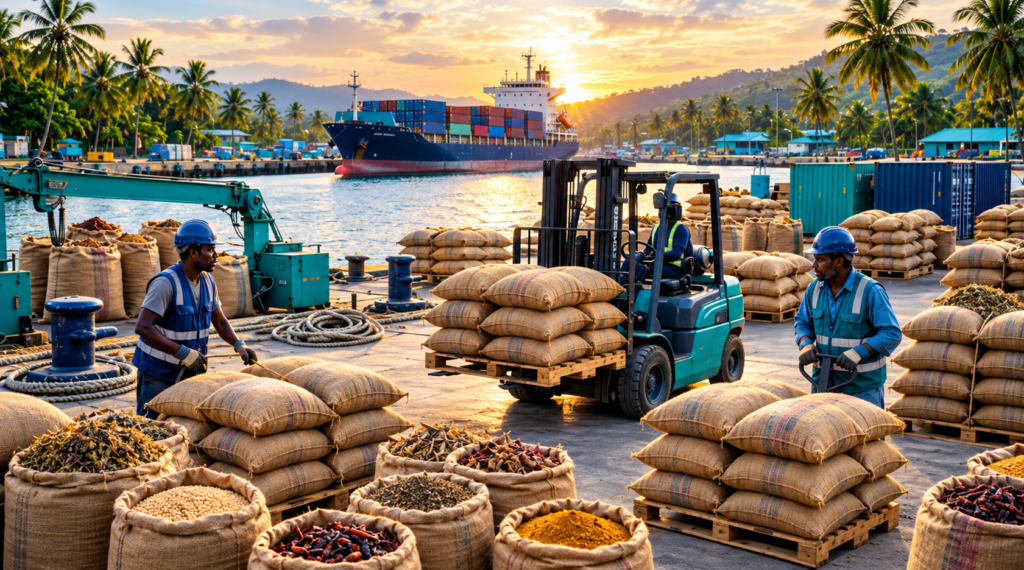
Every morning, Uganda exports wealth it never fully keeps.
In the hills of Ntungamo, a coffee farmer harvests beans that will eventually sell in European supermarkets for nearly twenty times what she earns. Uganda grows the coffee. Europe roasts it. Foreign brands package it. Foreign retailers profit from it. The farmer carries the risk, but someone else owns the value.
And after decades of exporting raw agricultural commodities, Uganda is beginning to confront a difficult national question: is the country feeding the world while remaining trapped at the bottom of the value chain?
Uganda is, by almost every agricultural measure, a continental powerhouse. It is Africa’s largest coffee exporter, supported by fertile soils and an equatorial climate that sustain one of the richest agricultural ecosystems on the continent. Agriculture contributes approximately 26.5 percent of GDP, generates nearly 36 percent of export earnings, and employs close to 70 percent of the working population.
Yet despite these advantages, Uganda captures only a fraction of the real value created from its agricultural products.
The numbers tell the story clearly.
Uganda exported a record 8.8 million 60-kilogram bags of coffee worth approximately $2.5 billion in the twelve months to February 2026, representing a 61 percent increase in export value. But less than 6 percent of that coffee is processed domestically before export. Most of it leaves Uganda as green beans, while the roasting, branding, packaging, and retail profits are captured abroad.
By the time Ugandan coffee reaches shelves in London, Hamburg, Dubai, or Shanghai, its value has multiplied dramatically. A kilogram of green coffee exported from Kampala at roughly $2 to $4 can retail for between $40 and $80 once transformed into branded consumer products overseas. Uganda grows the commodity. Someone else owns the consumer relationship.
And coffee is only one example.
Across western Uganda, tonnes of mangoes, pineapples, and passion fruits spoil during peak harvest seasons because of limited cold storage, weak transport systems, and inadequate processing capacity. Post-harvest losses in some agricultural categories range between 25 and 40 percent of total production. Meanwhile, aflatoxin contamination continues to cost Uganda millions of dollars annually in lost export opportunities, especially in premium international markets where food safety standards are increasingly strict.
Economists describe this as the “commodity trap” — a structural cycle where developing economies export raw materials cheaply while importing finished products at far higher prices.
But increasingly, this is no longer just an agriculture story. It is an industrialisation story, an infrastructure story, a financing story, a trade story, and ultimately, a national competitiveness story.
Because the most profitable part of modern agriculture is no longer simply farming. It is processing, logistics, branding, packaging, market access, and ownership of the final consumer.
And that is where Uganda continues to struggle.
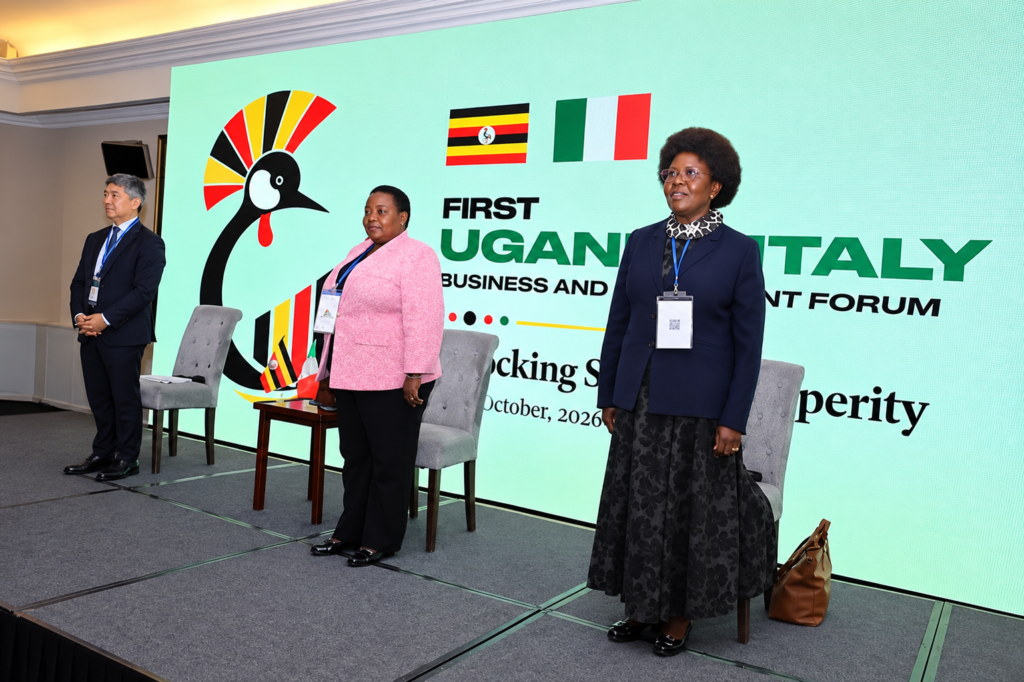
For decades, Europe has remained Uganda’s dominant coffee destination, accounting for nearly 67 percent of exports, with Italy alone taking approximately 39 percent of shipments. While these markets remain important, they also reinforce Uganda’s long-standing dependence on exporting raw agricultural commodities instead of finished products.
The constraints are well known: limited agro-processing infrastructure, high electricity costs, weak rural roads, limited industrial financing, expensive cold-chain logistics, compliance challenges with international sanitary standards, and insufficient investment in value-addition ecosystems. Together, they make it easier to export raw produce than to transform it locally.
But the pressure to change direction is growing.
In April 2025, President Yoweri Museveni announced a ban on the export of raw agricultural products, signalling growing frustration with Uganda’s continued position at the bottom of global value chains. The government has since intensified its push toward agro-industrialisation, allocating approximately UGX 1.878 trillion in the FY 2024/25 budget toward the sector.
At the same time, Uganda is aggressively diversifying its export markets. Coffee exports to China have grown significantly in recent years, while Uganda-China bilateral trade reached approximately $2.1 billion last year, reflecting Kampala’s broader effort to reduce dependence on traditional European destinations.
Yet policy ambition alone will not solve the problem.
Banning raw exports without first building sufficient processing capacity risks creating pressure on farmers before the industrial ecosystem is ready. The coffee sector alone is estimated to require nearly $2 billion in processing, logistics, and industrial investment if Uganda is to achieve its long-term export ambitions.
The opportunity, however, may be larger than ever before.
The African Continental Free Trade Area has created a single African market of approximately 1.4 billion people by progressively eliminating tariffs on up to 90 percent of goods traded across member states. For Uganda, this changes the equation.
For decades, exporting processed goods across Africa was often expensive and uncompetitive because of tariffs and fragmented trade systems. AfCFTA now creates the possibility for Uganda to export instant coffee instead of green beans, packaged dairy products instead of raw milk, fruit concentrates instead of fresh produce, and finished agricultural brands instead of bulk commodities.
But AfCFTA will not reward potential. It will reward preparedness.
Countries such as Kenya, Ethiopia, Rwanda, and Morocco are already positioning aggressively around industrial manufacturing, agro-processing, logistics, and export competitiveness.
Uganda has the agricultural base, the climate, the labour force, and the land. What it still lacks is the full industrial ecosystem capable of transforming agricultural abundance into long-term national wealth.
Back in Ntungamo, the farmer already understands the mathematics better than most economists. She/he knows what she/he earns per kilogram. She/he knows what the final product sells for abroad. She understands the difference between growing value and keeping value.
And across Uganda’s agricultural economy, millions of farmers face the same reality every season.
The land is here. The labour is here. The product is here.
What remains missing is the chain of infrastructure, industrial investment, financing, logistics, technology, and policy execution needed to transform Uganda from a producer of raw commodities into a producer of finished value.
Because in the modern global economy, countries do not become wealthy simply by growing commodities.
They become wealthy by transforming them.
And Uganda’s next economic chapter may depend on whether it finally learns to keep more of the value it creates.