For more than a century, Pan-Africanism gave Africa a powerful political idea: that the continent was stronger when Africans stood together. From the anti-colonial struggle to the creation of the Organisation of African Unity and later the African Union, the idea of African unity became part of the continent’s political vocabulary.
But Africa now faces a different question. Can political solidarity become economic capability?
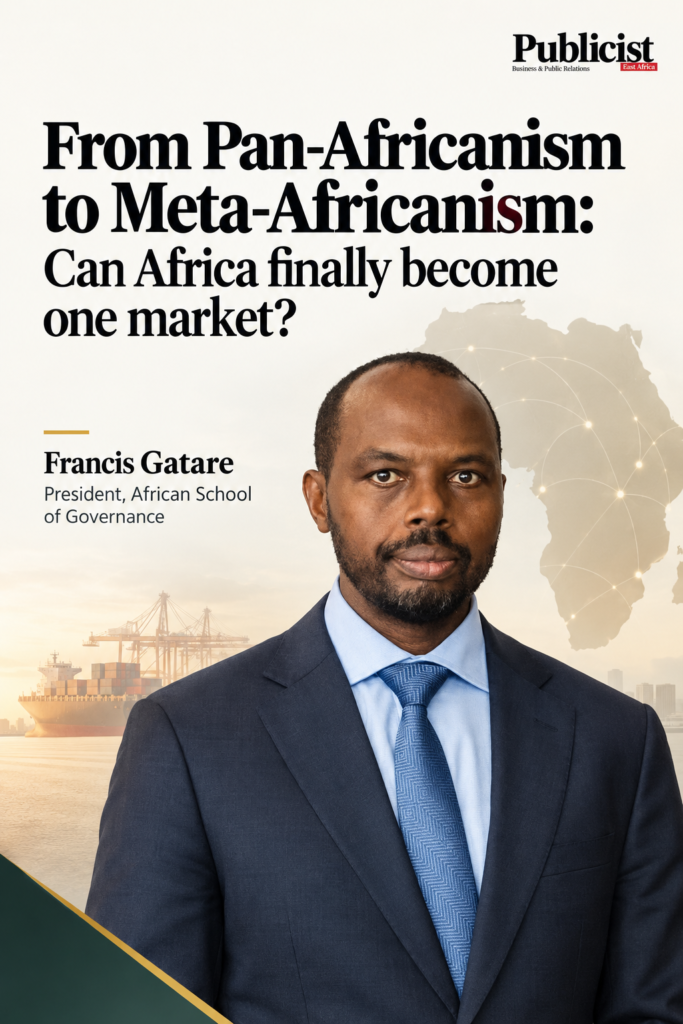
That question was placed at the centre of the inaugural Africa Mindset Reset Forum held in Kigali on August 25–26, where the African School of Governance put forward “Meta-Africanism” as a proposed next phase of Pan-African thinking. Francis Gatare, president of the African School of Governance, described it as an evolution of Pan-Africanism, moving Africa beyond political solidarity towards collective action, stronger institutions and execution.
The idea is still new, and there is no single universally accepted definition of Meta-Africanism. But the argument emerging from Kigali is clear enough: Africa should move from simply imagining unity to building the systems that allow Africans to operate at continental scale.
That makes the idea particularly relevant to one of Africa’s oldest unresolved ambitions: creating a genuinely integrated market.
The continent has already built much of the institutional architecture. The African Continental Free Trade Area is intended to create a single market covering 54 countries and a combined economic space worth more than $3.4 trillion. By late 2025, 50 countries had ratified the agreement. Yet signing and ratifying an agreement is very different from making a market work in practice.
The gap is visible in the numbers. Intra-African trade accounted for only about 16 percent of Africa’s total trade in 2022, compared with 68 percent in Europe and 59 percent in Asia. Most African trade still takes place with countries outside the continent.
This is the paradox at the heart of African integration. Africa has a continental market on paper, but its economies still behave largely as neighbouring markets rather than parts of one economic system.
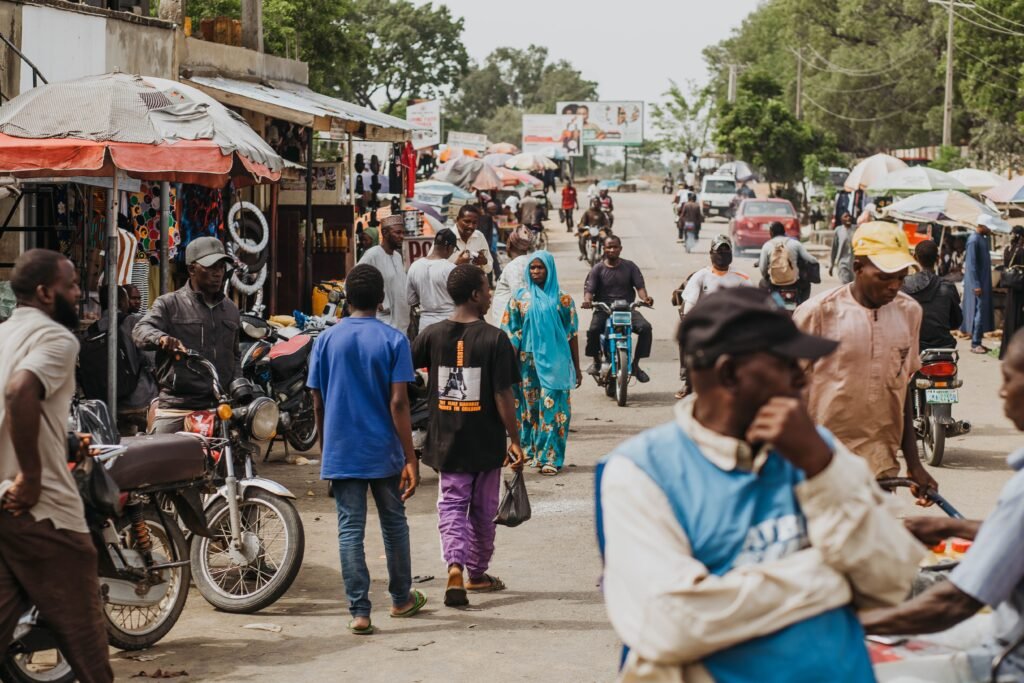
A business in Kampala may see Nairobi as a nearby market, yet expanding there can still involve different regulations, standards, licensing requirements, taxes, currencies and administrative systems. A manufacturer may have customers only a few hundred kilometres away while finding it easier to sell outside Africa than across a neighbouring border.
Africa has built institutions for unity faster than it has built systems that make unity work.
That is precisely where the Meta-Africanism argument becomes more interesting than simply another call for African unity. It asks what infrastructure, institutions and capabilities are required for unity to become economically useful.
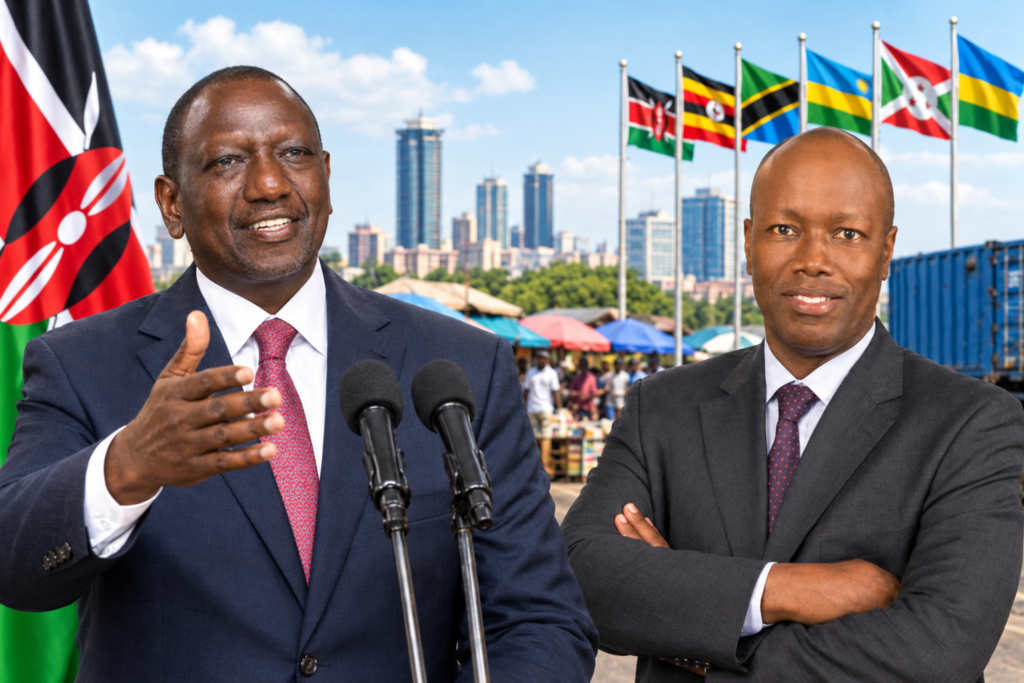
Some of that infrastructure is already emerging. The Pan-African Payment and Settlement System, or PAPSS, is attempting to solve one of the continent’s most persistent problems: how African businesses pay each other across borders. PAPSS allows participating businesses and individuals to make cross-border payments in local currencies, reducing the need to route transactions through third-country currencies and correspondent banks outside Africa. By 2025, the system had connected more than 150 commercial banks, while its expansion included Kenya and Rwanda.
The significance goes beyond payments. A market cannot become genuinely integrated if money cannot move efficiently within it.
The same principle applies to infrastructure, customs, standards and regulation. AfCFTA can remove tariffs, but businesses still need roads, railways, ports, reliable electricity, digital connectivity and predictable rules to take advantage of those tariff preferences. UNCTAD estimates that full implementation of AfCFTA could create a $3.4 trillion market, but says unlocking that opportunity will require investment in transport, energy and ICT networks alongside reforms to customs and trade processes.
There is therefore a difference between removing a border on paper and making the border economically invisible.
For an African entrepreneur, integration becomes real when a customer in another country can buy a product without excessive friction, when payment arrives quickly, when the product can cross the border predictably and when the business can operate under rules that it can understand and afford to comply with.
That also raises a more difficult political question. African governments increasingly want continental integration, but they remain responsible for protecting domestic jobs, businesses and political interests. The recent tensions over foreign traders and restrictions on certain economic activities show how quickly national interests can collide with the promise of an integrated African market.
This is not simply a contradiction to be dismissed. Governments have legitimate reasons to protect vulnerable domestic sectors. But if every country responds to domestic pressure by closing parts of its economy to its neighbours, the continental market will remain fragmented.
The challenge for Meta-Africanism, therefore, is not to abolish national interests. It is to make national prosperity increasingly compatible with continental prosperity.
That requires a different understanding of scale. Uganda does not need to choose between Ugandan businesses and an African market. Kenya does not have to choose between Kenyan industry and regional trade. Nigeria does not have to choose between domestic enterprise and continental expansion. The larger opportunity is to create African companies that begin at home but can grow across African markets.
This is where AfCFTA, PAPSS and emerging regional value chains become more than policy instruments. They are pieces of the infrastructure required to turn African economic proximity into economic integration.
And the prize is considerable. Africa has one of the world’s largest concentrations of young people, substantial agricultural potential, critical minerals, growing consumer markets and rapidly expanding digital economies. Yet individual African countries often lack the market size needed to develop competitive industries at scale.
A continental market changes that equation. It allows a manufacturer to think beyond the population of one country. It gives technology companies a larger customer base. It gives farmers access to more buyers. It gives African investors more opportunities to deploy capital within the continent. And it gives African governments a stronger collective position in global trade and investment negotiations.
But none of this happens automatically. Meta-Africanism will ultimately have to be judged by what it produces. If it remains a language for conferences, speeches and social media posts, it will simply add another attractive phrase to Africa’s political vocabulary. If it helps drive practical reforms in trade, infrastructure, payments, technology, education and capital, it could represent something more consequential.
Pan-Africanism gave Africa the political imagination of unity. Meta-Africanism, as currently framed, asks whether Africans can build the economic and institutional capability to make that unity useful.
The distinction matters because Africa does not lack continental institutions. It lacks sufficient continental execution.
The African Union exists. Regional economic communities exist. AfCFTA exists. PAPSS exists. What remains is the harder work of connecting these systems so that integration becomes something businesses, workers, investors and consumers experience in their daily economic lives.
The ultimate test is therefore simple.
Can an entrepreneur in Kampala build a company that grows naturally into Nairobi, Kigali or Lagos? Can African capital finance African businesses across borders? Can a manufacturer source components from another African country without facing unnecessary administrative barriers? Can an African consumer travel, work, pay and do business across the continent with fewer restrictions?
If the answer gradually becomes yes, then Meta-Africanism will have moved beyond an idea. It will have become an operating system for a more integrated Africa. Pan-Africanism gave Africa the dream of unity. The next phase must make that unity productive. The goal is not simply Africans standing together, but Africans building together.