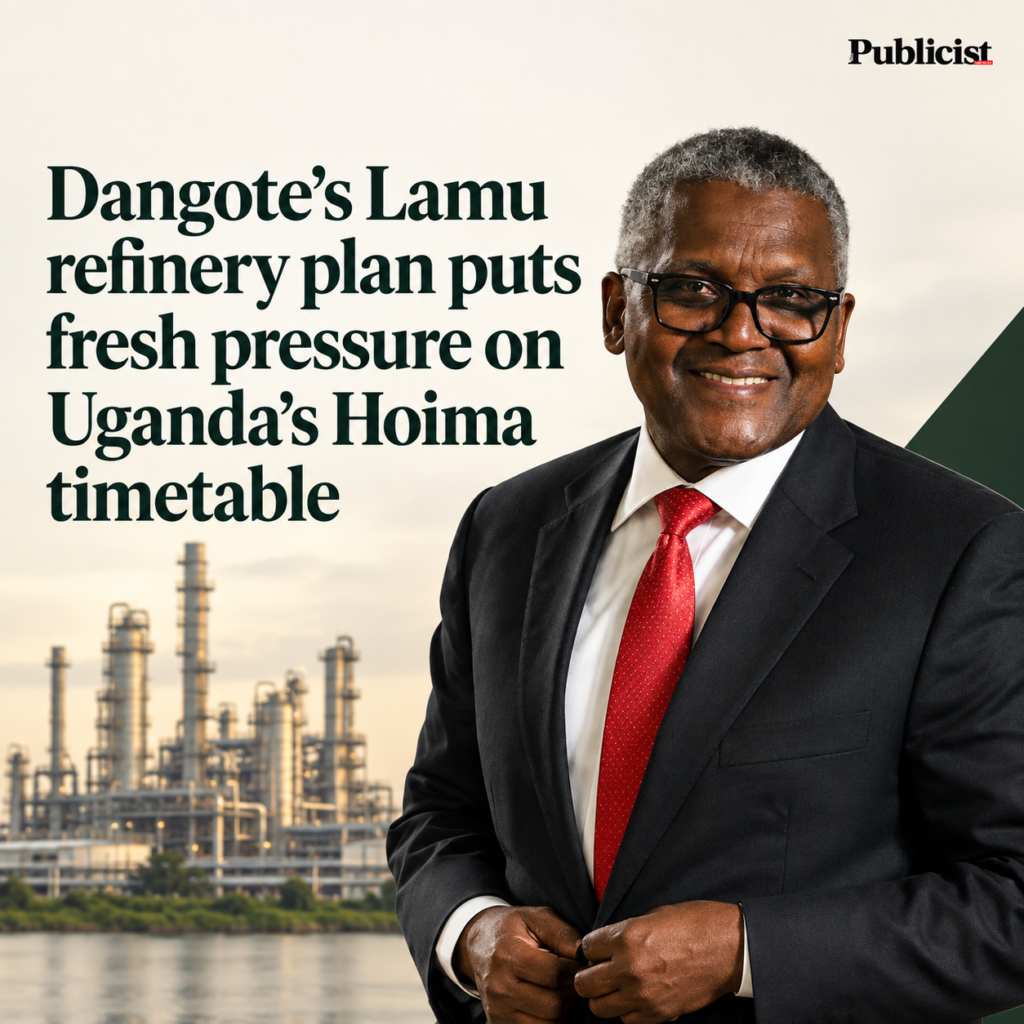

Aliko Dangote is betting that East Africa can become a major refining market. His proposed 700,000-barrel-per-day refinery in Lamu, Kenya, could become one of the region’s biggest industrial investments. But before the plant can turn crude into fuel, it must answer a more basic question: where will all that crude come from?
Dangote Industries plans to break ground on the refinery on September 30 and hopes to have it completed by 2030. The project is expected to cost between $15 billion and $16 billion and, at 700,000 barrels per day, would become East Africa’s largest refinery.
The scale is striking because Kenya currently has no commercial-scale crude production. That immediately puts feedstock at the centre of the project’s economics.
Kenyan officials have suggested that the refinery could potentially source as much as 600,000 barrels of crude a day from East Africa, including Uganda, South Sudan and Kenya. But each option comes with complications. Kenya is not yet producing commercial quantities. South Sudan has crude but its export system remains vulnerable to insecurity and disruption. Uganda has the most immediate production potential, but its crude already has an export route.
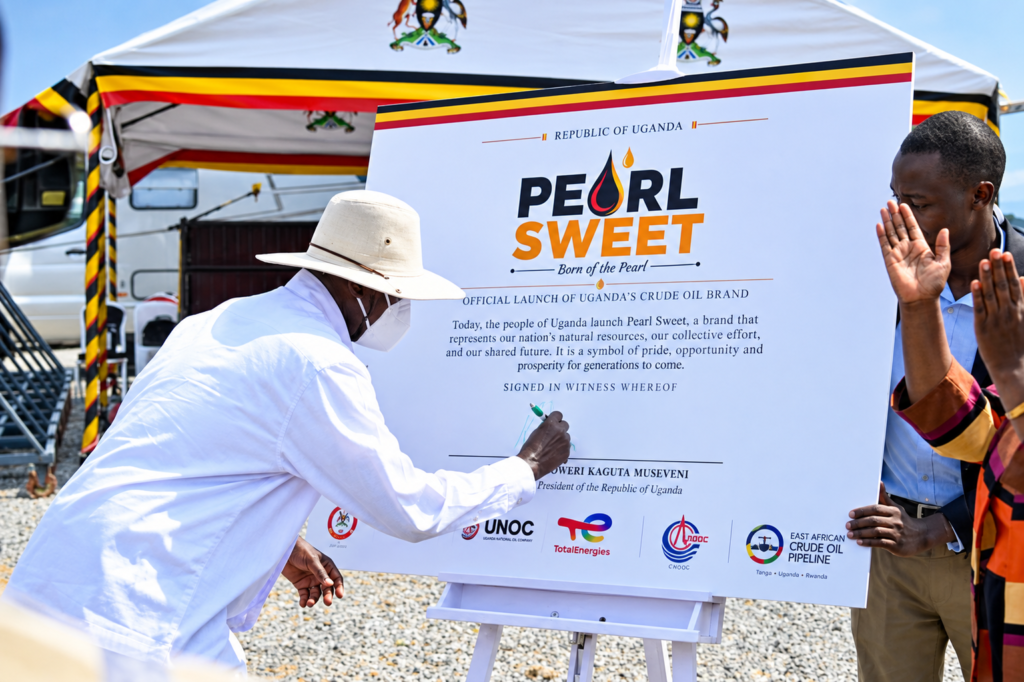
Uganda is preparing to begin commercial production by the end of 2026. Its crude has now been named Pearl Sweet, with recoverable reserves estimated at about 1.65 billion barrels and peak production expected at roughly 230,000 barrels per day.
The challenge is geography and infrastructure.
Uganda’s crude is being developed around an export system centred on the 1,443-kilometre East African Crude Oil Pipeline, which will transport Pearl Sweet from the Albertine region to Tanga on Tanzania’s Indian Ocean coast. The pipeline is designed to carry Uganda’s waxy crude to international markets.
So the region is approaching an unusual situation. Uganda is preparing to produce crude and move it east through Tanzania, while Kenya is preparing to build a giant refinery on its northern coast that will need hundreds of thousands of barrels of crude every day.
That raises a much bigger question than whether Uganda can sell oil to Dangote.
Why is East Africa still exporting crude and importing refined petroleum when it has the resources and market to build a regional energy value chain?
Uganda itself is planning a 60,000-barrel-per-day refinery at Kabaale in Hoima. The government says the refinery is intended to supply petroleum products to Uganda and regional markets, while EACOP provides an export route for crude. Uganda’s own petroleum strategy therefore already envisages both domestic refining and crude exports.
Lamu, however, would operate at a completely different scale. At 700,000 barrels per day, Dangote’s proposed refinery would have more than 11 times the planned capacity of Uganda’s Hoima refinery. It is not simply a Kenyan project sized for Kenyan consumption. Its economics depend on access to a much larger regional market.
That market exists. Kenya, Uganda, Tanzania, Rwanda and other East African economies remain heavily dependent on imported petroleum products. The East African has reported that countries in the region collectively spend about $700 million a month on refined petroleum products, including liquefied petroleum gas.
The attraction for Kenya is particularly clear. A large refinery could allow the country to capture more value from petroleum processing while strengthening Lamu as an energy and logistics hub. But the refinery will still need crude, and sourcing it locally at the required scale is far from straightforward.
That is why Uganda matters. Pearl Sweet will not automatically become feedstock for Lamu. Uganda has already invested heavily in EACOP and has commercial arrangements and infrastructure built around exporting its crude through Tanzania. Redirecting significant volumes towards Kenya would therefore require more than a buyer and a pipeline connection. It would involve commercial agreements, transportation infrastructure and a rethink of how the region’s crude moves to market.
There is also the question of whether the two refineries should even be viewed as competitors.
Uganda’s 60,000-barrel-per-day plant is intended to address domestic and regional petroleum-product demand, while Lamu’s 700,000-barrel-per-day facility is being positioned as a much larger regional refining hub. In theory, the two could form part of a wider system in which crude is produced in Uganda and South Sudan, refined at different regional facilities and moved across East African markets.
But that would require governments to coordinate infrastructure rather than develop it as separate national projects.
The timing makes the issue even more significant. On September 9, Brent crude settled above $100 a barrel as escalating conflict in the Middle East disrupted global oil flows and heightened concerns about vulnerable shipping routes.
For an East African economy that imports most of its refined petroleum, shocks like this quickly become domestic economic problems. Transport costs rise. Inflationary pressure increases. Businesses face higher operating costs. Consumers eventually pay more.
Regional refining cannot eliminate exposure to global oil prices, but it can change where value is captured and potentially reduce some of the logistical vulnerabilities associated with importing finished products from distant markets.
That is the strategic opportunity behind Lamu.
But it is also the project’s central vulnerability. A refinery of 700,000 barrels per day needs a reliable and competitively priced supply of crude. If regional crude cannot reach Lamu economically, the refinery may have to rely heavily on seaborne imports, leaving it exposed to the same international shipping and geopolitical risks it is partly intended to help the region manage. Reuters has identified crude supply as one of the project’s major challenges.
For Uganda, this creates an important choice.
Pearl Sweet could primarily move through EACOP to Tanga and into international markets. Uganda could refine a portion of its crude in Hoima and export the remainder. Or, over time, its crude could become part of a broader East African energy system stretching from the Albertine Graben to Hoima, Tanga, Lamu and the region’s major consumer markets.
The answer will depend on economics as much as politics. Crude will flow towards the infrastructure and markets that offer producers and refiners the strongest commercial case.
Dangote’s Lamu bet therefore exposes a contradiction at the heart of East Africa’s oil economy. The region is developing crude production, pipelines, ports and refineries, yet these projects are still largely being planned through national lenses.
Uganda has crude. Tanzania has the export corridor. Kenya has a large petroleum market, a deep-water port and now a proposed 700,000-barrel-per-day refinery. South Sudan has substantial oil resources but faces major logistical constraints.
The pieces are there. What is missing is the regional architecture to connect them.
If Lamu succeeds, it could become more than Kenya’s refinery. It could become a test of whether East Africa can finally build an integrated petroleum value chain in which crude produced in the region feeds industries and markets within the region.
For Uganda, that makes the question especially important: will Pearl Sweet simply pass through Tanzania on its way to the global market, or can Uganda’s crude become part of an East African industrial economy stretching from Hoima to Tanga, Lamu and beyond? Dangote’s bet on Lamu may force the region to answer that question.