Uganda Airlines is approaching a defining stage in its recovery. After years of government investment, expanding its network and overcoming operational challenges, the national carrier is working towards a more difficult milestone: building an airline that can finance its operations, manage its costs and eventually generate profits without depending on repeated government support.
The ambition is significant. On November 2, 2026, Chief Executive Officer Girma Wake told Uganda Broadcasting Corporation (UBC) that the airline is targeting annual revenues of between $400 million and $500 million by 2030. Management expects to break even by 2031, supported by annual passenger traffic growth of between 12 and 15 per cent. These are ambitious targets, but the airline’s financial position shows how much work remains.
The Auditor General’s report for the 2024/25 financial year recorded a net loss of approximately Shs230.8 billion, compared with Shs231.58 billion in the previous year. Revenue grew by 19.2 per cent, yet the reduction in losses was only about Shs768 million. Trade and other payables also increased to approximately Shs235.7 billion by June 2025, from Shs171.7 billion a year earlier. The figures show that while the airline is attracting more business, its operating costs and outstanding obligations continue to absorb much of the additional revenue.
The scale of public investment makes the turnaround particularly important. Parliament reported in September 2025 that government had invested approximately Shs1.87 trillion in the airline since its revival. The Public Accounts Committee recognised the carrier’s commercial potential but pointed to the need for greater operational efficiency and strategic investment to turn growing demand into sustainable returns.
For Uganda Airlines, the challenge is no longer simply to establish a national carrier. It is to make the business model work.
Building a commercially viable network
The first step towards financial independence is making the airline’s routes commercially sustainable. Opening new destinations increases market reach, but every route must attract enough passengers and revenue to cover its operating costs.
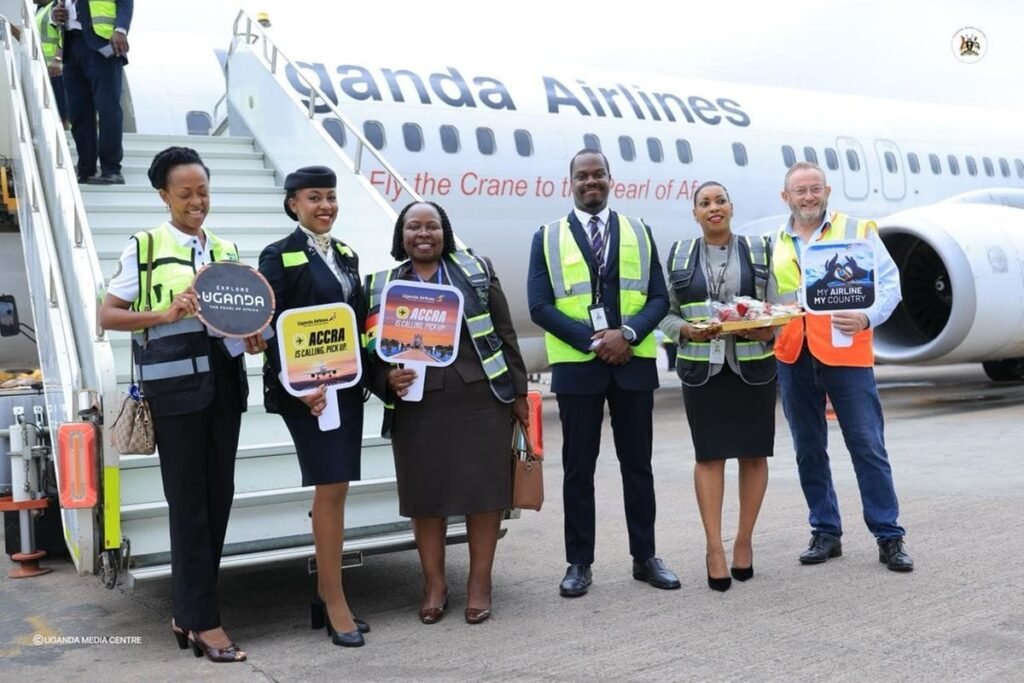
The launch of the Accra service illustrates how management is approaching this challenge. Rather than operate separate flights to Accra and Lagos immediately, Uganda Airlines is combining the two markets on a four-times-weekly service between Entebbe, Lagos and Accra.
The arrangement allows the airline to build passenger volumes across both destinations before committing additional aircraft capacity. Management expects the combined service to operate for about a year to 18 months, depending on demand, before potentially separating the routes and increasing frequencies.
However, attracting passengers between African cities requires more than opening routes. Uganda Airlines must also secure the traffic rights that allow it to carry passengers between destinations outside Uganda.
Ghana has granted the airline fifth-freedom rights to carry passengers between Accra and Lagos, but Nigeria’s approval is still outstanding. Without both countries’ consent, the airline cannot fully use those rights to generate additional revenue.
Wake also said that Uganda’s non-participation in the Single African Air Transport Market (SAATM) has complicated efforts to secure similar rights in other markets. The arrangement is intended to liberalise air transport across Africa, giving airlines greater access to participating countries.
This matters because Entebbe must become more than a departure and arrival point. It needs to function as a regional gateway connecting passengers from African cities to longer international routes.
The airline’s commercial success will depend partly on its ability to build this network without expanding faster than demand can support.
Cargo could provide a stronger revenue base
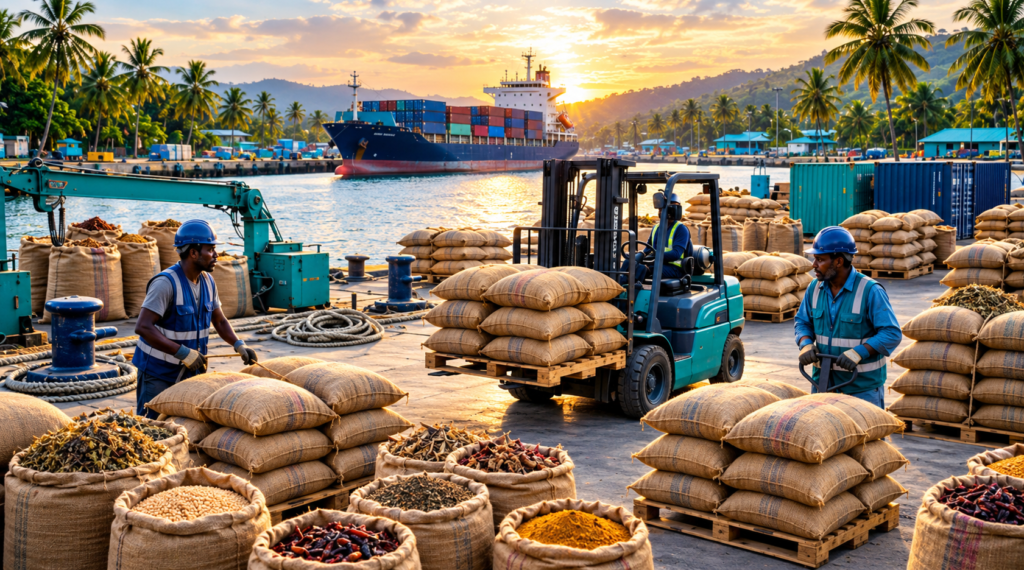
Passenger tickets alone may not deliver the growth required to meet the airline’s financial targets. Cargo offers another revenue stream, particularly given Uganda’s agricultural export potential.
Wake said that the London service carries approximately 17 to 20 tonnes of cargo per flight. The Lagos operation is also carrying between two and three tonnes of dairy products and meat per flight, with management targeting 15 to 20 tonnes daily on the West African corridor as demand develops.
For Ugandan exporters, reliable air connections can improve access to markets where delivery time and product freshness matter. Flowers, fresh produce, fish, dairy and meat could benefit from stronger cargo capacity, provided freight costs remain competitive.
The airline is considering a dedicated freighter once cargo volumes justify the investment. This would allow it to develop cargo as a business in its own right rather than relying mainly on the unused capacity of passenger aircraft.
However, the opportunity depends on building consistent demand. A dedicated freighter would need enough regular cargo to cover fuel, maintenance, crew and other operating costs. The commercial case must therefore be based on actual export volumes and contracted demand, rather than projections alone.
Controlling costs and strengthening operations
Revenue growth will only improve the airline’s financial position if expenditure is brought under control. Aircraft leasing, fuel, engine maintenance, spare parts and ground services all place pressure on operating costs.
Aircraft availability is another challenge. Wake also said that limited fleet capacity has constrained expansion, with the airline relying on leased aircraft while some of its own planes undergo maintenance. Management expects the return of additional aircraft to provide room for more routes and frequencies.
The airline also plans to invest in services it currently obtains from external providers, including catering, passenger lounges, ground handling and aircraft maintenance facilities.
These investments could reduce operating costs while creating opportunities to serve other airlines. A maintenance hangar, for example, could generate additional income if it provides services to other operators.
But building these facilities requires substantial capital. Uganda Airlines must demonstrate that the expected savings and additional revenue will justify the investment, particularly while it continues to report annual losses and outstanding supplier obligations.
The airline’s financial recovery will depend not only on how much it earns, but also on how efficiently it uses its aircraft, staff and other resources.
Public investment must deliver measurable returns
Government remains central to the airline’s future. In July 2026, Finance Minister Henry Musasizi urged the board and management to adopt a private-sector business model and implement reforms that would make the carrier profitable and reliable.
The ministry also reported that Uganda Airlines commanded 27 per cent of the market at Entebbe International Airport, according to its board. That market presence provides a foundation for growth, but market share alone does not demonstrate financial sustainability.
Board chairperson Priscilla Mirembe Serukka has said recapitalisation is necessary to acquire aircraft, meet growing route demand and improve reliability. Such support may be important during the airline’s development, but it also raises questions about how much more public funding will be required and when the carrier can begin financing its growth independently.
The difference between investment and recurring financial support is important. Capital used to acquire productive assets can strengthen an airline’s long-term capacity. However, continued funding to cover operating losses would indicate that the business model has not yet become sustainable.
With substantial public resources invested, the airline must demonstrate progress through transparent financial reporting, improved operational performance and measurable reductions in its dependence on government support.
Turning growth into financial independence
Uganda Airlines has established a presence in the regional market and is expanding its international connections. Its next task is to turn that presence into a financially sustainable operation.
Achieving the 2031 break-even target will depend on whether passenger growth, cargo expansion, better aircraft utilisation and cost management can progress together. The airline must also improve its operational reliability, settle outstanding supplier obligations and ensure that new routes generate sufficient revenue.
For Uganda, the stakes extend beyond the performance of a national carrier. A sustainable airline could strengthen tourism, connect exporters to international markets, support trade and create opportunities across the aviation industry.
But these benefits will be difficult to sustain if the airline continues to depend on repeated public funding to meet its operating costs.
The ambition to become financially independent is a necessary step. The real test will be whether Uganda Airlines can turn its expanding network into consistent earnings, manage its costs and reduce the burden on the public purse.