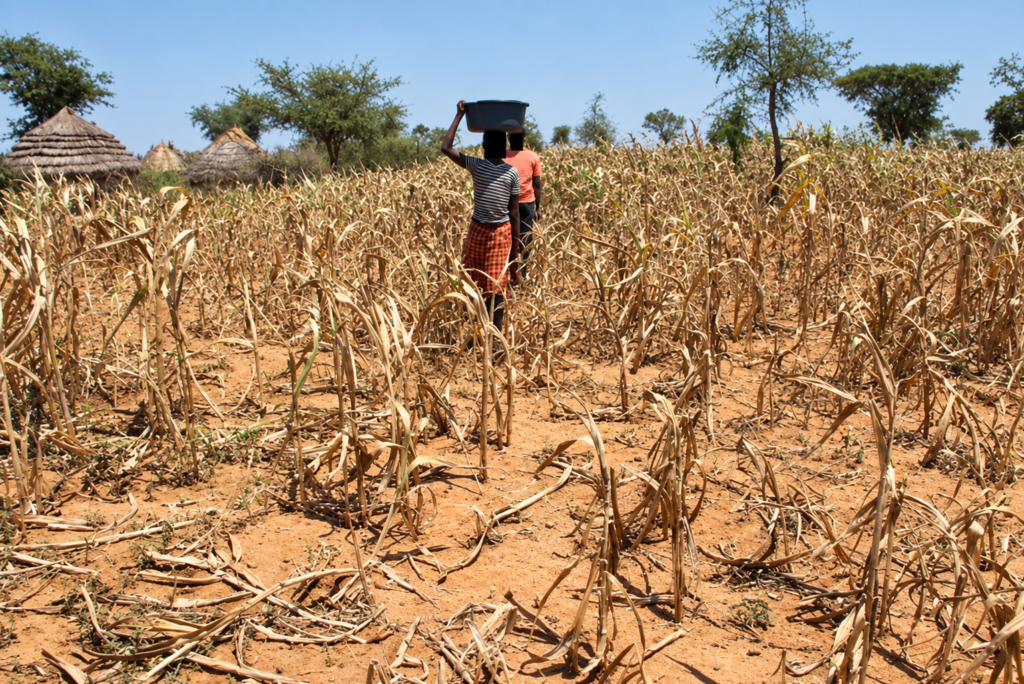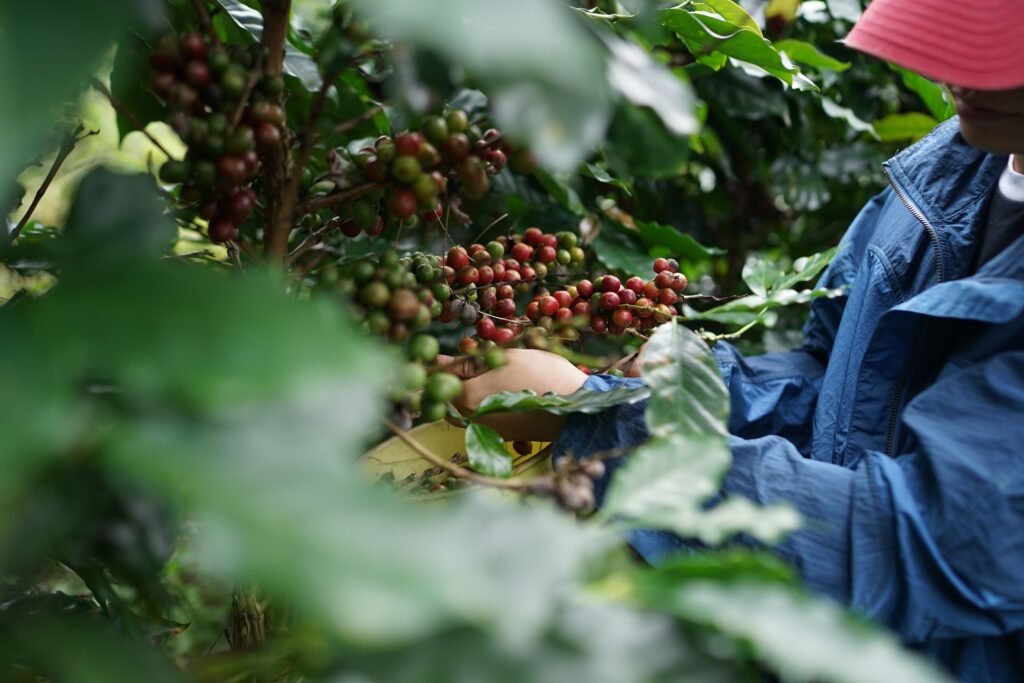
When coffee farmers lose a harvest to drought or unpredictable weather, the damage goes beyond their gardens. Income disappears, loans become harder to repay, and families may struggle to finance the next planting season.
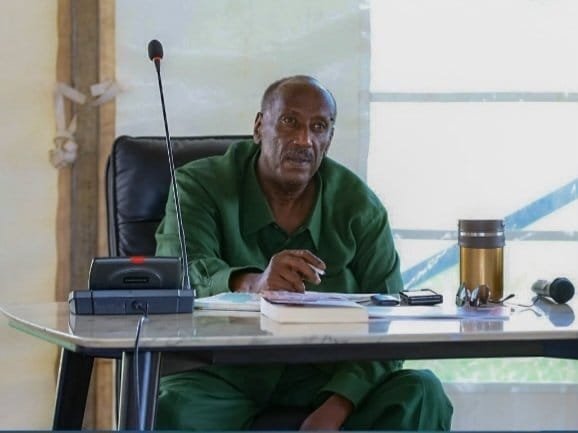
That is the concern behind a petition brought to Gen Salim Saleh, Chief Coordinator of Operation Wealth Creation. Addressing heads of Parliament’s committees at Kapeeka, Nakaseke District, on 30 October 2026, Saleh said coffee farmers whose crops had been damaged by bad weather had approached him.
“I don’t know where to take this petition,” he said.
Saleh named northern Uganda and Masaka among the affected areas. He added: “If there was agriculture insurance then that would have paid them.”
The petition was to be forwarded to a committee chairperson present, with the assurance that it would reach the Speaker and be referred to the relevant committee. But the farmers’ losses raise a broader question: why are growers still exposed when agricultural insurance already exists in Uganda?
The Uganda Agriculture Insurance Scheme was introduced in 2016/17 through a public-private partnership between government and insurance companies. Implemented through the Agro Insurance Consortium under the Uganda Insurers Association, it is designed to protect farmers against financial losses caused by adverse weather, pests, diseases and other disasters.
Government subsidises premiums to make cover more affordable. Small-scale farmers receive a 50 per cent subsidy, large-scale farmers 30 per cent, while farmers in disaster-prone areas can receive an 80 per cent subsidy regardless of farm size. These subsidies reduce the cost of obtaining insurance; they are not direct payments to farmers for crop losses.
Yet the scheme faces a specific challenge: government support is not keeping pace with the number of farmers seeking protection.
The Ministry of Finance’s FY2023/24 monitoring report recorded 37,114 farmers who had applied for agricultural insurance by 31 December 2023. Of these, 35,265 received the government premium subsidy, while 1,849 could not access it because the available funds had been exhausted.
The following financial year, the Ministry’s annual monitoring report recorded 35,947 insured farmers by 30 June 2025, with a combined insured agricultural value of Shs240.757 billion. Claims settled during the period totalled Shs3.478 billion, while government’s subsidy allocation stood at Shs5 billion.
The Ministry also identified inadequate funding for farmer awareness, limited access to weather and climate forecasts, and insufficient extension services as barriers to uptake. It recommended increasing the annual subsidy from Shs5 billion to Shs10 billion to meet growing demand.
The figures point to a system in which public support is limited and demand can exceed available funding. But they do not establish how many coffee farmers affected by the recent dry spell had insurance or whether their losses qualified for compensation.
That distinction matters. A farmer may be unable to obtain subsidised cover, may not know about the scheme or may hold a policy that does not cover a particular loss. The available figures do not establish which of these gaps affected the farmers who petitioned Saleh.
In a Daily Monitor report published on 20 October 2026, John Makosya, an expert at the Agriculture Insurance Consortium, attributed low uptake partly to limited awareness. He said the consortium had intensified efforts to sensitise farmers. Jane Nakaggwa, chairperson of Kabuwoko Multipurpose Cooperative in Masaka, also told the newspaper that many growers were unaware of insurance programmes that could cushion them against climate-related and other shocks.
The Insurance Regulatory Authority has similarly identified awareness and affordability as barriers. In October 2024, it said demand for agricultural insurance subsidies was exceeding available supply, with the annual Shs5 billion allocation intended to help farmers obtain cover at reduced rates.
The challenge is therefore not simply to encourage farmers to buy insurance. Policies must be accessible and clearly explain premiums, covered risks, exclusions and how claims are assessed. Farmers also need to know where to enroll and what happens when a loss occurs.
Insurance can help farmers recover financially, but it cannot reverse physical damage to crops. A coffee tree weakened by prolonged drought may need time, water and additional investment before it produces again. Farmers still need reliable weather information, extension services, irrigation and access to affordable finance.
The Insurance Regulatory Authority has warned that climate shocks can undermine livelihoods, disrupt agricultural value chains and threaten food security. Insurance can help farmers recover and reinvest, but it must be part of a wider response to climate risk rather than a substitute for better farming practices and preparedness.
Saleh’s remarks have brought the issue before Parliament. The next step should be to establish the scale of the losses, determine how many affected farmers had insurance and understand why others were left without cover.
Parliament can examine whether the subsidy is sufficient, how quickly eligible claims are settled and whether farmers in affected regions can access insurance through cooperatives, agricultural officers and insurers. It should also establish how many farmers are excluded when the subsidy runs out and whether the existing scheme adequately covers the risks facing coffee growers.
Uganda has already established a scheme intended to protect farmers against agricultural risks. The task now is to make that protection work in practice.
For coffee farmers, a lost harvest can mean losing a season’s income and the resources needed to begin again. Insurance cannot prevent bad weather, but accessible, adequately funded and well-understood cover can help ensure that one failed season does not become a long-term setback.