
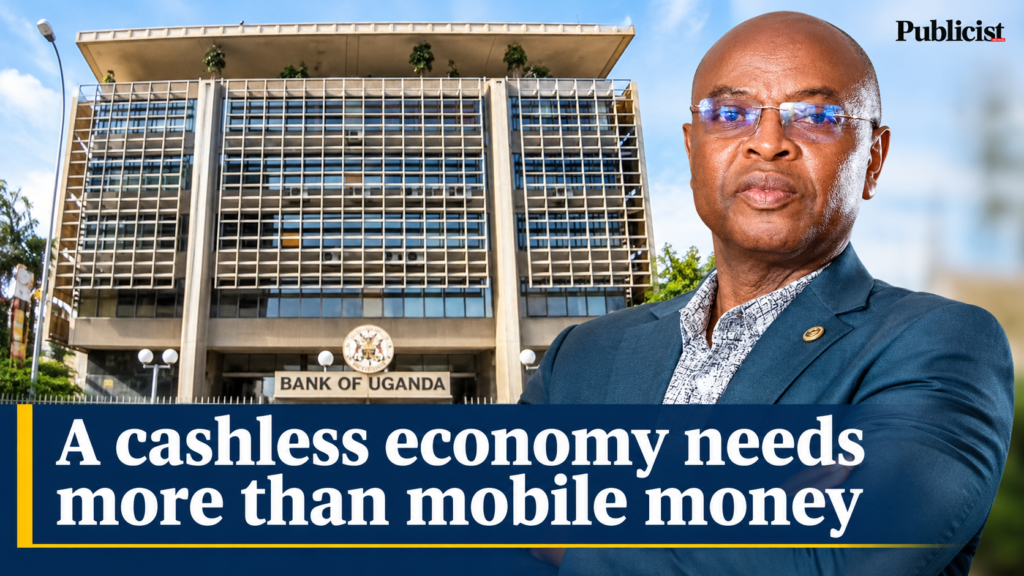
Uganda’s financial system is becoming increasingly digital, but many businesses still depend on cash to serve customers and manage daily transactions. The Bank of Uganda’s latest payment systems upgrade raises an important question: are businesses ready for an economy that increasingly depends on electronic payments?
On November 5, the central bank temporarily suspended its Real-Time Gross Settlement (RTGS) and Automated Clearing House (ACH) services to upgrade the systems. They are scheduled to resume at 9am on November 9.
RTGS handles high-value and time-sensitive transfers between financial institutions, while ACH processes electronic credit transfers, direct debits and cheque clearing. According to reports, RTGS processed 215,831 transactions worth Shs79.6 trillion in May 2026, while ACH handled 1.45 million transactions valued at Shs6.7 trillion in August.
The upgrade is intended to improve the reliability, resilience and interoperability of Uganda’s payment infrastructure. It also supports the East African Community’s plans to improve cross-border payments.
The scale of Uganda’s digital payments growth is significant. In February 2026, Bank of Uganda Deputy Governor Professor Augustus Nuwagaba reported that electronic money transactions increased by 28 percent, from Shs285.9 trillion in 2024 to Shs366 trillion in 2025. Transaction volumes grew by 17.3 percent, from 7.8 billion to 9.1 billion.
Mobile money continued expanding in 2026. According to Bank of Uganda figures reported in October, transactions reached Shs263 trillion in the first seven months of the year, representing 72 percent of the entire 2025 annual value. The transactions numbered 5.8 billion. Registered customers reached 59.8 million in July, although 38 million had been active in the preceding 90 days. The number of mobile money agents also increased to 1.3 million, from 833,000 two years earlier.
These figures demonstrate the growing role of digital finance, although transaction values include deposits, withdrawals, transfers and merchant payments. They should not be mistaken for the value of purchases made electronically.
Despite this growth, cash remains important. Visa executives have estimated that approximately 66 percent of transactions in Uganda are still conducted in cash. Economist Dr Fred Muhumuza has attributed this dependence partly to high transaction charges, unreliable networks and limited interoperability.
“Many Ugandans, especially small traders such as roadside tomato vendors, still prefer cash because mobile money charges remain high,” Muhumuza observed.
The cost of digital transactions is supported by research from Innovations for Poverty Action. Its transaction cost study found that 19 percent of mobile money transactions in Uganda involved overcharging by agents. This demonstrates why affordability and transparent pricing matter when encouraging businesses to adopt electronic payments.
A separate study published by Uganda Christian University in October 2026, involving 323 respondents in Kampala’s informal sector, identified transaction costs, fraud concerns and limited convenience as barriers to mobile merchant payments.
The challenge is particularly important for Uganda’s small businesses. According to the United Nations Capital Development Fund, micro and small enterprises account for almost 90 percent of private-sector firms, employ more than 2.5 million people and contribute approximately 75 percent of GDP.
These businesses need payment solutions that are affordable and easy to use. A large company may have dedicated financial systems, but a market trader or small retailer may depend on a basic mobile phone and a single mobile money account.
Financial inclusion figures also show that access does not automatically translate into effective digital usage. The 2023 FinScope survey found that 81 percent of Ugandan adults were financially included, while formal financial inclusion stood at 68 percent. Government’s National Financial Inclusion Strategy 2023–2028 targets at least 85 percent inclusion by 2028.
For businesses, the benefits of electronic payments include easier record-keeping, reduced cash-handling risks and faster transactions. However, these advantages can be undermined by high charges, network interruptions and fraud.
Professor Nuwagaba has called for faster adoption of secure, inclusive and interoperable digital payment systems to support commerce and economic activity. The emphasis on interoperability is important because businesses should be able to receive payments from different banks and mobile money networks without unnecessary complications.
The temporary shutdown also highlights the need for business continuity arrangements. According to reports, fintech industry representative Zianah Nyiramanza has emphasised the importance of businesses communicating with their banking partners, planning for payment interruptions and keeping customers informed.
Uganda’s digital payment expansion creates opportunities for retailers, manufacturers, farmers and tourism operators. Faster payments can improve supplier relationships, strengthen financial records and make it easier for businesses to serve customers across different markets.
But this requires more than upgrading central payment infrastructure. Banks, telecommunications companies and fintech providers must address transaction costs, improve network reliability and strengthen fraud protection. Businesses also need the skills and systems to verify payments and manage electronic records.
The Bank of Uganda’s latest upgrade is an important step in modernising the financial system. However, the success of Uganda’s cashless ambitions will depend on whether the benefits reach businesses beyond major commercial centres.
A digital economy must work for the manufacturer in Jinja, the retailer in Kampala, the farmer in Mbarara and the market trader in Gulu. Until electronic payments become affordable, reliable and secure for these businesses, cash will remain an important part of Uganda’s commercial life.