
Africa has never lacked ambition. Governments have produced long-term development plans, businesses have announced transformation strategies and regional institutions have created frameworks for trade, industrialisation, technology and investment.
The ambitions are considerable. Uganda has its Tenfold Growth ambition. The African Union has Agenda 2063. The African Continental Free Trade Area (AfCFTA) seeks to create one of the world’s largest single markets. The question is increasingly not whether Africa knows where it wants to go. It is whether Africa can execute.
That question will take centre stage in Kampala when the International Association for Strategy Professionals (IASP) Uganda Chapter and the National Planning Authority (NPA) host the IASP Africa Regional Conference 2026 on October 29–30 under the theme, “Unlocking Strategy Excellence for Africa’s Transformation.”
The conference brings together strategy professionals, policymakers, business leaders, academics and development practitioners. But its most important conversation extends beyond the conference room: why does the distance between an ambitious strategy and a measurable result remain so wide?
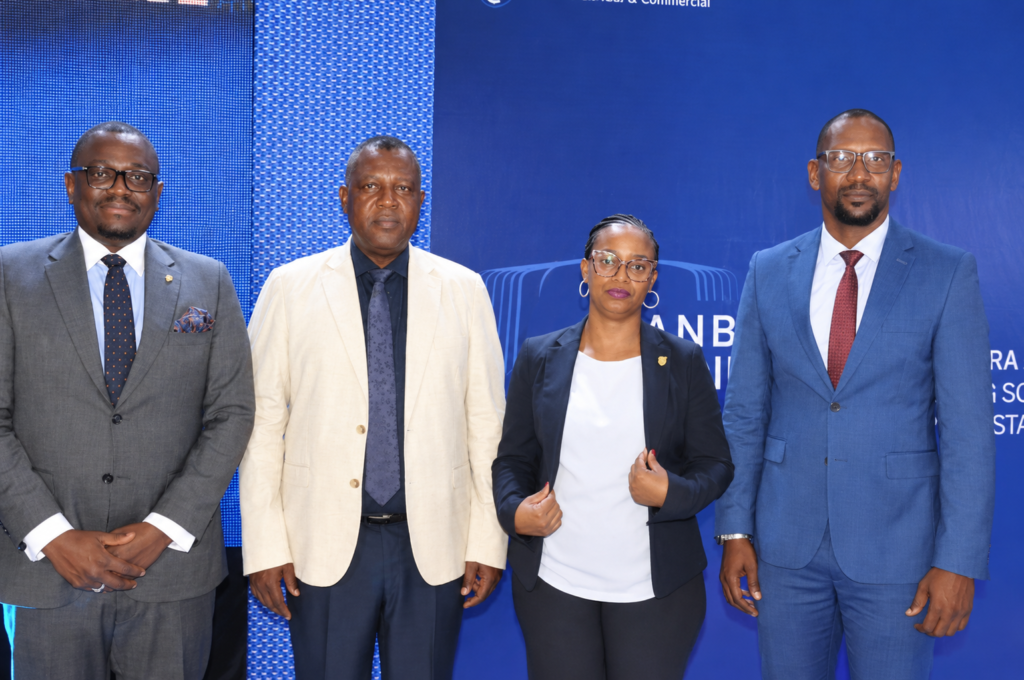
For Innocent Agaba, President of the IASP Uganda Chapter, Africa’s challenge is no longer a shortage of strategies.
“Across Africa, organisations have ambitious development agendas and growth aspirations,” Agaba said at the launch. “The real opportunity now is to strengthen strategy excellence so that institutions consistently execute strategy, improve performance and deliver sustainable results.” he adds.
The distinction is important. A strategy can identify the right priorities and still fail to produce change. A government can establish an industrialisation policy without building the infrastructure and institutional systems needed to support it. A company can announce an expansion strategy without having the capital, talent or operational discipline to deliver it. The problem, therefore, is often not ambition. It is the machinery required to turn ambition into action.
For Uganda, this question is particularly important as the country pursues its Tenfold Growth ambition by 2040.
Dr Joseph Muvawala, Executive Director of the NPA, said accelerated growth is essential to expanding opportunity, creating prosperity and delivering inclusive development.
“As we pursue Uganda’s Tenfold Growth ambition by 2040, we recognise that accelerated growth is essential for expanding opportunity, creating prosperity and delivering inclusive development,” he said.
But ambitions of that scale cannot be achieved through a vision statement alone.

Capital must move into productive sectors. Infrastructure projects must be delivered. Businesses must become more competitive. Human capital must improve and public institutions must coordinate.
Uganda’s growth ambition will ultimately be judged not by the quality of its strategy documents, but by what changes in the economy as those strategies are implemented. That is the difference between strategic ambition and strategic capability.
The same challenge is visible at the continental level. AfCFTA is one of Africa’s most ambitious economic projects. Its potential includes larger markets, stronger regional value chains, increased investment and greater opportunities for African businesses. But an agreement does not automatically create an integrated market.
A June 2026 assessment by WTO Chairs noted that implementation of AfCFTA has been slow and that progress remains largely country-driven. The harder work happens at borders, inside customs agencies, within ministries, along transport corridors and inside businesses.
The World Economic Forum’s 2026 analysis similarly argues that Africa must turn continental commitments into practical and commercially viable trade outcomes, pointing to customs systems, standards, non-tariff barriers, infrastructure and security as critical implementation issues.
Africa does not need another declaration that intra-African trade matters. It needs the systems that make trading across African borders easier.
The execution debate should therefore not be reduced to individual leadership. Execution is institutional.
A strategy requires people who understand their responsibilities, resources aligned with priorities, systems that track progress and leaders willing to intervene when implementation goes off course.
It also requires accountability. A development plan should not be judged primarily by the quality of the document produced at its launch. It should be judged by whether roads are built, factories become operational, exports increase, jobs are created, services improve and productivity rises.
The same applies to businesses. A corporate strategy is not successful because it was approved by a board. It succeeds when capital, people, technology and operations move in the same strategic direction and produce measurable results. Too often, institutions treat strategy as an event rather than a capability.
Technology adds another layer to the debate. The IASP conference identifies technology and artificial intelligence among its six strategic priorities. AI has the potential to improve productivity, decision-making and public services across Africa.
But AI is not a substitute for institutional capability. An organisation with fragmented data, weak governance and poor processes does not automatically become more strategic because it adopts AI.
Technology can accelerate execution. It can also accelerate inefficiency. The more important question is therefore not simply how African institutions can adopt AI, but whether they have the systems and capabilities to turn technology into measurable outcomes.
Africa’s development debate has long focused on infrastructure gaps, financing constraints, skills shortages, limited industrial capacity and fragmented markets.
Those challenges remain. But another capability could increasingly determine which African economies and businesses pull ahead: the ability to execute well.

The countries that can move policies from paper to implementation, infrastructure from announcement to completion, trade agreements from signatures to transactions and technology strategies from pilots to productivity will have an advantage.
In a continent with increasingly similar ambitions, execution could become the differentiator. Africa already knows what kind of future it wants. It has produced the plans. It has established the frameworks. It has set the targets. The next challenge is harder: proving that it can execute.