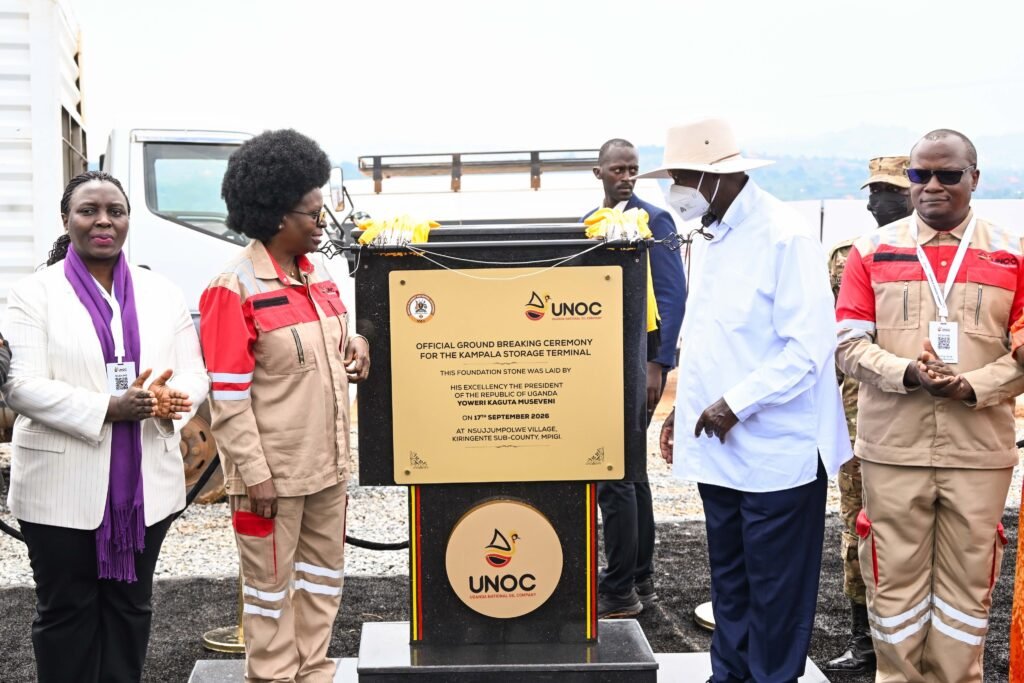
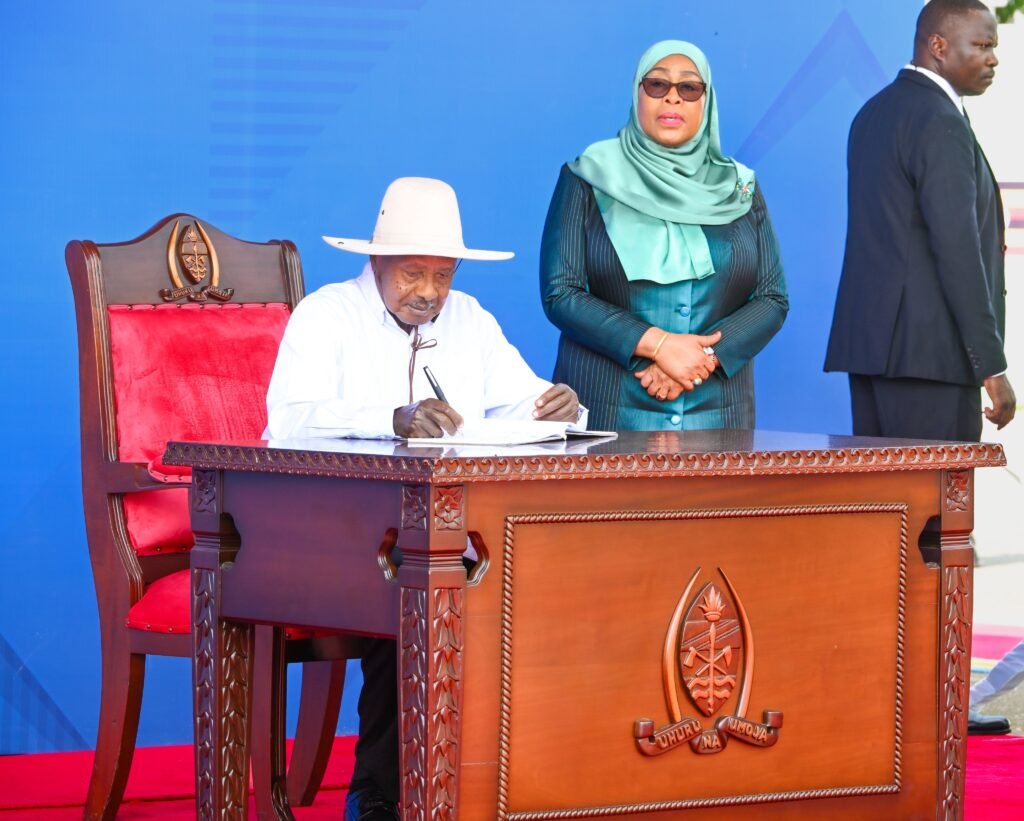
Uganda’s oil story is entering a new phase. For years, the central question was when Uganda would produce its first barrel. But following President Yoweri Museveni’s latest engagement with Tanzanian President Samia Suluhu Hassan, a bigger question is emerging, what kind of regional energy economy can Uganda help build around its oil?
During his visit to Dar es Salaam, Museveni witnessed the signing of a Memorandum of Understanding between Uganda National Oil Company (UNOC), Tanzania Petroleum Development Corporation (TPDC) and Vitol Bahrain E.C. to develop the Tanga Regional Energy Hub.
“This partnership builds on the success of EACOP and will strengthen regional energy security, industrialisation and trade,” Museveni said in a post on X.
He added that the Tanga Hub, together with Uganda’s Hoima Refinery, would enable the region to create more value through “refining, storage, logistics and manufacturing instead of exporting raw materials.”
That statement points to the real significance of the agreement. Uganda’s oil strategy is increasingly moving beyond production and export towards building a wider industrial ecosystem around petroleum. Hoima could become a centre for refining and petrochemical activity, while Tanga could provide storage, logistics and access to regional and international markets.
The two projects are not yet one integrated system. But the latest agreement creates the possibility of connecting them.
EACOP was primarily designed to transport Uganda’s crude from the Albertine Graben to Tanga for export. The new Tanga partnership potentially gives that corridor another economic function.
According to the government, the emerging hub will involve petroleum storage, logistics, refining, trading and distribution. Feasibility and front-end engineering design studies for a refined petroleum products pipeline and storage terminal are also progressing, while studies for a proposed natural gas pipeline between Uganda and Tanzania are expected to be completed later this year.
That creates the possibility of a much broader regional energy corridor: production in western Uganda, refining and industrial activity around Hoima, transportation through EACOP, and storage and distribution through Tanga.
The commercial opportunity extends beyond crude. Every stage of that chain creates demand for engineering, construction, transport, storage, financial services, technology, maintenance, skills and manufacturing. That is where the bigger economic question lies, who captures the value created around the oil?
Uganda’s Energy Minister, Dr Monica Musenero, has framed the partnership in those broader terms, arguing that it can create jobs, deepen regional trade and strengthen the logistics systems supporting the two economies.
For Tanzania, the agreement strengthens Tanga’s potential as an energy and logistics gateway on the Indian Ocean and for Uganda, it creates another route through which the country’s oil strategy could connect to regional markets.
East Africa remains heavily dependent on imported refined petroleum products even as countries in the region develop their own oil resources. That creates exposure to international prices, shipping disruptions and geopolitical shocks.
A more integrated regional system could change that equation. Instead of individual countries building isolated infrastructure, Uganda and Tanzania could develop complementary assets across the energy value chain. Hoima could focus on refining and industrialisation, while Tanga provides storage, logistics, maritime access and distribution.
The value would come not simply from producing more fuel, but from making it easier and cheaper to move energy across the region. That is particularly important as East Africa’s demand for petroleum products continues to grow.
The opportunity, however, is still largely prospective. The projects must be financed, built and commercially integrated before the promised regional benefits can be realised.
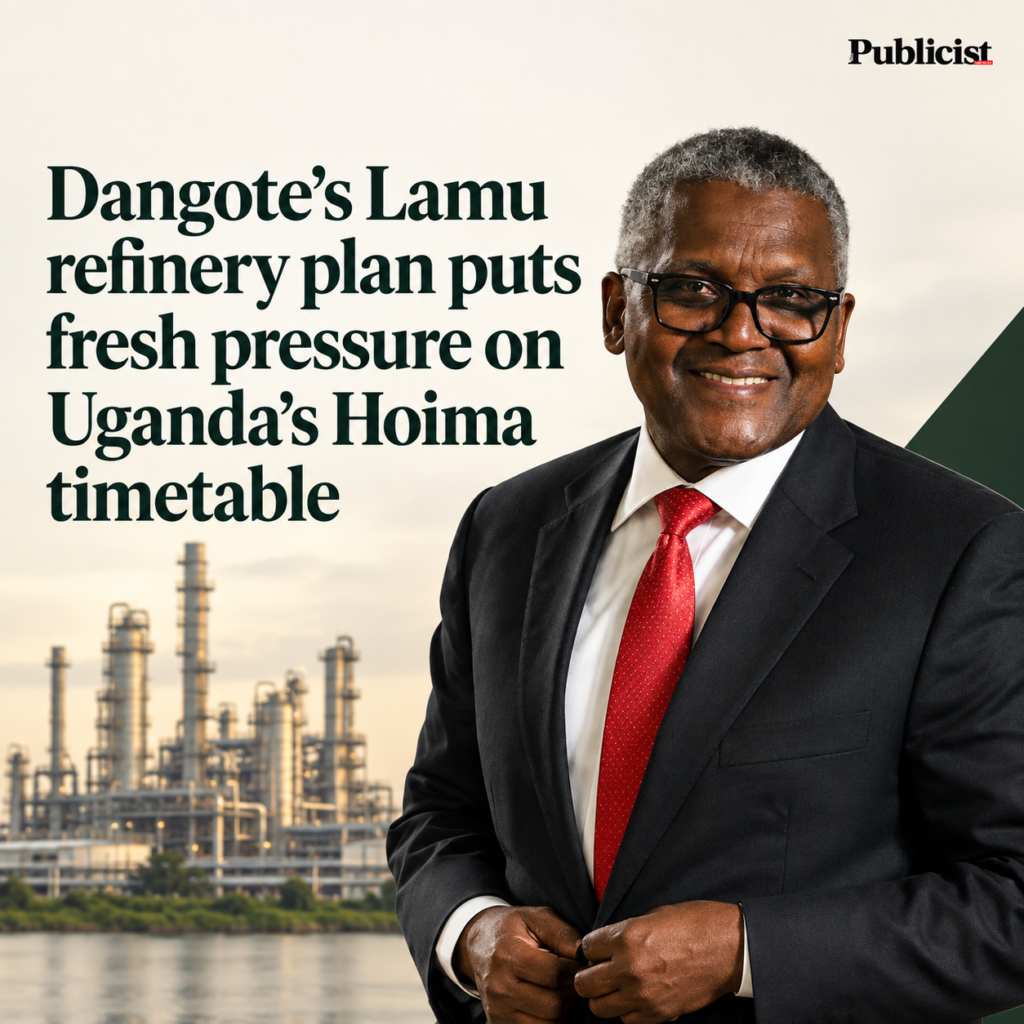
The regional picture becomes even more interesting when Dangote’s East African ambitions are added. Aliko Dangote initially considered several locations for a major East African refinery, including Tanzania. But in July, Dangote Industries confirmed that its planned refinery will be built at Lamu in Kenya, with a projected capacity of about 700,000 barrels per day.
That changes the competitive landscape. East Africa could eventually have major refining and petroleum infrastructure emerging around Hoima, Tanga and Lamu, each serving different parts of the regional market.
For Uganda, this makes regional connectivity even more important. Hoima does not have to compete simply by producing fuel; it will need reliable infrastructure to move products efficiently into markets beyond Uganda.
For Tanga, the opportunity is to become more than an export point for Ugandan crude. Its future value could lie in storage, trading, logistics and distribution across the region.
For Dangote, the size of the East African market remains attractive, but the emergence of additional regional refining capacity means the market will not be uncontested.
The competition could ultimately benefit the region if it results in greater supply security, more investment and more efficient energy logistics. But it also means that infrastructure will matter as much as refinery capacity. The refinery that can connect most efficiently to consumers, pipelines, ports, storage facilities and industrial users will have a significant advantage.
This is where Uganda’s long-running value-addition argument faces its biggest test. The country has spent years insisting that its petroleum resources should support industrialisation rather than simply generate crude export revenues. The Hoima refinery is part of that ambition. So is Kabalega Industrial Park. The Tanga agreement potentially adds another regional component.
But infrastructure alone does not create industrialisation. Uganda will need manufacturers that use petroleum products and petrochemical inputs, local companies capable of supplying the oil and gas industry, skilled workers, financial institutions willing to support investment, and regional markets capable of absorbing the resulting products.
That is why the most important question is no longer simply whether Uganda will produce oil. It is whether the country can turn oil infrastructure into an industrial ecosystem.
The latest Uganda-Tanzania agreement does not mean that Hoima, EACOP and Tanga are already functioning as one system. They are at different stages of development, and several components remain under study or require further investment.
But the direction is becoming clearer. Uganda is trying to connect its oil production to refining, industrialisation and regional markets. Tanzania is seeking to strengthen Tanga’s position as an energy and logistics hub. Kenya is positioning Lamu around a major new refining investment. And private-sector players such as Vitol and Dangote are increasingly shaping the region’s energy landscape.
That makes the Museveni–Samia engagement bigger than another oil-sector agreement. It signals a possible shift from national oil projects to regional energy architecture.
The real prize is not simply more barrels or more refineries. It is an integrated system in which pipelines, ports, refineries, storage facilities, logistics networks and industries work together to retain more economic value within East Africa.
For Uganda, that would represent a significant evolution of its oil strategy. The oil may be produced in Uganda but the bigger economic opportunity could be built across East Africa.