In 2026, Uganda found itself celebrating two major export milestones, the country surpassed Ethiopia in monthly coffee export volumes, exporting 47,606 tonnes compared to Ethiopia’s 43,481 tonnes and reinforcing its growing position in global coffee markets.
Around the same period, official trade data showed that gold had emerged as Uganda’s largest export earner, generating an estimated USD 6.4 billion in export receipts and overtaking coffee by a wide margin.
One commodity generated the biggest export earnings in Uganda’s recent history. The other supports more than 1.8 million households.
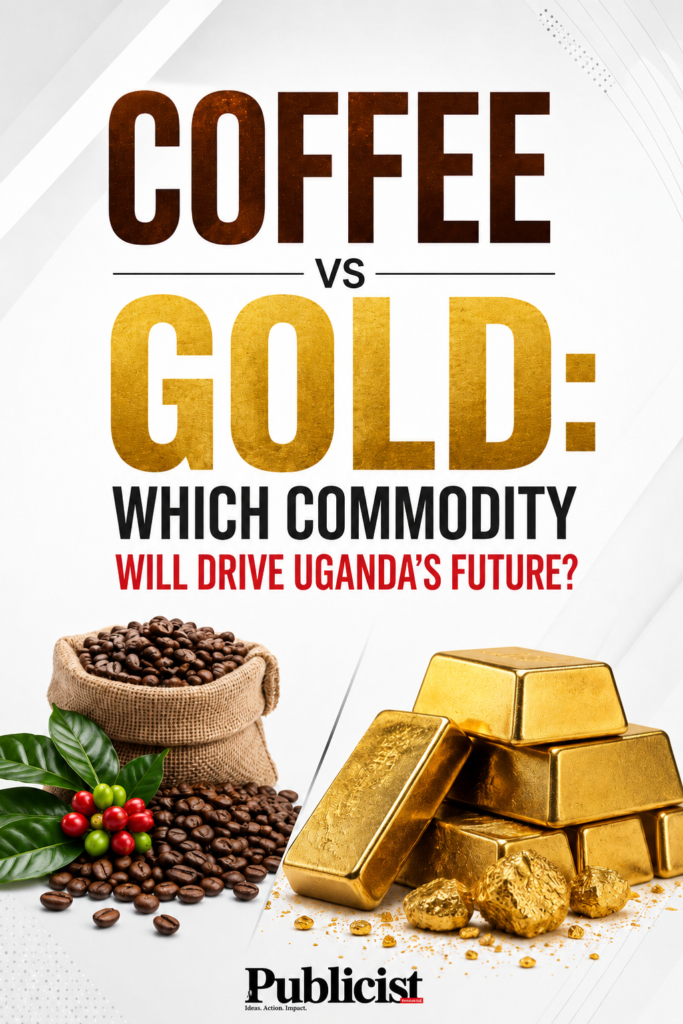
Together, they raise one of the most important questions facing Uganda’s economy: which commodity is better positioned to drive the country’s future?
The raw comparison appears straightforward. Official trade data released in 2026 showed that gold generated approximately USD 6.4 billion in export receipts during the previous year, compared to about USD 2.46 billion from coffee. On foreign exchange earnings alone, gold wins comfortably.
The gold boom has transformed Uganda’s external sector. Merchandise exports reached a record USD 13.43 billion, helping narrow the country’s trade deficit and strengthening foreign exchange inflows. In the twelve months to June 2025, nearly four out of every ten export dollars earned by Uganda came from gold.
For policymakers and the Bank of Uganda, these inflows have been significant. They have supported the stability of the shilling, strengthened foreign exchange reserves, and provided an important buffer against global economic uncertainty.
Yet the story changes when the focus shifts from export earnings to economic impact.
Coffee may generate less revenue than gold, but it touches far more Ugandans.
Over 1.8 million households depend on coffee cultivation for their livelihoods. The sector supports farmers, transporters, processors, exporters, warehouse operators, financial institutions, and thousands of businesses connected to the agricultural value chain.
A dollar earned from coffee passes through many hands. A farmer in Mbale sells cherries. A transporter moves them to a processor. A warehouse stores them. An exporter ships them abroad. The value circulates through communities, creating income, employment, and local economic activity.
Gold follows a different path. Despite generating billions of dollars in exports, the sector’s contribution to domestic revenue remains comparatively modest. Official estimates suggest tax collections from gold exports remain low relative to the scale of trade.
At the same time, concerns over smuggling, informal trade networks, profit repatriation, and weak enforcement continue to dominate discussions about the sector’s long-term developmental impact.
Ugandan authorities estimate that illicit trade in gold may be costing the country trillions of shillings annually. Artisanal and small-scale miners, who account for much of Uganda’s domestic gold production, often remain at the lowest end of the value chain while traders, intermediaries, and exporters capture a larger share of the profits.
The contrast is difficult to ignore. Gold is generating more money for Uganda’s balance of payments. Coffee is generating more prosperity for Uganda’s people.
But perhaps the more important question is not whether Uganda should choose coffee or gold.
The real question is how Uganda can capture more value from both.
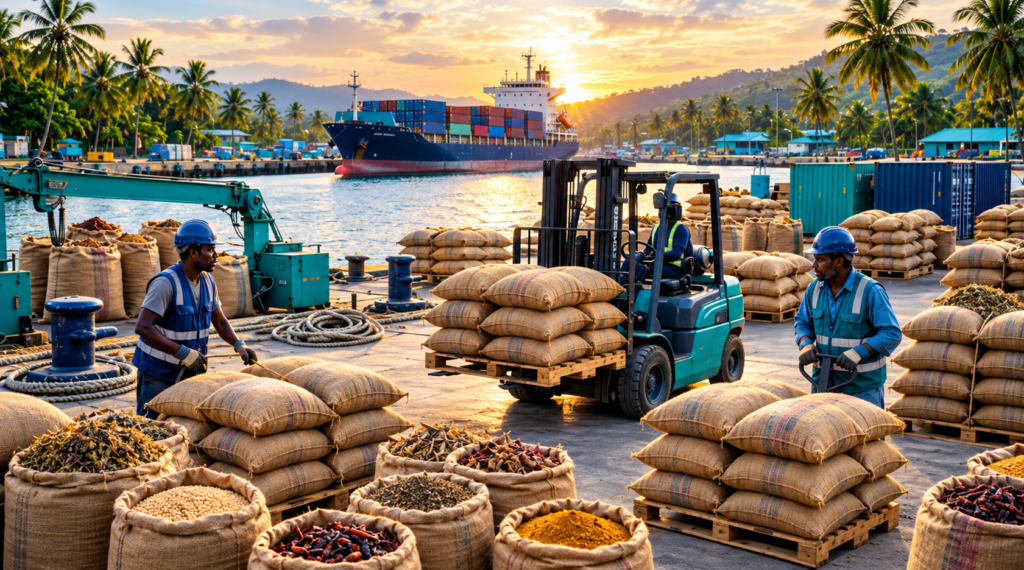
For decades, African economies have exported raw commodities while importing finished products at significantly higher prices. Uganda has not been immune to this pattern. Whether it is unprocessed coffee beans or raw mineral exports, much of the value creation often happens outside the country’s borders.
This is where the next phase of Uganda’s economic transformation may be decided.
In coffee, value addition offers enormous potential. Roasting, packaging, branding, and exporting finished coffee products could allow Uganda to earn substantially more from the same volumes it currently produces. Countries with far smaller coffee-growing sectors earn significantly higher revenues because they control more of the downstream value chain.
The same principle applies to gold.
If Uganda strengthens regulation, formalises artisanal mining, improves traceability systems, and expands local refining and mineral processing capacity, a greater share of gold revenues could remain within the domestic economy. The objective should not simply be exporting more gold, but retaining more value from every ounce exported.
According to several African development economists, countries that successfully transform natural resource wealth into broad-based prosperity are often those that invest in value addition, industrialisation, and strong institutions rather than relying solely on commodity exports.
That lesson may be particularly relevant for Uganda today.
Coffee provides resilience because it spreads income across millions of households. Gold provides scale because it generates large volumes of foreign exchange. One strengthens livelihoods. The other strengthens national accounts.
Neither commodity alone is sufficient. A future built solely on coffee risks limiting export earnings. A future built solely on gold risks concentrating wealth while creating fewer linkages to the wider economy.
Uganda’s greatest opportunity lies in leveraging both. Coffee can continue driving rural incomes, agricultural transformation, and inclusive growth. Gold can strengthen export earnings, investment inflows, and macroeconomic stability. Together, they provide a foundation for a more diversified economy.
The ultimate measure of success will not be which commodity earns more money.
It will be whether Uganda can transform commodity exports into industries, industries into jobs, and jobs into long-term prosperity. That is the challenge that will define Uganda’s next economic chapter.
And in that future, the winner may not be coffee or gold. The winner may be value addition.