
Key leaders who gathered at the inaugural Kampala Blockchain Summit, held on Tuesday, November 25, 2025, agreed that the future of Uganda’s economy lies in harnessing the potential of emerging technologies like blockchain to boost national productivity.
The central challenge posed at the summit, held under the theme, ‘From Regulation to Growth: Uganda as a Regional Hub for Virtual Assets,‘ was clear: as Africa prepares to host the world’s largest working-age population, productivity is the next frontier; without it, the demographic dividend becomes a missed opportunity.
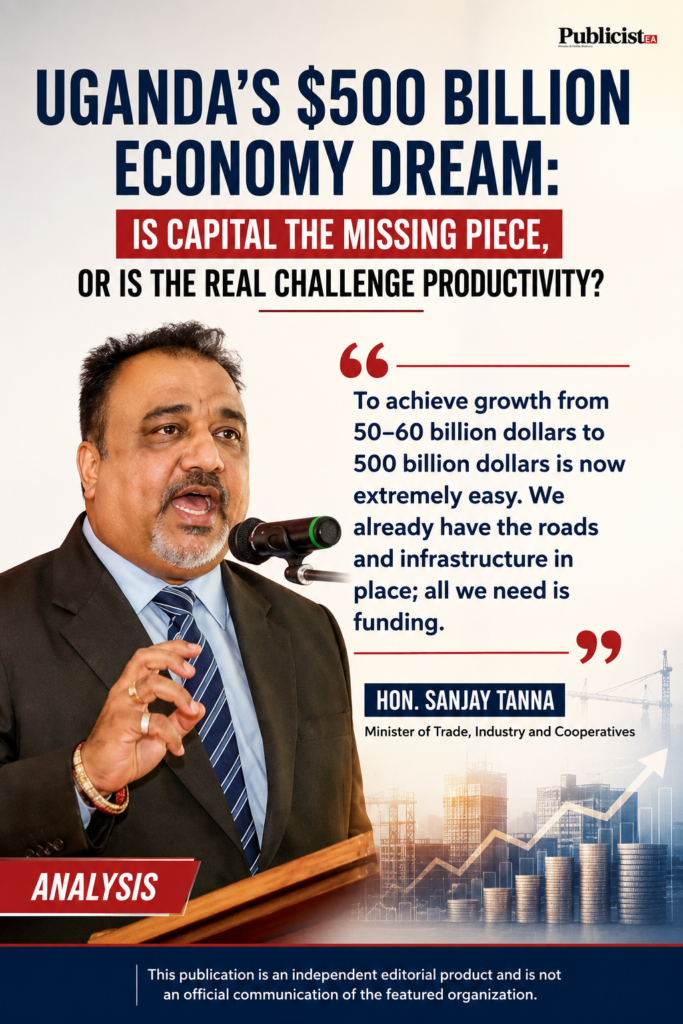
Sylvia Mulinge, the Chief Executive of MTN Uganda, opened a critical fireside chat at the Summit by aligning technological ambition with Uganda’s national goal of growing its economy from USD $50 billion to USD $500 billion by 2040, a vision built on digital transformation and industrialisation.
The Foundation is Access and Skills
Mulinge stressed that for this ambitious vision to materialise, the nation must first address the fundamental issues of access and digital literacy.
“We have to start with access. We need to get our youth online and equip them with the skills to use technology to create opportunity. Without that foundation, innovation benefits a few when it should power national transformation,” Mulinge said.
This foundational work, according to Mulinge, ensures that the digital dividend is inclusive, extending beyond the urban elite to empower the masses, a key lesson learned from the initial rollout of mobile money.

Regulation as an Enabler
A major focus of the fireside chat, which included Dr. Tumubweine Twinemanzi, the Executive Director of the National Payment Systems at the Bank of Uganda, centered on the delicate balance between rapid innovation and necessary regulatory oversight.
Dr. Twinemanzi and Mulinge explored the question: How do you regulate at a speed that keeps up with innovation?
Mulinge asserted that the experience from mobile money remains highly relevant, noting, “Innovation will always run faster, but regulation does not have to slow it down. When regulators and innovators stay in conversation, regulation becomes an enabler.”
She drew a direct parallel, explaining that, “Stablecoins today sit where mobile money sat fifteen years ago. Collaboration between the private sector and regulators is essential to build the trust necessary for new digital currencies and technologies to scale safely.”
Uganda’s Blockchain Competitive Edge
The Governor of the Bank of Uganda, Dr. Michael Atingi-Ego, left the summit with a pointed challenge, noting, as Uganda builds borderless products, what will be the nation’s competitive advantage?
Mulinge offered a simple answer, stating that “Uganda must win by solving everyday local problems.”
She noted that Mobile money succeeded because it fixed a real need: payments and financial inclusion. Blockchain and stablecoins, according to Mulinge, must follow suit by addressing practical issues that impact the average Ugandan and regional trade, such as:
Cross-border remittances, trade settlement, transparency in public finance and supply chain efficiency, among others. She stressed that the core takeaway is that technology transforms economies only when it transforms lives.
Navigating Uganda’s Regulatory Landscape
While the conversation at the summit emphasised collaboration, the current regulatory landscape for cryptocurrencies and blockchain-based payment instruments in Uganda remains restrictive.
The BoU has repeatedly issued public statements and directives cautioning against and restricting the use of cryptocurrencies as a form of payment.
Notably, a 2023 High Court ruling reinforced the BoU’s stance, effectively declaring cryptocurrencies illegal as a payment instrument. The ruling upheld a BoU directive that bars licensed entities under the National Payment Systems Act from converting crypto assets into fiat or mobile money.
However, the regulatory framework has begun to address the industry’s need for compliance and oversight.
The Financial Intelligence Authority (FIA) published a letter amending the Anti-Money Laundering Act to include Virtual Asset Service Providers (VASPs) among the list of “accountable persons” subject to supervision and monitoring.
This duality of strict restrictions on payment instruments, but regulatory oversight for service providers, highlights the complex environment that innovators and regulators must navigate to realise the transformative potential of blockchain technology in Uganda.