
The Leader of the Opposition in Parliament, Rt. Hon. Joel Ssenyonyi has publicly criticised the government’s decision to allocate Shs5.4 billion toward purchasing a power stabiliser for Roofings Limited in Namanve Industrial Park.
This condemnation came amidst the parliamentary approval of colossal supplementary budget requests, raising serious questions about the fairness of public spending priorities.
Speaking on the floor of Parliament, Ssenyonyi questioned “the criteria used to single out and financially assist large, wealthy individuals like Roofings Chairman Sikander Lalani, while numerous smaller Ugandan businesses are reportedly ‘sinking’ without any government intervention or support.”
Massive Borrowing Underpins Supplementary Budget
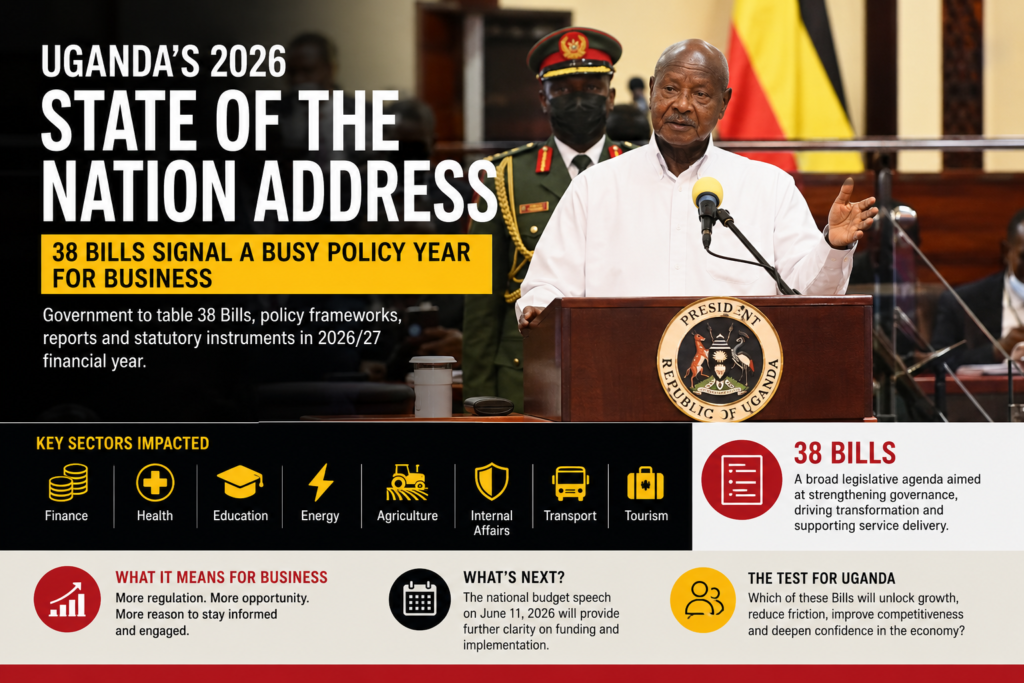
The contentious allocation for Roofings Limited was part of three supplementary expenditure schedules approved by Parliament, totalling an enormous Shs8.104 Trillion. The approval of this supplementary budget has significantly inflated Uganda’s overall national budget as follows;
Original Budget (FY 2025/26): Shs 72.376 Trillion
Revised Budget: Shs 78.631 Trillion
To fund these unfunded priorities, the government is resorting to massive borrowing: Shs4.278 trillion from foreign lenders and Shs3.770 trillion from local commercial banks.
According to Hon. Ssenyonyi, this substantial increase in debt to finance selective expenditures has intensified the Opposition’s scrutiny.
Questionable Priorities: Bailouts vs. Bonuses
Hon. Ssenyonyi’s critique focuses on the selective nature of the expenditures, particularly the Shs5.4 billion purchase for a single private company.
He specifically questioned why “wealthy individuals like Sikander Lalani are bailed out,” when the country faces broader economic distress.
Further fueling the debate over priorities, the approved supplementary budgets also included a significant allocation of Shs23.89 billion for the Uganda Revenue Authority (URA) as a ‘Bonus for their Staff.’
Ssenyonyi revealed that Parliament approved an extra Shs23.89 billion for the URA, designated as a staff bonus for exceeding the revenue collections target for the Financial Year (FY) 2024/25.
Ssenyonyi’s stance implies that while performance bonuses are standard, allocating funds for a selective corporate subsidy alongside a staff bonus, all financed primarily through borrowing, demonstrates a misaligned set of priorities that do not adequately address the financial needs of the wider Ugandan business community.
The decision, he noted, has placed pressure on the government to provide clear, transparent justification for the expenditure on Roofings Limited, explaining how this specific outlay benefits the public interest and why it supersedes the urgent financial needs of other sectors and struggling enterprises.
However, our efforts to secure a comment from Roofings Limited about this matter were futile as our incessant calls to their offices hadn’t been answered by press time.