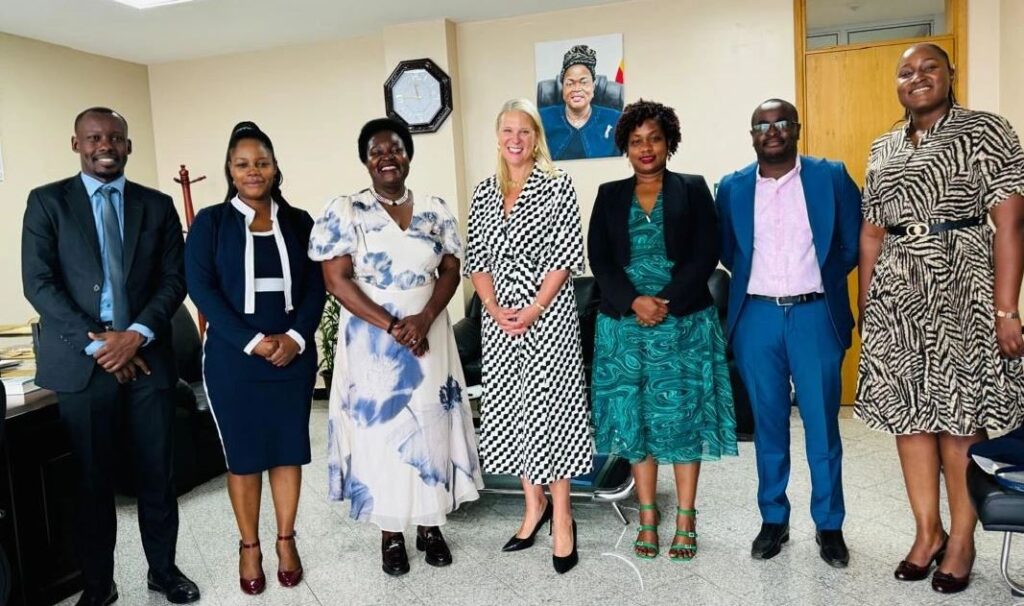
Uganda is intensifying its strategic partnership with the United Kingdom to accelerate its energy transition, enhance the electricity infrastructure, and unlock its vast mining potential.
This commitment was reaffirmed during a crucial meeting held on Tuesday, July 22, 2025, at Petroleum House, Entebbe, between Hon. Dr. Ruth Nankabirwa Ssentamu, the Minister of Energy and Mineral Development (MEMD), and the British High Commissioner to Uganda, H.E. Lisa Chesney.
The high-level discussions centred on the UK’s robust support for Uganda’s pivotal sectors, signalling deepening bilateral ties aimed at fostering sustainable development and mutual economic growth.
Driving Clean Energy and Financial Inclusion
Minister Nankabirwa expressed profound gratitude for the UK’s steadfast collaboration, particularly highlighting advancements in renewable energy through the Renewable Energy Feed-in Tariff (REFiT) programme.
She noted that this mechanism, designed to incentivise private sector investment in clean energy, has been crucial in diversifying Uganda’s energy mix.
Enhanced Investment and Collaboration
H.E. Chesney lauded Minister Nankabirwa’s visionary leadership and commended the Ministry’s impressive recent progress. She reiterated the strong collaborative relationship between the British High Commission and the Ministry of Energy and Mineral Development.
To spur investment in Uganda, H.E. Chesney announced an upcoming mining webinar by Team UK, which will gather business and thought leaders from both countries to discuss investment opportunities.
This dedicated event will serve as a platform to attract UK companies keen on exploring and investing in Uganda’s promising mining sector, providing valuable insights and fostering direct connections.
The high-level engagement between Uganda and the UK underscores a shared commitment to sustainable energy development and responsible resource utilisation.
Clean Cooking Unit at MEMD
A significant focus of the meeting was the Uganda-UK Clean Cooking Programme, a critical initiative addressing energy poverty and deforestation.
The UK is actively supporting the establishment of a dedicated Clean Cooking Unit within the Ministry of Energy and Mineral Development, a key milestone set to officially launch during the Energy and Minerals Week in October 2025.
According to Nankabirwa, this unit aims to revolutionise cooking practices in Uganda, transitioning households from harmful biomass fuels to cleaner, more efficient alternatives like electric cooking, which is projected to benefit tens of thousands of Ugandans, improve public health, and reduce environmental impact.
Uganda Set for COP and Global Green Economy
Hon. Nankabirwa took the opportunity to brief H.E. Chesney on the upcoming Energy and Minerals Week 2025.
She emphasised its strategic importance in refining Uganda’s message ahead of the crucial COP (Conference of the Parties) summit in Brazil later this year.
Uganda’s presentation at the COP will highlight its commendable progress towards climate commitments and its unwavering dedication to a just and inclusive energy transition.
This involves leveraging domestic resources to fund sustainable development while ensuring no one is left behind in the shift to cleaner energy.
Scaling the Mineral Sector
A key element of Uganda’s future economic narrative, as highlighted by Minister Nankabirwa, is its abundant endowment of transition minerals.
These critical minerals, vital for global green technologies and the booming electric vehicle industry, are not only crucial for Uganda’s development but also for the world’s journey towards a green economy.
The Minister extended a direct invitation to the UK private sector to invest heavily in Uganda’s energy and mining sectors, promoting strong partnerships that promise mutual benefits.
She revealed that Uganda’s mineral investment opportunities are estimated to be over USD620.5 billion, encompassing minerals like copper, cobalt, nickel, and rare earth elements.
As Uganda prepares to present its progressive energy transition agenda on the global stage at COP, the continued partnership with the UK, particularly in clean cooking, electricity infrastructure, and mineral value addition, will be instrumental in realising its ambitious development goals and contributing significantly to the global green economy.