
Uganda’s economy has demonstrated remarkable resilience in the first half of 2025 and is now on a robust upward trajectory, with key indicators pointing to strong and sustainable growth.
This was revealed today by Hon. Matia Kasaija, the Minister of Finance, Economic Development and Planning, during a presser at the Uganda Media Centre, where he presented a comprehensive overview of the nation’s economic health, highlighting impressive gains across all sectors and a clear strategy for the future.
Solid Growth and Macroeconomic Stability
The Minister reported that in the fiscal year 2024/25, Uganda’s economy expanded to Shs226.3 trillion (USD61.3 billion), up from Shs203.7 trillion (USD53.9billion) in the previous year. According to Kasaija, this translated to a real GDP growth of 6.3%, compared to 6.1% in the previous year, thereby moving Uganda closer to its goal of achieving lower-middle-income status.
The country’s macroeconomic fundamentals, according to the Minister, remain strong, and these include:
Inflation
Headline inflation eased to 3.8% in July 2025, well within the Central Bank’s medium-term target of 5%. This stability was largely due to lower food prices and reduced transport costs, allowing the Central Bank to maintain its interest rate (CBR) at 9.75% for the tenth consecutive month.
Shilling Performance
Kasaija revealed that the Ugandan shilling has shown exceptional strength and stability. It appreciated by 0.5% in July 2025 and has been ranked by the International Monetary Fund (IMF) as the most stable currency in Africa.
Economic Activity
He stated that the Composite Index of Economic Activity (CIEA) continues to rise, indicating sustained improvement in business activity and strong investor confidence. This, he noted, is reflected in increased business orders, rising employment, and robust output across sectors like construction and manufacturing.
Private Sector Credit
The Minister also revealed that the stock of outstanding credit to the private sector grew by 7.5%, reaching Shs23.9 trillion in June 2025, a clear sign of increased economic activity and confidence.
Diversification and Global Competitiveness
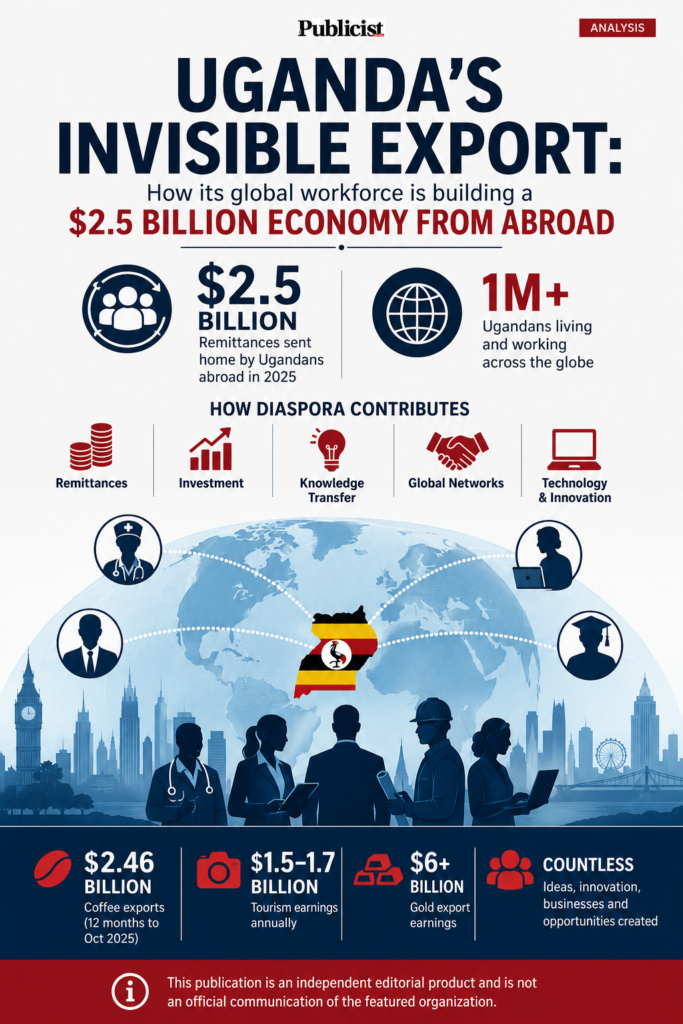
Uganda’s external sector is a story of diversification and growing competitiveness. According to Kasaija, over the last 15 years, the country has introduced 32 new export products, shifting from a heavy reliance on coffee.
While coffee’s contribution has fallen from 75.6% to 20.9% of total merchandise exports, new products such as gold, cocoa beans, and manufactured goods have taken centre stage.
This diversification, he observed, is paying off, with merchandise exports surging by 64.3% in the 12 months ending June 2025, reaching USD1.15 billion.
Tourism is also experiencing a major boom, with inflows growing to USD1.52 billion in the year 2024 to March 2025.
This growth, Kasaija pointed out, is a testament to the country’s peace and stability, and strategic government investments in infrastructure, including Uganda Airlines.
He noted that foreign Direct Investment (FDI) inflows also increased to USD3.30 billion in 2024, largely driven by significant developments in the oil and gas sector.
Social Progress and Future Outlook
The economic progress is directly translating into improved social outcomes. The Minister asserted that Uganda has met the conditions for graduation to lower-middle-income status, and its Human Development Index (HDI) has improved, placing it in the medium human development category.
As a result of this, the Minister revealed that the proportion of people living in poverty has decreased from 20.3% to 16.1%, while income inequality has also been reduced.
He attributed these gains to government wealth creation initiatives like the Parish Development Model (PDM), Operation Wealth Creation (OWC) and Emyooga, which have redistributed resources to marginalised groups.
Looking ahead, Kasaija stated that the economy is projected to grow by at least 7.0% in the current fiscal year and reach double-digit growth in the medium term, fueled by the commencement of oil and gas production.
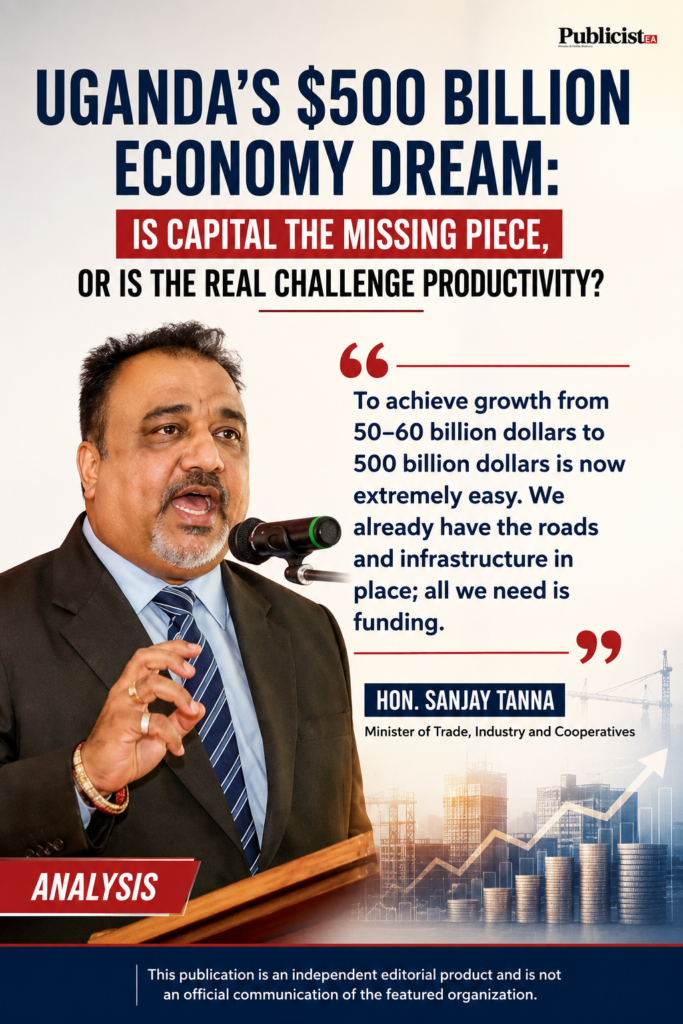
This will be supported by the Tenfold Growth Strategy, which aims to expand the economy to USD500 billion in the next 15 years.
This ambitious strategy, Kasaija emphasised, is centred on four priority sectors: agro-industrialisation, tourism, mineral-based industrial development, and science, technology, and innovation.