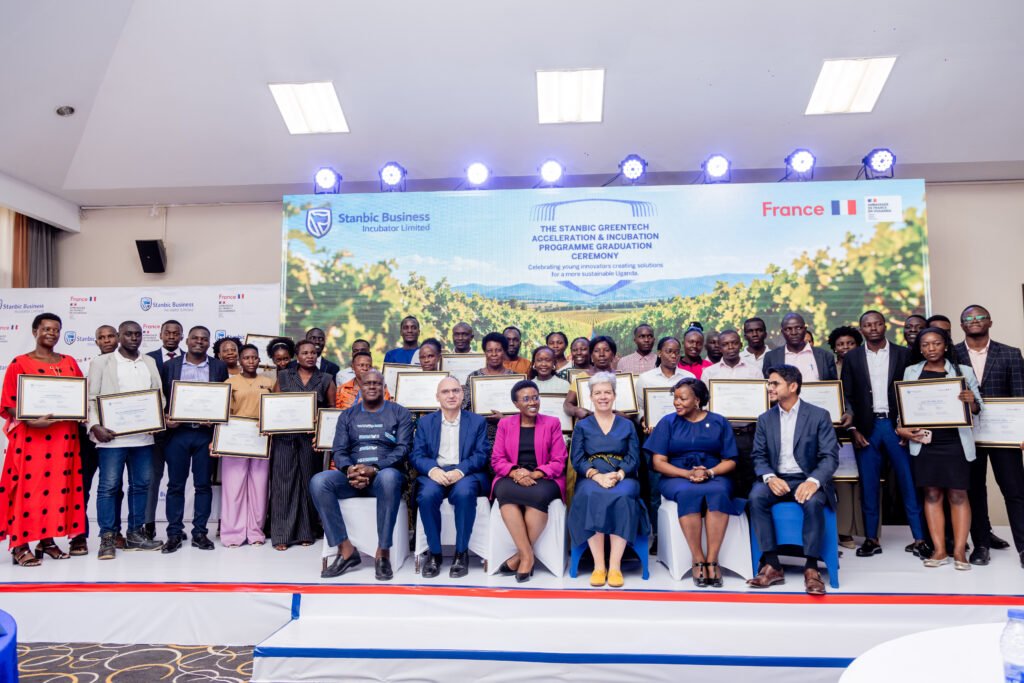

Uganda is set to transform its climate challenges into massive investment opportunities, an agenda driven by the recent introduction of the nation’s green taxonomy. This was the central theme of the opening panel at the Green Finance Dialogue Forum 2025, titled “From Risk to Opportunity – Scaling Green Finance in Uganda.”
The high-level discussion held in Kampala and moderated by Flavia Tumusiime, brought together leading voices in sustainable development and finance to chart a clear path for mainstreaming climate finance across the Ugandan economy.
The Taxonomy and a Clear Compass for Investors
The panelists agreed that the newly established Ugandan green taxonomy is a game-changer, providing the clarity and transparency needed to unlock both domestic and international capital.
Eng. Dr. Pablo Martínez, the Country Representative for the Global Green Growth Institute (GGGI), underscored its strategic importance, stating, “The recent green taxonomy of Uganda helps to identify green investments and distinguish them from riskier investments in the climate change context.”
He noted that this taxonomy functions as a standardised classification system, which is vital for:
Risk Mitigation: Allowing financial institutions to assess and price climate-related risks accurately.
Investor Confidence: Combating the risk of “greenwashing” by providing verifiable criteria for genuinely sustainable projects.
Mobilising Capital: Directly channeling public and private funds toward climate adaptation, mitigation, and broader green growth objectives, aligning with Uganda’s national development goals.
Climate Finance as a Dual-Purpose Tool
The discussion moved beyond just risk management to highlight the enormous market potential of green finance. The consensus was that climate finance serves a dual purpose: it is a necessary tool for risk mitigation while simultaneously acting as a gateway to new green markets and sustainable business models.
The panel, which included Dr. Colin Agabalinda (Inclusive Rural and Climate Finance Specialist, ARCAFIM – IFAD) and Dr. Lena Giesbert (Senior Manager, adelphi), emphasised that investing in resilience, such as climate-smart agriculture or renewable energy infrastructure, creates long-term value and competitive advantage.
Collaboration as Key to Mainstreaming Finance
The experts stressed that scaling green finance requires unprecedented collaboration across sectors. The perspective from the commercial banking sector, offered by Diana Nanono Ssengendo, Sustainability Manager at dfcu Bank, is crucial in this effort.
She pointed out that the challenge lies in translating high-level policy frameworks, like the green taxonomy, into accessible, de-risked financial products for entrepreneurs and small-to-medium enterprises (SMEs).
To effectively mainstream green finance into Uganda’s economic DNA, the following actions were implicitly or explicitly supported by the panel’s theme:
De-risking Investments
By utilising blended finance mechanisms, guarantees, and technical assistance to make green projects more attractive to local financial institutions.
Capacity Building
Training financial institutions, regulators, and project developers on the practical application of the new green taxonomy.
Sector-Specific Opportunities
Focusing on priority sectors identified by the taxonomy, such as sustainable agriculture, renewable energy, green infrastructure, and water resource management.
In a nutshell, the message from the Green Finance Dialogue Forum 2025 is clear: Uganda has moved past debating the necessity of green finance.
With the taxonomy now in place, the focus has squarely shifted to implementation. By embracing this new framework, Uganda is positioning itself not just to survive the climate crisis, but to lead a regional economic transformation built on sustainable and inclusive growth.