For years, Uganda’s informal economy has operated largely outside the traditional banking system. Small traders, farmers, transport operators, artisans and entrepreneurs generate income every day, but many remain outside the kind of formal financial systems that banks have traditionally designed their products around. Their businesses may be active and profitable, yet their financial lives are often built around cash, mobile money and informal borrowing.
The renewed focus by Stanbic Bank Uganda on unsecured lending under its ‘Oli in Charge’ campaign offers a glimpse into a broader shift taking place in Uganda’s financial sector, banks are increasingly being forced to meet customers where they actually operate, rather than waiting for the informal economy to become formal before serving it.
The question is no longer whether Uganda’s informal economy matters to banks. It is whether banks can afford to ignore it. The scale of the opportunity is difficult to overlook. Uganda’s informal sector accounts for a significant share of employment and economic activity, particularly among households and businesses that do not have the collateral, documentation or predictable incomes traditionally required for bank credit.
For banks, this creates both a challenge and an opportunity. The challenge is that informal businesses can be difficult to assess using conventional lending models. A farmer’s income can fluctuate with seasons. A trader may generate daily cash flows without maintaining formal accounts. A small business owner may have a viable enterprise but lack titled property to pledge as security.
Yet these customers are not necessarily financially inactive. They borrow, save, transact, pay school fees, buy stock, invest in farms and manage household expenses. Much of this activity simply happens outside conventional bank channels.
“Behind every loan application is a parent preparing for a school term, a business owner seeking to expand, a farmer investing in production, or a family planning for the future,” Atuhairwe said.
Stanbic’s latest campaign is significant because it attempts to widen the definition of who can access formal credit.
Under the revamped ‘Oli in Charge’ campaign, salaried customers can access unsecured loans of up to UGX350 million, repayable over as long as 120 months, while non-salaried customers, including farmers and entrepreneurs, can access unsecured financing of up to UGX250 million.
It suggests that access to formal credit is increasingly being framed around the customer’s financial needs and capacity rather than employment status alone.
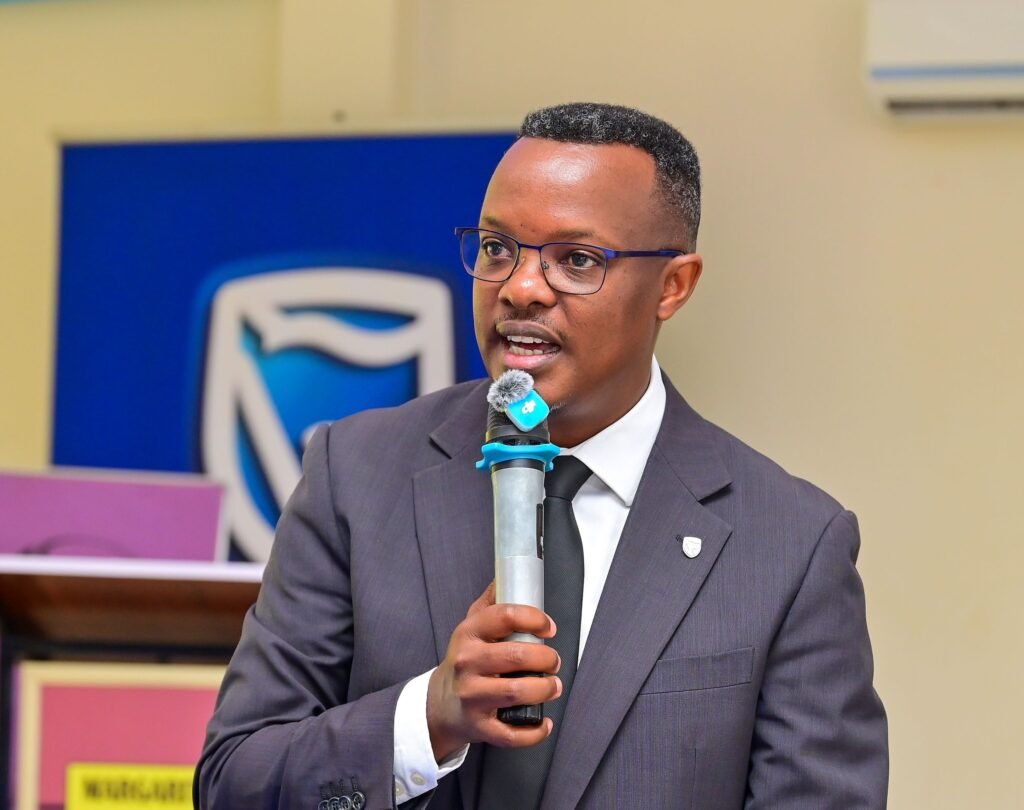
Speaking at the campaign relaunch in Kampala, Sylvia Atuhairwe, Head of Distribution at Stanbic Bank Uganda, said the bank was deliberately trying to make credit more accessible at a time when households and businesses were facing competing financial demands.
“Behind every loan application is a parent preparing for a school term, a business owner seeking to expand, a farmer investing in production, or a family planning for the future,” Atuhairwe said.
Her comments point to a reality that banks cannot easily escape: the Ugandan customer is not neatly divided between formal employment and unemployment.
There is a much larger middle, people earning incomes through businesses, agriculture, contracts, trade and other forms of self-employment.
For this group, the biggest barrier to borrowing is often not the absence of economic activity, but the mismatch between how they earn money and how banks traditionally assess borrowers.
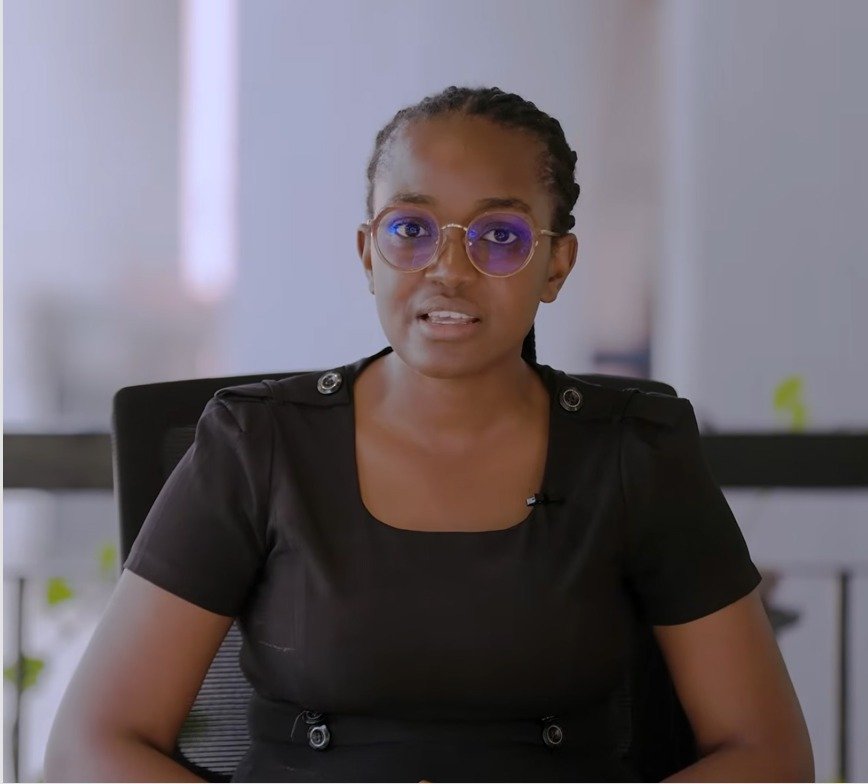
Yvone Namutosi, Head of Digital and E-Commerce at Stanbic Bank Uganda, said customers can apply for loans through the bank’s mobile application and USSD platform and receive a response in as little as two minutes.
“At Stanbic, we are reimagining how customers access credit. Through our digital platforms, customers can apply for a loan from wherever they are and receive a response in as little as two minutes,” Namutosi said.
The significance of digital lending goes beyond speed. For an informal trader or entrepreneur, avoiding repeated branch visits, paperwork and lengthy application processes can materially change the cost of accessing formal finance. Digital channels also give banks an opportunity to observe transaction behaviour and build more responsive financial products.
That could become increasingly important as Uganda’s economy becomes more digitally connected.
The same customer who receives payments digitally, pays suppliers electronically and settles school fees through mobile banking is generating a growing digital financial footprint.
For banks, that footprint could eventually become part of how creditworthiness is understood.
Stanbic’s offer of Instant Cash loans of up to UGX5 million through its mobile banking platform, including interest-free access under the campaign’s stated terms, also illustrates how financial institutions are moving towards smaller, faster and more digitally delivered forms of credit.
But there is a bigger economic question underneath this transformation. Can Uganda turn the financial activity already taking place in the informal economy into productive formal capital?
The answer matters because credit is not simply about consumption. For an entrepreneur, access to working capital can mean more stock, another employee or a larger shop. For a farmer, it can mean inputs and equipment. For a household, it can mean the ability to manage a temporary cash-flow gap without turning to expensive informal borrowing.
This is where banks’ growing interest in unsecured lending becomes strategically important. Traditional secured lending depends heavily on collateral. But a large part of Uganda’s productive economy does not necessarily possess the assets required to unlock substantial formal credit. Unsecured lending shifts some of the assessment towards income, transaction history, repayment capacity and the bank’s understanding of the customer.
That comes with greater risk for lenders, but it also creates the possibility of reaching a much larger market.
Stanbic is increasingly linking this expansion of credit to its wider economic transformation agenda. Still, expanding credit to the informal economy comes with an important warning.
Greater access to borrowing is not automatically financial inclusion. If households and small businesses borrow without sufficient income, financial planning or protection, increased access to credit can become increased vulnerability.
That is why the campaign’s insurance component is also significant. Dogo Singh, Insurance Manager at Stanbic Bank Uganda, said borrowing should be accompanied by protection against risks that could undermine the assets or businesses financed through credit.
“True financial control is not only about accessing money; it is also about protecting your future and the people who depend on you,” Singh said.
That principle may become increasingly important as more informal businesses enter the formal financial system.
The real test for banks will therefore not be how much money they lend, but whether they can build sustainable financial relationships with customers whose incomes, businesses and risks look very different from those of conventional salaried borrowers.
Uganda’s informal economy is too large to remain an afterthought in that equation.
For decades, banks could design products primarily around the formally employed customer and treat everyone else as a harder-to-serve segment. But as entrepreneurship, agriculture, small-scale trade and digital transactions continue to shape household incomes, the economic centre of gravity is becoming harder to ignore.
The next phase of banking in Uganda may therefore be less about bringing informal customers into the old banking model and more about redesigning banking around how Ugandans actually earn, spend, save and invest.
Stanbic’s revamped ‘Oli in Charge’ campaign is one example of that shift. The larger story is much bigger than one loan campaign. Uganda’s informal economy is becoming too important for banks to serve only at the margins. The institutions that learn how to understand, finance and protect this economy could have a decisive role in determining how much of the country’s everyday economic activity becomes productive, bankable capital.