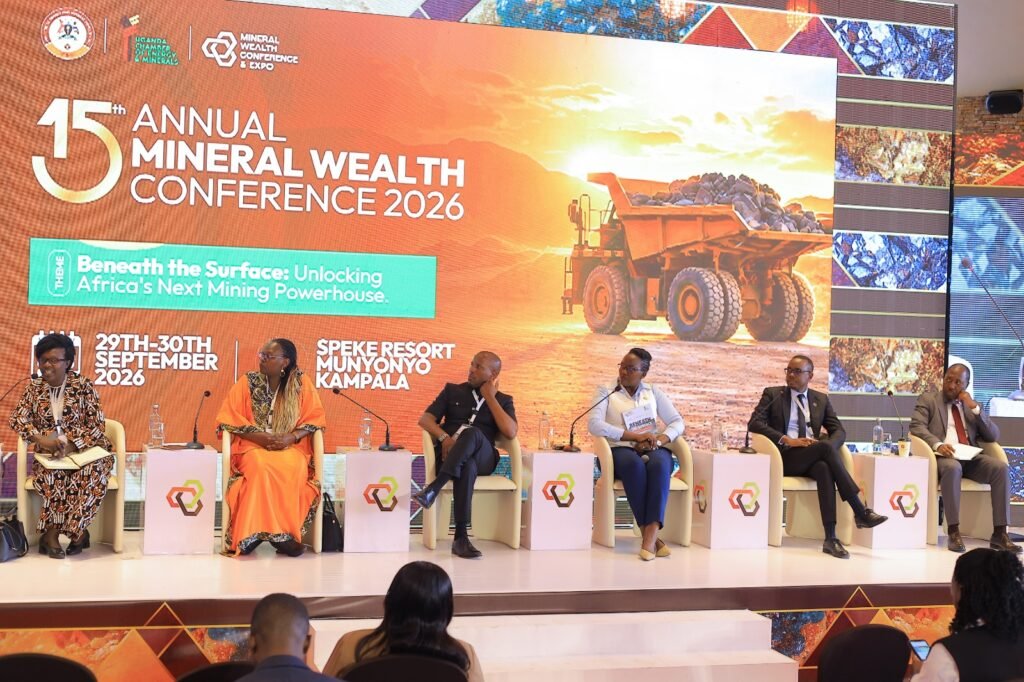

Uganda recently held the 14th Annual Mineral Wealth Conference (AMWC2025) in Kampala under the inspiring theme, “Sustainable Mineral Development through Collaboration, Innovation and Green Transitions”, during which key players in the mineral sector committed to a sustainable industrialised future.
The event, held at the Kampala Serena Hotel, served as a critical platform, unifying policymakers, investors, and industry leaders who share a collective vision, which is transforming Uganda’s vast mineral potential into the cornerstone of its economic overhaul.
As noted by Ms. Cream Treasure, the Communications Specialist at the Uganda National Oil Company (UNOC), “the dialogue focused not just on what Uganda has beneath its soil, but how that wealth will be translated into enduring, inclusive prosperity for all citizens.”
Tenfold Growth Target and Value Addition
At the heart of the conference was Uganda’s bold national aspiration, which is achieving a 10-fold growth in GDP from USD 50 billion to USD 500 billion by 2040. Leaders were unequivocal that the mineral sector is one of the key anchors required to reach this ambitious goal, but only if the strategy pivots away from raw mineral exports.
Key figures, including Hon. Ruth Nankabirwa (Minister of Energy and Mineral Development), Hon. Phiona Nyamutoro (Minister of State for Mineral Development), Dr. Abdoul Karim (Vice President of Fortuna Mining Corporation), and Mr. Aggrey Ashaba (Chairman of the Uganda Chamber of Energy and Mines), stressed that the foundation for job creation, skills development, and long-term value retention lies in:
Local Refining and Processing: Moving up the value chain through mineral beneficiation. As industry figures emphasised, “If Mineral Resource is King, then Value Addition to the Mineral Resource is King Kong.”
Manufacturing: Using processed minerals to build domestic industries.
Job Creation: Ensuring that the economic benefits are retained within the country to foster a skilled workforce.
Minister Nankabirwa revealed that the government is actively supporting this through key developments, including the operationalisation of the Uganda National Mining Company (UNMC) and the development of new steel and cement plants.
Collaboration, ESG, and Green Transitions
What stood out most to observers like Ms. Treasure was the strong alignment among all key stakeholders: government, private sector, and investors.
This shared commitment, according to Ms. Treasure, extends far beyond immediate financial gains, focusing instead on long-term sustainability. Key principles emphasised at the conference included:
Sustainable Development
Recognising that mineral development is fundamentally about building industries and empowering communities, not just extraction.
Environmental Safeguarding
A firm commitment to protecting the environment, particularly water resources and fertile soils that aligns with the “Green Transitions” theme.
Responsible Investment
Driving investment toward critical minerals (like graphite, lithium, copper, and rare earth elements) essential for the global energy transition, while adhering to robust Environmental, Social, and Governance (ESG) standards.
The discussions concluded with a shared sense of optimism and commitment: “The future looks promising,” as Ms. Treasure reflected, with a unified determination to see these conversations translate into action and responsible development that safeguards Uganda’s environment for generations to come.
This conference reinforced the powerful message that Uganda is strategically positioning its mineral wealth to be a true engine of economic transformation, prioritising industrialisation and national content over the short-term profits of raw exports.