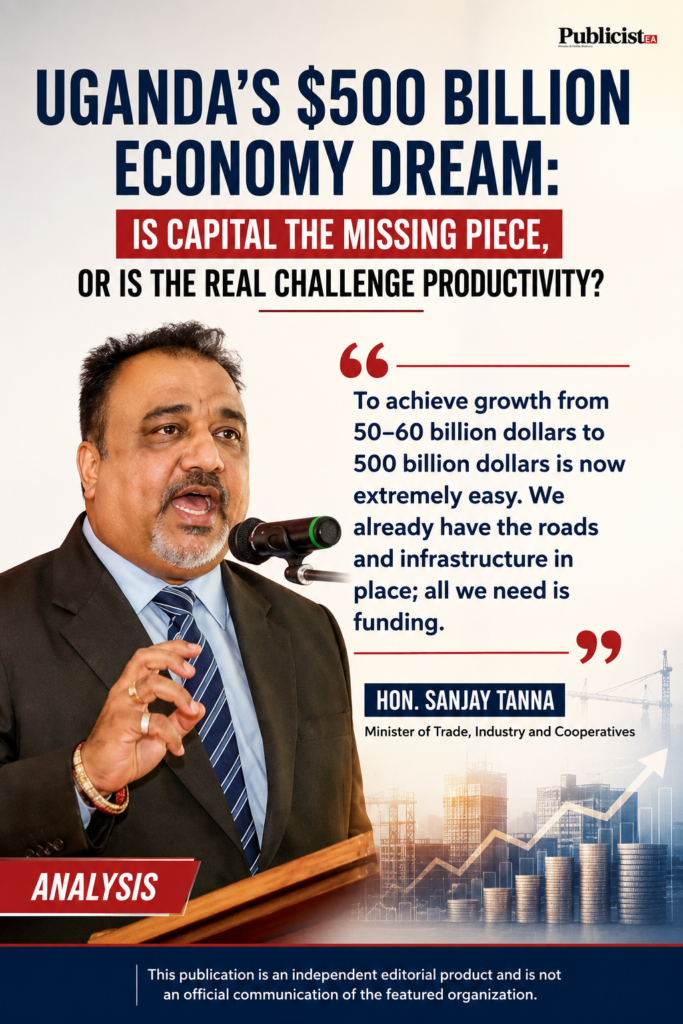

The Uganda National Bureau of Standards (UNBS) is spearheading a major national quality overhaul to unlock Uganda’s ambitious goal of achieving 10-fold economic growth over the next 15 years.
This transformation is being powered by the strategic launch of the Guide for Good Governance of the National Quality Infrastructure (NQI), coinciding with crucial national consultations to review key economic policies.
Speaking at the unveiling of the NQI guide during a function held on Wednesday in Kampala, Eng. James Kasigwa, Executive Director of UNBS, framed the launch as an “essential step towards building a stronger, more competitive Uganda.”
“Competitive enterprises, credible institutions, and quality-driven production systems are non-negotiable for success both locally and globally,” Eng. Kasigwa said.
MSMEs Ready for the Continental Market
Eng. Kasigwa noted that with over 90% of Uganda’s businesses being Micro, Small, and Medium Enterprises (MSMEs), they are rightly identified as the engine of the economy, driving job creation and innovation.
He highlighted the immense opportunities these businesses can seize if they embrace quality and standards, which include:
Demographic Dividend
He explained that over 75% of Ugandans are under 35 years old, providing a dynamic, trainable labour force ready to fuel industrialisation.
African Market Access
Eng. Kasigwa pointed out that MSMEs have access to the vast East African Community (EAC) market, worth USD $300 million, and to the African Continental Free Trade Area (AfCFTA) market, worth USD $1.5 billion.
Standards Harmonisation
He revealed that UNBS is actively supporting this access through its participation in standards harmonisation in the EAC and the “One Standard, One Certificate” efforts led by the African Organisation for Standardisation (ARSO).
He also observed that the continent is seeing strong growth in regional trade, rising from USD $190 billion in 2023 to USD $220 billion in 2024, a massive opportunity for quality-conscious MSMEs.
Policy Reform and the Challenge of Quality
According to Eng. Kasigwa, the NQI Guide launch doubled as a National Stakeholder Consultation on the review of the country’s foundational policies: the MSME Policy (2015) and the National Standards and Quality Policy (2012).
“This comprehensive approach is designed to address existing systemic challenges, which include: Low Standards Adoption and Gaps in the NQI. There is an urgent need to strengthen the NQI to protect consumers and enhance competitiveness,” he stated.
Eng. Kasigwa emphasised that to achieve the set objectives, policy reform must address East Africa’s low 16% share of intra-African trade (compared to Southern Africa’s 40%) through strong policy and coordinated action.
Untapped Potential in Value Addition
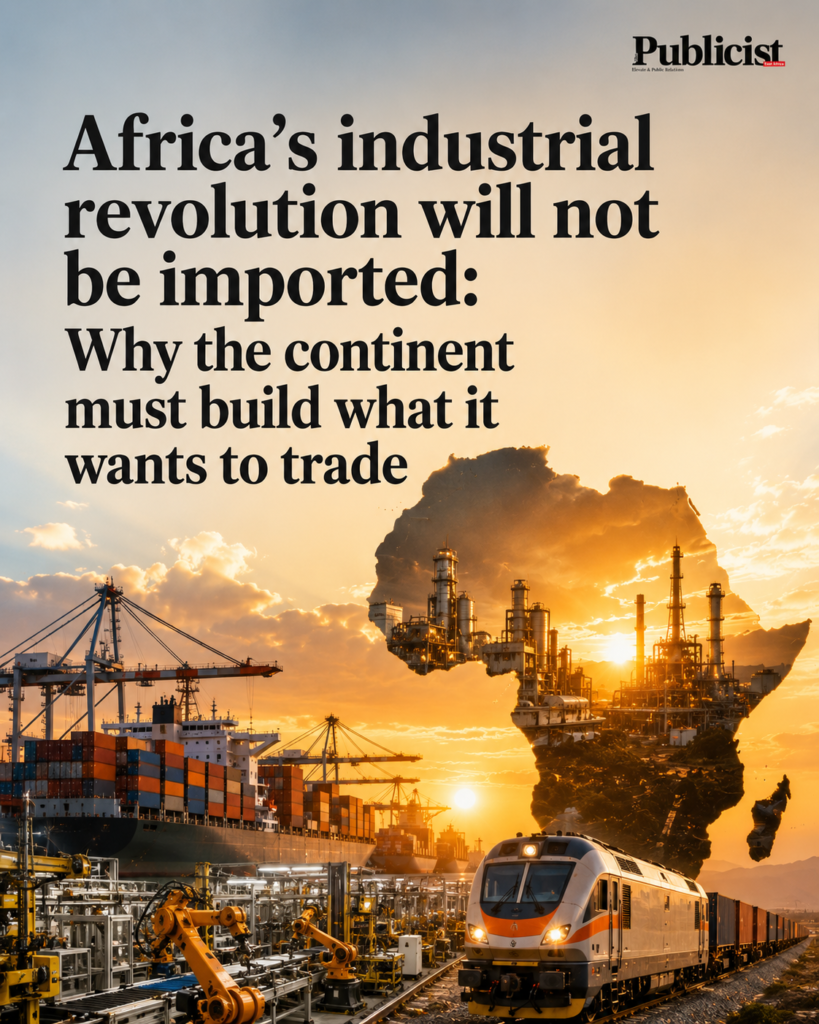
He also disclosed that Uganda still largely exports raw materials, yet through industrialisation and value addition, the product value can be increased a thousand-fold.
“The difference between developed and developing economies is defined by how well they have embraced standardisation and quality,” he said, adding, “From the steam engine to electricity, computing, and now Artificial Intelligence, every industrial revolution has been won by nations that leveraged standards and technology, and Uganda needs to do the same.”
Embedding Good Governance and Competitiveness
He explained that the new NQI guide and the ongoing policy reviews mark a decisive step toward creating a transparent, accountable, and high-performing quality ecosystem.
This ecosystem, he noted, is the engine that will propel Uganda’s aspiration for tenfold economic transformation.
He concluded by revealing that UNBS is calling upon all MSMEs, private sector actors, development partners, and consumers to actively participate in shaping and strengthening the NQI guide.
The goal, he stressed, is clear: to embed good governance, quality consciousness, and competitiveness at the heart of Ugandan enterprises, enabling them to compete confidently across Africa and the world.