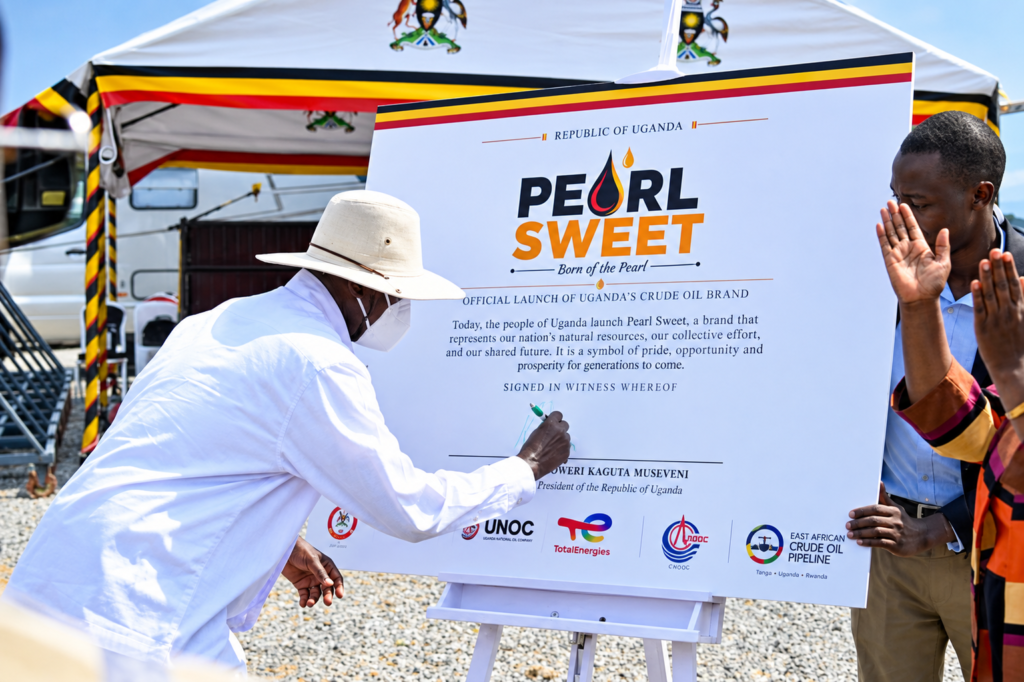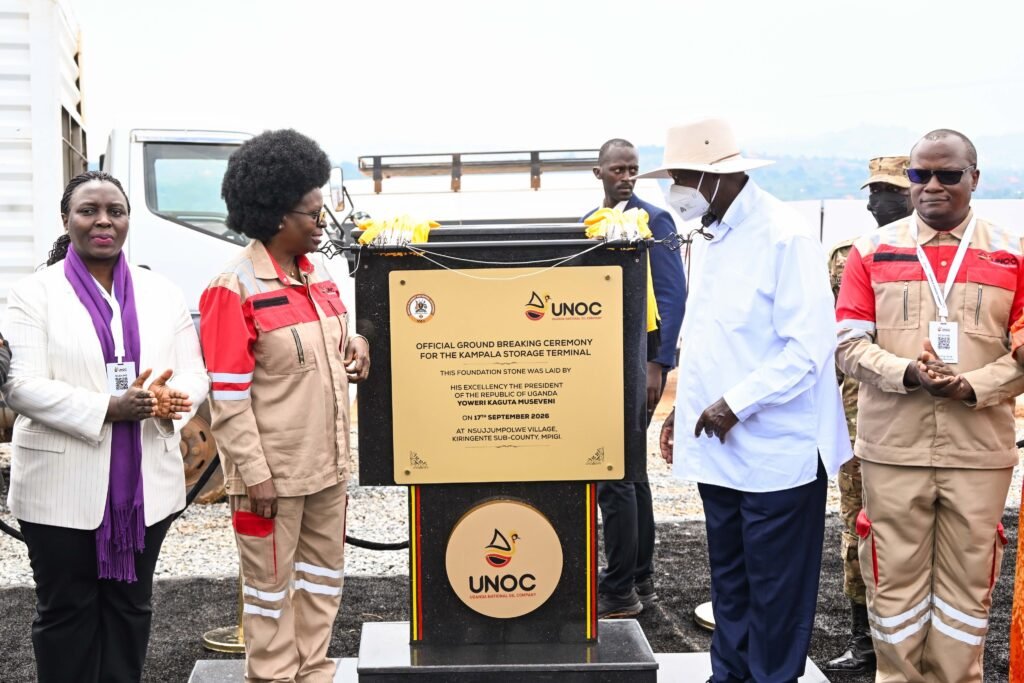

As Uganda prepares for its historic transition from infrastructure development to the production phase of its oil and gas sector, the focus is shifting sharply from drilling to cultivating a lasting legacy of empowered nationals and enterprises.
This was the central theme of the 6th National Content Conference (NCC 2025) that kicked off today in Kampala, where officials celebrated the 10th anniversary of the Petroleum Authority of Uganda (PAU) and launched a strategic blueprint for the future.
The conference, attended by industry leaders and regulators, underscored that the ultimate measure of success is not merely the commencement of oil flow, but how the resource transforms Uganda into a prosperous nation, in line with the country’s ambitious Tenfold Growth Strategy by 2040.
Projection of USD $8 Billion in Long-Term Contracts
Hon. Sidronius Okasai Opolot, State Minister of the Ministry of Energy and Mineral Development (MEMD), highlighted the immense economic opportunities unlocked by the sector’s operational phase.
Production Scale
Hon. Opolot said that “With an estimated 6.5 billion barrels of oil in place, 1.65 billion of which are recoverable, Uganda’s production is expected to reach 230,000 barrels per day, positioning the country as a significant mid-tier oil producer in Africa.”
Long-Term Spend
The Minister emphasised that the petroleum projects span 20–25 years, with annual operating expenditures expected to exceed USD $8 billion.
“These funds will support long-term contracts for Ugandan enterprises in crucial areas, including maintenance, manufacturing, equipment supply, health and safety, ICT, chemicals, and specialised engineering services,” Minister Opolot said.
PAU’s Strategic Plan to Redefine National Prosperity
The core challenge, as stated by Minister Opolot, is turning oil resources into lasting national prosperity.
This, according to him, means “moving beyond crude extraction to building strong institutions, resilient local enterprises, and capacity that endures beyond the fields.”
At the conference, the PAU’s new Strategic Plan was launched, which is a five-year blueprint aligned with the Tenfold Growth Strategy.
According to the Minister, this plan will guide the regulatory approach, national content implementation, and technology adoption, with a sharp focus on efficiency, value retention, competitiveness, and sustainable development.
Mr. Ernest Rubondo, Executive Director of the PAU, confirmed that the NCC 2025 agenda was specifically curated to explore the opportunities and expectations in the production phase, including available financing options for Ugandan entities and strategies for technology transfer.
He said that this year’s theme: ‘Beyond Drilling: Cultivating a Legacy of Empowered Nationals and Enterprises in Uganda’s Oil Age’, reflects the current phase of Uganda’s oil and gas sector, as the country prepares to begin production in the second half of 2026.
“During this conference, our speakers will explore the opportunities and expectations in the production phase, share experiences of companies implementing national content, and highlight available financing options for Ugandan entities,” Mr. Rubondo said.
“We will also discuss opportunities in the region and in emerging oil provinces like Namibia, as well as strategies for technology transfer, innovation in operations, and how the oil and gas sector will drive Uganda’s Tenfold Growth by 2040. Regional synergies for national content development and other key topics will also be featured,” he added.
Call to Action for Evolving Institutions
The Minister issued a direct challenge to Uganda’s education and training sector, stressing that a new professional class is required to sustain the operational phase.
“Uganda will need certified technicians, control room operators, pipeline inspectors, digital engineers, geoscience and environmental specialists, as well as thousands of professionals in finance, accounting, insurance, procurement, logistics, law, and occupational health and safety,” the Minister said, adding, “Our training institutions and skills development ecosystem must evolve, becoming more agile, industry-driven, and technologically grounded.”
This commitment, he noted, ensures that Ugandans remain active participants, not just spectators, in the sector.
Defining ‘First Commercial Oil’
In his remarks, Mr. Rubondo provided clarity on the phased nature of entering the international oil market, defining the stages of ‘First Oil’. He explained the structured meaning of ‘First Oil’ thus;
First Oil Production
The moment oil begins to flow from the reservoirs to the Central Processing Facilities.
First Transfer
Within about two weeks, the processed oil reaches the delivery point in Kabaale, Hoima, and is transferred into the national infrastructure of the East African Crude Oil Pipeline (EACOP).
First Commercial Oil
According to Mr. Rubondo, this will be achieved once the first cargo is officially sold at the export terminal in Tanga, Tanzania, confirming Uganda’s entry into the international market. The production phase, he noted, is expected to begin in the second half of 2026.
He revealed that the conference will conclude with the National Content Awards, recognising local excellence in various categories.
“The conference will feature an exhibition where companies showcase their products, services, and mandates. It will conclude with the National Content Awards, recognising outstanding contributions in categories such as Skilling and Employment, Technology Transfer, Supplier Development, Inclusivity, Corporate Social Responsibility, and National Content Partner of the Year,” Mr. Rubondo noted.