Dangote over regional oil refining have revived a question many once dismissed, was
Uganda’s refinery-first strategy actually right?
For years, one word has defined Uganda’s oil sector: delay.
Delayed production timelines. Delayed refinery negotiations. Delayed investment decisions. And still, no first oil.
To critics, Uganda appeared trapped, negotiating endlessly while other nations pumped, exported, and collected revenues. The country’s cautious approach was routinely labelled indecisive, bureaucratic, and economically self-defeating.
But a new development is quietly reshaping that narrative.
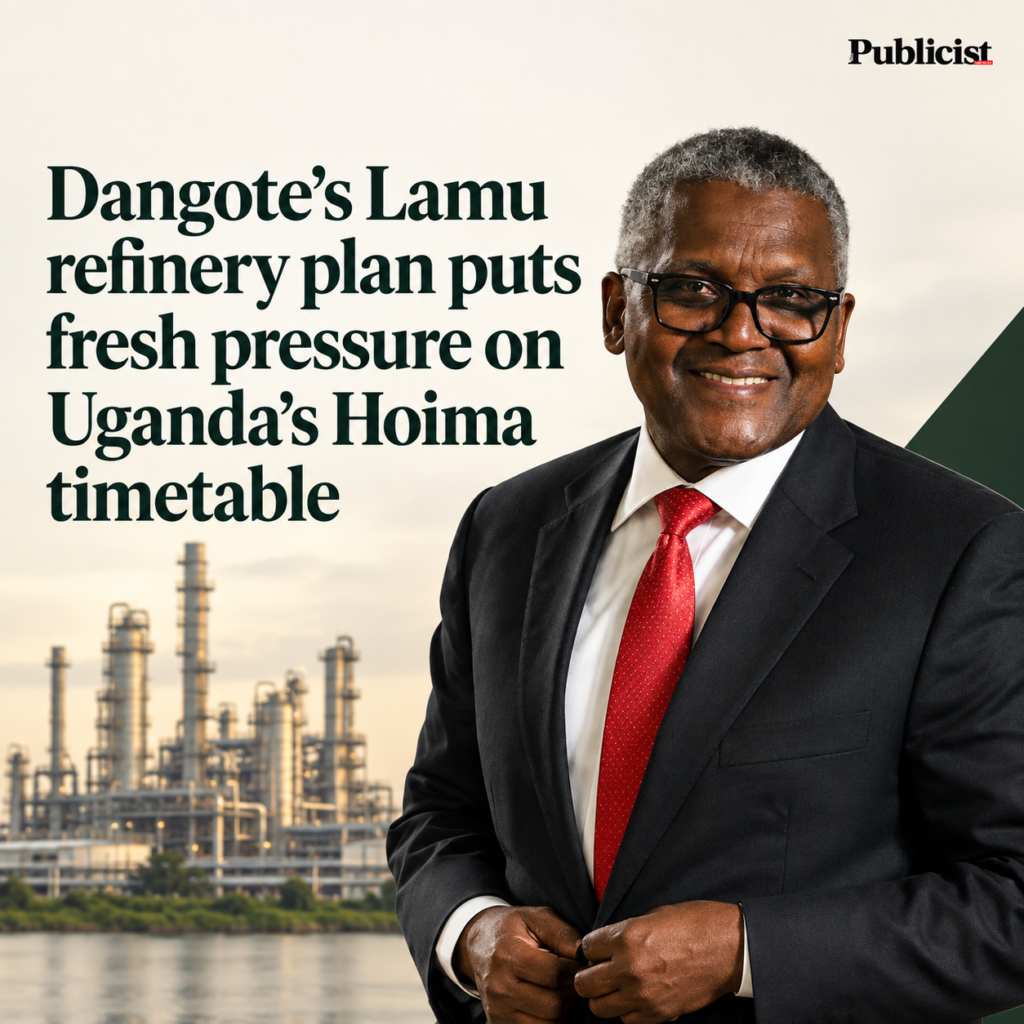
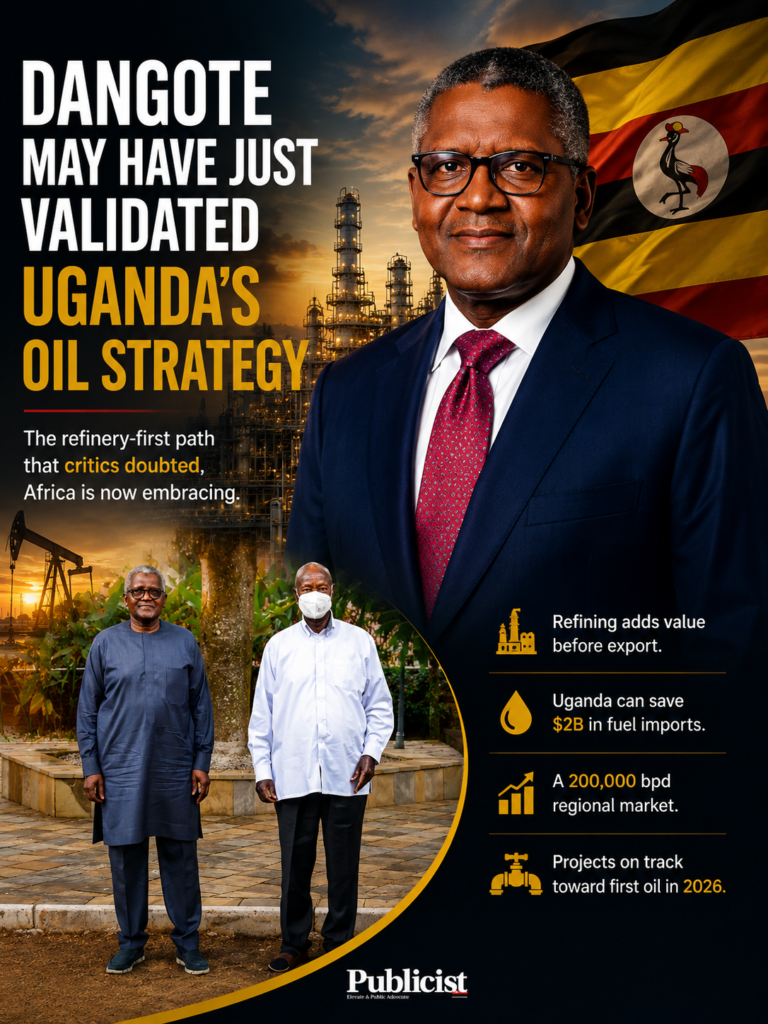
Recent discussions between President Yoweri Museveni and African industrialist Aliko Dangote over regional oil refining have revived a question many once dismissed, was Uganda’s refinery-first strategy actually right?
For over a decade, Museveni has argued that Uganda should not export crude oil without first building local refining and industrial capacity. His position rests on a simple economic principle, value addition before export.
At the time, critics warned Uganda was losing time, investor confidence, and revenue opportunities. Speed, they argued, was everything.
Museveni disagreed. Uganda, he maintained, should not become another exporter of raw commodities while importing expensive refined fuels.
According to the Petroleum Authority of Uganda (PAU), the Albertine Graben holds about 6.5 billion barrels of oil in place, with up to 1.65 billion barrels now estimated as recoverable. Then came Dangote.
For decades, Nigeria was Africa’s largest crude producer but remained heavily dependent on imported refined fuel. That contradiction exposed the limits of raw commodity exports, resource wealth leaving the continent while value is created elsewhere.
The Dangote Refinery has become a major correction to that model. With a capacity of 650,000 barrels per day, it began producing diesel and naphtha in 2024 and later expanded into gasoline. It is now the largest single-train refinery globally.
Aliko Dangote has since confirmed the refinery is exporting fuel across African markets, stating it has capacity to supply West, Central, and East Africa.
The significance for Uganda is clear, the logic driving Dangote’s refinery mirrors Uganda’s long-standing argument, process resources locally and retain downstream value.
Uganda did not design this continental shift. But it is now aligned with it.
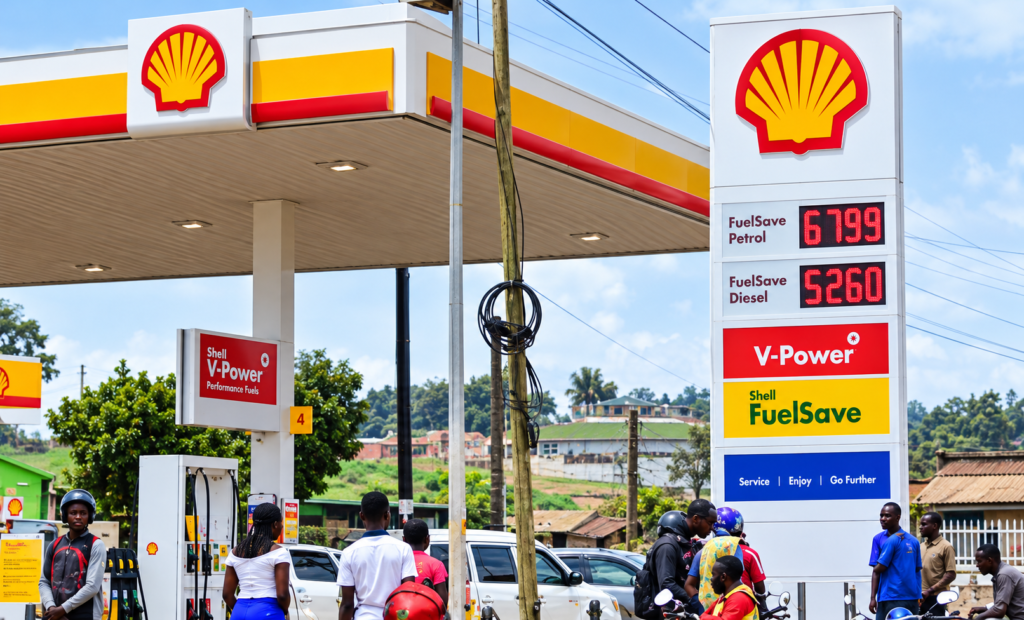
Uganda currently spends more than $2 billion annually importing refined petroleum products, exposing the economy to global price volatility and foreign exchange pressure.
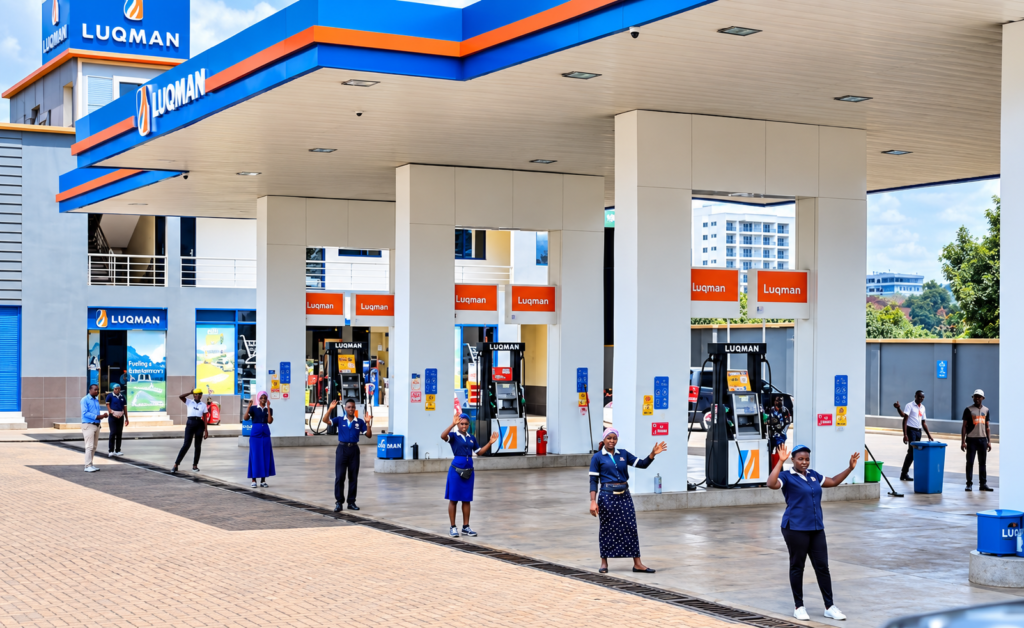
At the same time, East Africa consumes nearly 200,000 barrels of petroleum products per day, with demand growing at about 7 percent annually. Yet the region has limited refining capacity.
This structural gap is the basis of Uganda’s refinery argument.
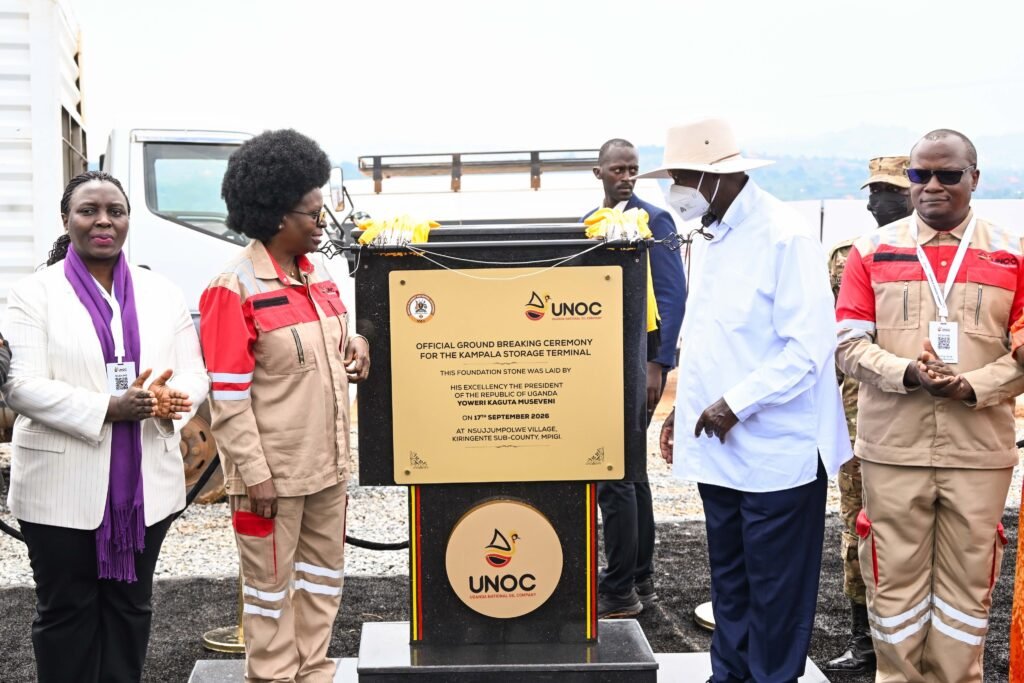
The planned Hoima refinery, developed with UAE-based Alpha MBM Investments, will process 60,000 barrels per day and cost about $4 billion. A Final Investment Decision is expected in July 2026. Uganda has also signed implementation agreements for the project.
Alongside this, the Tilenga and Kingfisher oil fields and the East African Crude Oil Pipeline (EACOP) are progressing toward first oil in 2026.
Uganda is entering oil production at a moment when global energy dynamics are shifting.
Across Africa, governments are prioritising industrialisation, energy security, and regional value chains. Fuel supply disruptions in recent years have reinforced the need for domestic refining capacity. The African Continental Free Trade Area is also pushing countries toward integrated regional production rather than raw exports.
Policy analyst Ali Lukyamuzi notes that even partial diversion of EACOP volumes into regional refining could significantly improve East Africa’s energy self-sufficiency.
Viewed in this context, Uganda’s delays begin to look less like failure and more like accidental positioning. Instead of entering global markets early as a crude exporter, Uganda now has the opportunity to connect oil production to a broader industrial strategy involving petrochemicals, fertilisers, manufacturing, logistics, and regional fuel supply.
Whether that opportunity is realised remains uncertain.
The delays have come at a cost.
Communities in the Albertine Graben have waited nearly two decades for transformation. Infrastructure development has been slower than expected. Investor uncertainty has persisted. And questions remain about whether Uganda can move fast enough to monetise its reserves before global energy transition pressures reduce long-term oil demand.
A refinery-first strategy is only meaningful if it is executed. That requires infrastructure delivery, technical capacity, financing, and integration into regional markets. Without that, value addition remains a policy aspiration rather than an economic reality.
Uganda’s oil story reflects a wider African challenge, Should resource-rich countries prioritise rapid extraction and early export revenues, or slow down to build industries capable of capturing long-term value?
Africa produces roughly 8 percent of global crude oil but accounts for only about 2 percent of global refining capacity. That imbalance continues to drain value from the continent.
But delay carries its own risks, lost revenue, investor fatigue, and the possibility that global energy systems shift before industrial plans materialise.
For years, the question was simple: why has Uganda’s oil taken so long? That question is now changing.
If Uganda successfully develops its refinery, integrates into a growing 200,000-barrel-per-day regional market, and reduces its $2 billion fuel import bill, then the delay may be reinterpreted not as indecision, but as an attempt—however imperfect—to enter the global energy economy from a stronger position.
And with Dangote now exporting refined products across Africa at scale, the model Uganda has long argued for is no longer theoretical, It is already operational.
The story of Uganda’s oil may not ultimately be about delay.