For years, Uganda’s banking sector has carried a familiar contradiction: strong profits, expanding balance sheets, rapid digital adoption, and rising deposits, alongside a quieter and more persistent limitation in its economic footprint.
Banks have scaled. Financial systems have deepened. Transactions have accelerated.
Yet in agriculture, manufacturing, and small enterprise development, access to affordable, productive credit remains constrained. Growth in the financial sector has not consistently translated into structural transformation in the real economy.
It is within this gap that Pearl Bank Uganda is positioning itself, not simply as a growing institution, but as a test case for whether banking in Uganda can deliver a different kind of economic outcome.
The bank’s 2025 performance signals clear momentum. Net profit rose by 34 percent to UGX 47.3 billion. Customer deposits increased to UGX 1.42 trillion. Total assets reached UGX 1.87 trillion. The loan portfolio expanded to UGX 749 billion, reflecting stronger credit activity across segments.
On paper, this is a straightforward growth story. In context, it is being interpreted differently. Pearl Bank is increasingly assessed not only on financial performance, but on whether its growth model can demonstrate a clearer link between banking expansion and real economic output. That shift changes what the numbers mean.
A significant part of this expansion is anchored in the bank’s digital and inclusion infrastructure through the Wendi platform. The system now operates across more than 10,000 agents, over 5,000 parishes, and integrates more than 15,000 SACCOs nationwide, making it one of the most extensive grassroots financial networks in Uganda’s banking ecosystem.
The scale is significant, but it introduces a harder question. Financial access in Uganda has expanded rapidly over the past decade, yet the conversion of that access into sustained productivity, stronger enterprises, and improved incomes has moved more slowly. Inclusion measures reach. Transformation measures outcomes.
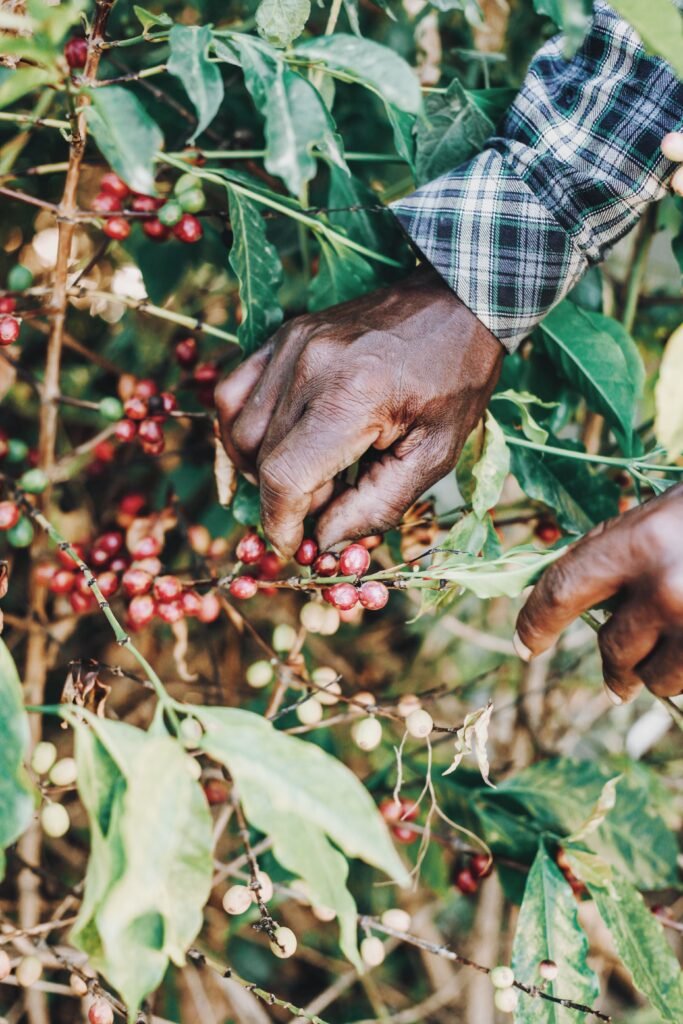
Pearl Bank’s lending pattern suggests a deliberate shift toward productive sectors. In 2025, the bank disbursed approximately UGX 340 billion to agriculture, supporting more than 11,000 farmers. It also extended UGX 398 billion to SMEs and financed thousands of micro enterprises.
These sectors sit at the centre of Uganda’s employment structure and long-term development ambitions. They are also structurally difficult to finance, shaped by limited collateral, income volatility, and exposure to climate and market shocks. These conditions have historically constrained lending appetite across much of the banking system. Pearl Bank’s strategy represents an attempt to expand credit exposure into these areas at scale.
The bank’s direction is closely aligned with national development frameworks, including the NDP IV agenda and broader financial inclusion priorities. Government officials have been explicit about the expectations. Finance Minister Matia Kasaija has called for deeper lending into productive sectors as a requirement for structural economic transformation. State Minister for Finance Evelyn Anite has described Pearl Bank as a demonstration of Uganda’s growing domestic financial capacity.
This alignment strengthens policy relevance, but it also raises expectations beyond commercial performance. When a bank becomes closely tied to national development priorities, its results are increasingly measured in terms of economic impact as much as profitability.
The challenge facing Pearl Bank is not expansion, but balance. Uganda’s financial system has consistently demonstrated strength in deposit mobilisation and transactional growth. What remains less consistent is the translation of financial depth into sustained productivity growth in the real economy.
This creates a structural tension at the core of the model. Expanding inclusion increases reach. Expanding productive lending increases exposure. Maintaining commercial discipline requires control over both.
Agriculture, SMEs, and micro-enterprises operate in environments that are structurally different from corporate lending. Returns are less predictable, markets more volatile, collateral systems weaker, and climate or price shocks more immediate. Sustaining credit growth in these segments without weakening portfolio quality becomes a central test of the model.
This is where development-oriented banking is most often challenged. It is not the expansion of lending that defines success, but the ability to sustain it without eroding financial stability.
Uganda has made visible progress in financial inclusion through digital banking, agent networks, and mobile money ecosystems. Access is no longer the primary constraint it once was. However, the relationship between financial access and economic transformation remains uneven. Higher financial penetration has not consistently translated into proportional gains in industrial output, job creation, or enterprise scaling.
That gap defines the environment in which Pearl Bank is now operating.
The bank sits at the intersection of commercial banking and development expectation. It is expanding access, increasing lending into productive sectors, and building infrastructure that reaches deep into rural economies. But the broader outcome of that strategy is still unfolding.
Because banking performance is not ultimately defined by how widely it reaches. It is defined by how deeply it reshapes economic activity.
This raises a wider question for Uganda’s financial system. Can the banking sector evolve beyond efficient financial accumulation into a system that consistently drives structural economic transformation? Or will it continue to deliver strong financial performance while the productivity challenge in the real economy remains only partially addressed?
Pearl Bank has become one of the clearest attempts to test that question in practice. Its performance will not only shape its institutional trajectory. It will also help define the limits, and possibilities, of Uganda’s banking model in the years ahead.