Across Africa’s rapidly urbanizing economies, housing remains one of the most persistent development challenges. Cities are expanding at a pace that continues to outstrip infrastructure and housing delivery. In this environment, Shelter Afrique Development Bank’s 2025 financial performance presents a picture of institutional growth and strengthening balance sheets, but also raises a deeper structural question about impact.
Shelter Afrique Development Bank (ShafDB), headquartered in Nairobi, reported a comprehensive profit of US$2.14 million for the year ended 31 December 2025, representing a 20% increase from US$1.79 million recorded in 2024.
The growth was driven by stronger lending activity, stable income streams, and improved treasury performance. Loan disbursements rose sharply to US$63 million in 2025, compared to US$24.06 million in 2024, reflecting a significant expansion in the Bank’s financing footprint.
The net loan portfolio increased by 29%, rising from US$134.78 million to US$174.08 million. Total assets also strengthened, reaching US$235 million from US$208 million in the previous year. Shareholders’ funds increased to US$176.09 million, supported by retained earnings and additional capital subscriptions.
Despite higher operating costs linked to institutional transformation and expansion, the Bank maintained positive profitability. Interest income remained stable at US$18.62 million, underscoring the resilience of its core lending operations.
At the governance level, Shelter Afrique’s leadership attributes the 2025 performance to the ongoing transformation of the institution into a more robust and effective development finance bank.
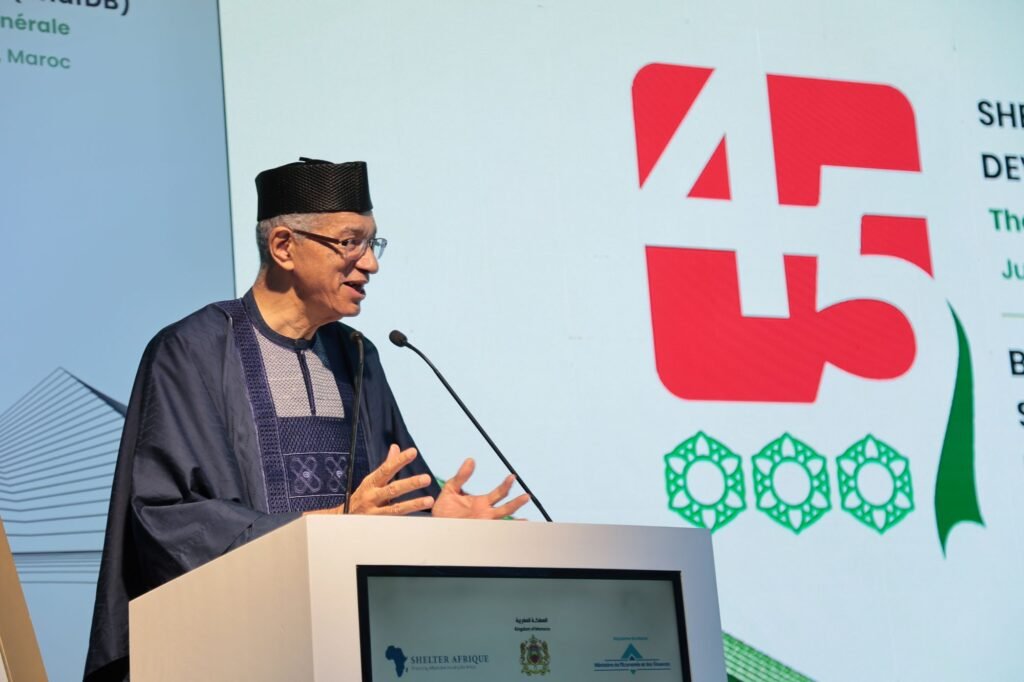
“The Bank’s performance in 2025 reflects the successful execution of our transformation agenda and the strength of our governance, strategy, and partnerships. Achieving profitability while significantly expanding our lending activities demonstrates the sustainability of our business model and our ability to create lasting value for our shareholders, investors, and member states’’said Lionel Zinsou, Chairperson of the Board of Directors of Shelter Afrique Development Bank.
As Africa continues to urbanize at an unprecedented pace, Shelter Afrique Development Bank remains committed to mobilizing capital at scale to support affordable housing, sustainable cities, and inclusive economic growth across the continent,” he adds
His statement frames the institution’s progress not only as financial recovery but as part of a broader mandate, positioning Shelter Afrique as a scalable development finance platform capable of responding to Africa’s accelerating urban transition.
On the operational side, the Bank’s management points to 2025 as a year of consolidation and expansion, particularly in loan growth, funding diversification, and capital market positioning.
“The 2025 results mark another important milestone in our journey to becoming Africa’s leading housing and urban development finance institution. We grew our loan portfolio by nearly 30 percent, increased disbursements by 129%, strengthened our balance sheet, and diversified our funding sources while maintaining profitability,” said Thierno-Habib Hann, Managing Director and Chief Executive Officer.
Hann emphasized that the Bank’s progress extends beyond balance sheet growth, highlighting structural changes in how the institution raises and deploys capital.
“Equally important, we laid the foundation for future growth through new capital market initiatives, local currency financing solutions, and strategic partnerships that will enable us to scale our impact and better serve our clients across Africa,” he added.
These statements reflect a strategic shift toward capital market integration, local currency financing mechanisms, and increased reliance on long-term funding instruments.
A defining feature of 2025 was the strengthening of Shelter Afrique’s funding base through major external facilities and capital market preparations.
The Bank secured a US$120 million concessional facility from the Arab Bank for Economic Development in Africa (BADEA), aimed at supporting member states’ capital subscriptions and advancing its trajectory toward an investment-grade credit rating.
It also mobilized a US$50 million facility from the African Export-Import Bank (Afreximbank), further expanding its lending capacity for housing and urban infrastructure projects across the continent.
In parallel, the Bank advanced preparations for a FCFA 60 billion sustainable bond programme in West Africa and received approval for a US$500 million East Africa sustainable bond programme. These initiatives are intended to deepen access to domestic capital markets and expand long-term financing options for housing development.
Despite institutional growth and increased financing capacity, Africa’s housing deficit remains substantial. Rapid urbanization continues to outpace housing supply, while structural constraints such as land administration inefficiencies, high construction costs, and infrastructure deficits persist across many markets.
Even with increased lending activity, the conversion of financial capital into affordable housing remains uneven, largely due to systemic constraints in project preparation, affordability thresholds, and urban planning bottlenecks.
This creates a structural imbalance, financial institutions may expand their balance sheets, but housing delivery depends on broader ecosystem readiness.
The expansion of Shelter Afrique’s loan book and capital base highlights a clear shift in the scale of available financing for housing. However, the pace of financial expansion does not automatically align with the pace of housing construction.
While disbursements rose to US$63 million in 2025, Africa’s housing demand continues to grow exponentially, driven by demographic expansion and accelerated urban migration.
This divergence raises a central development question: whether current financing models are sufficient to meaningfully close the housing gap, or whether systemic constraints continue to limit the translation of capital into housing units.
Shelter Afrique Development Bank’s 2025 performance reflects a strengthening institution that is increasingly integrated into Africa’s development finance architecture. Its growing profitability, expanded loan portfolio, and diversified funding sources indicate improved institutional resilience and operational scale.
However, the broader challenge remains unchanged: ensuring that financial growth translates into measurable improvements in housing access, affordability, and urban development outcomes.
As Africa’s cities continue to expand, the key test will not only be the growth of development finance institutions like Shelter Afrique, but their ability to convert capital into homes, infrastructure, and livable urban environments at scale.
Until that alignment is achieved, the gap between financial performance and housing outcomes will remain one of the most defining tensions in Africa’s development trajectory.