“Investment follows confidence, and confidence follows credible risk mitigation,” President Ruto said.
Africa’s biggest investment challenge is no longer only about finding opportunities. The continent has abundant resources, a growing consumer market, a youthful workforce and significant potential in sectors ranging from renewable energy to manufacturing. The bigger challenge has been convincing investors that Africa’s opportunities can be matched with predictable and manageable risks.
This is where the role of the African Trade and Investment Development Insurance (ATIDI) is becoming increasingly critical. As African governments seek to attract more private capital to finance infrastructure, industrialisation and economic transformation, ATIDI is emerging as a key institution in reducing investment uncertainty and strengthening investor confidence.
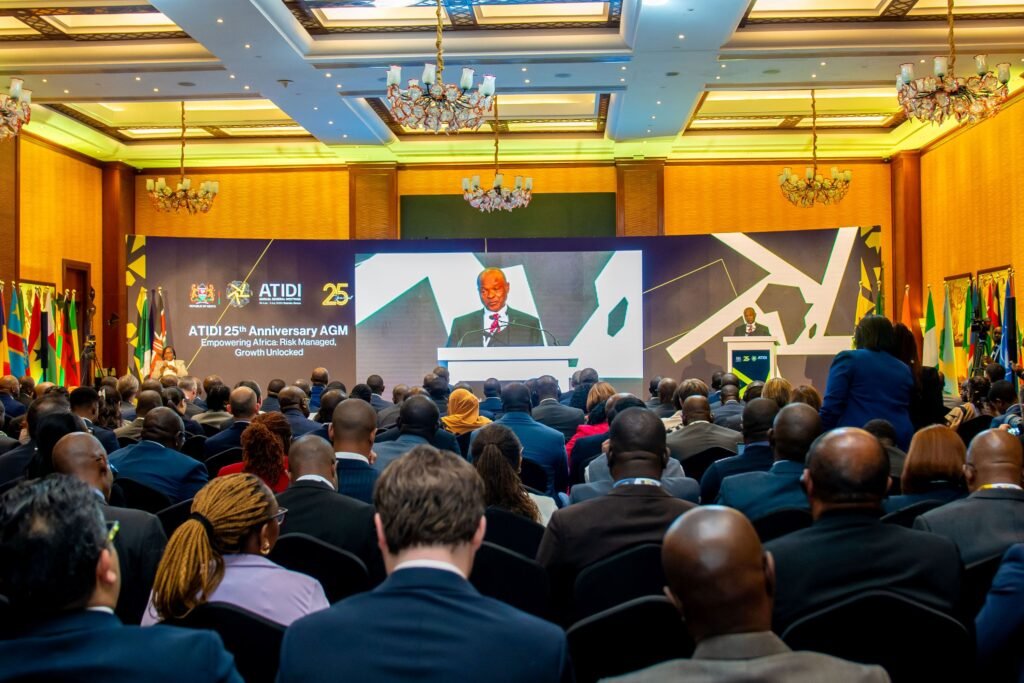
The institution’s 26th Annual General Meeting, held in Nairobi, Kenya, from 30 June to 3 July 2026 under the theme “Empowering Africa: Risk Managed, Growth Unlocked,” highlighted ATIDI’s transformation from a regional insurance provider into a continental risk-management platform supporting Africa’s investment ambitions.
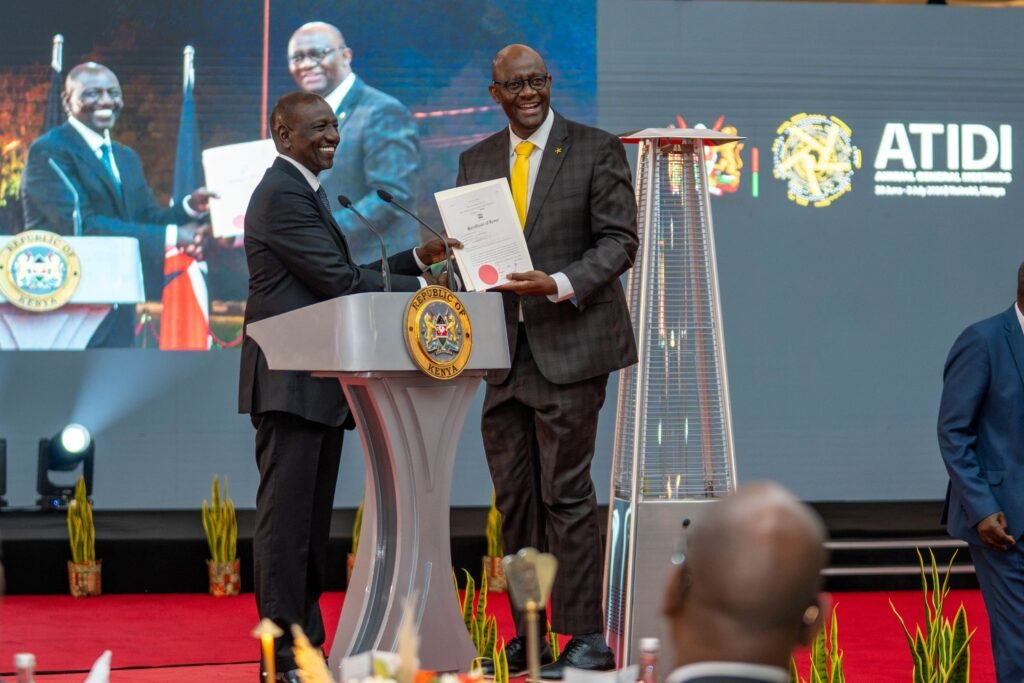
At the meeting, Kenyan President William Ruto described ATIDI as a strategically important institution within Africa’s emerging financial architecture, arguing that investment flows where confidence exists.
“Investment follows confidence, and confidence follows credible risk mitigation,” President Ruto said.
His remarks captured a growing reality in Africa’s development journey: capital exists, but unlocking it requires institutions capable of managing risk, protecting investors and creating confidence.
“Africa’s greatest asset is confidence. If capital is the engine of development, confidence is its fuel. That is where ATIDI has found its unique purpose. We do not merely mitigate risk. We create confidence,”
Africa faces a major economic contradiction. The continent holds nearly USD 4 trillion in long-term domestic savings through pension funds, insurance assets and central bank reserves. Yet, Africa continues to face an annual financing gap exceeding USD 400 billion, with much of its available capital invested outside the continent.
For President Ruto, the challenge is not simply a shortage of money. “Africa does not suffer from a shortage of capital. Africa suffers from a shortage of institutions capable of transforming risk, mobilising savings and connecting them to productive investment,” he said.
This gap between available capital and investable opportunities has been driven partly by perceptions of risk. Political uncertainty, currency fluctuations, regulatory changes and concerns about project viability have historically increased the cost of financing African investments. As a result, businesses and governments often pay more for capital compared to markets perceived as less risky. ATIDI’s growing importance lies in addressing this confidence gap.
Founded to support trade and investment across Africa, ATIDI provides insurance and guarantee solutions that protect investors and financial institutions against risks that can undermine projects.
Through instruments such as political risk insurance and credit insurance, ATIDI helps create conditions where investors are more willing to commit capital to African markets.
Over the past 25 years, the institution has helped catalyse more than USD 93 billion in private investment across Africa.
Its impact demonstrates a fundamental principle in investment: capital does not only move towards opportunity; it moves towards confidence.
Professor Kelly Mua Kingsly, Chairman of ATIDI’s Board of Directors, described confidence as Africa’s most important investment asset.
“Africa’s greatest asset is confidence. If capital is the engine of development, confidence is its fuel. That is where ATIDI has found its unique purpose. We do not merely mitigate risk. We create confidence,” he said.
This confidence-building role has become increasingly important as African governments face limited fiscal space and rising debt pressures. ATIDI’s evolution reflects a broader shift in Africa’s financial landscape.
For years, development across the continent relied heavily on government spending and external financing. However, growing infrastructure needs and fiscal constraints have created demand for institutions that can mobilise private capital at scale.
ATIDI’s guarantee model provides one answer to this challenge. By reducing investment risks, guarantees can encourage commercial lenders, institutional investors and multinational companies to participate in projects that might otherwise be considered too risky.
President Ruto noted that strengthening Africa’s guarantee architecture could significantly expand investment flows, calling for ATIDI’s recapitalisation to USD 2 billion.
He argued that every dollar invested in Africa’s guarantee systems has the potential to mobilise significantly more private capital. Kenya has already positioned itself as a major supporter of ATIDI’s expansion. The country announced plans to increase its shareholding in the institution from USD 25 million to USD 65 million, subject to national approval processes.
Kenya also presented ATIDI with land for the construction of its permanent headquarters, reinforcing Nairobi’s growing role in Africa’s financial ecosystem.
ATIDI’s expanding role comes amid efforts to build a stronger African financial system capable of mobilising domestic resources and reducing reliance on external financing.
President Ruto endorsed the New African Financial Architecture for Development (NAFAD), an initiative designed to strengthen cooperation among African financial institutions and improve risk-sharing mechanisms.
At the centre of this framework is the Alliance of African Multilateral Financial Institutions (AAMFI), bringing together institutions including the African Development Bank, Afreximbank, Africa Finance Corporation and ATIDI.
The goal is to create stronger African institutions capable of lowering borrowing costs, unlocking domestic savings and attracting global investment.
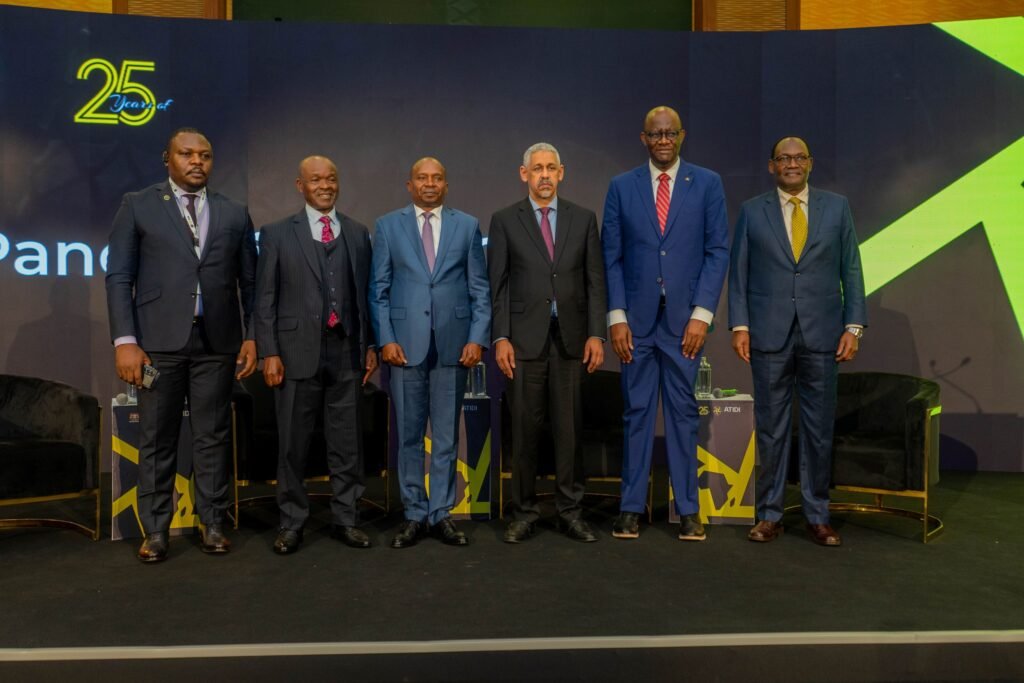
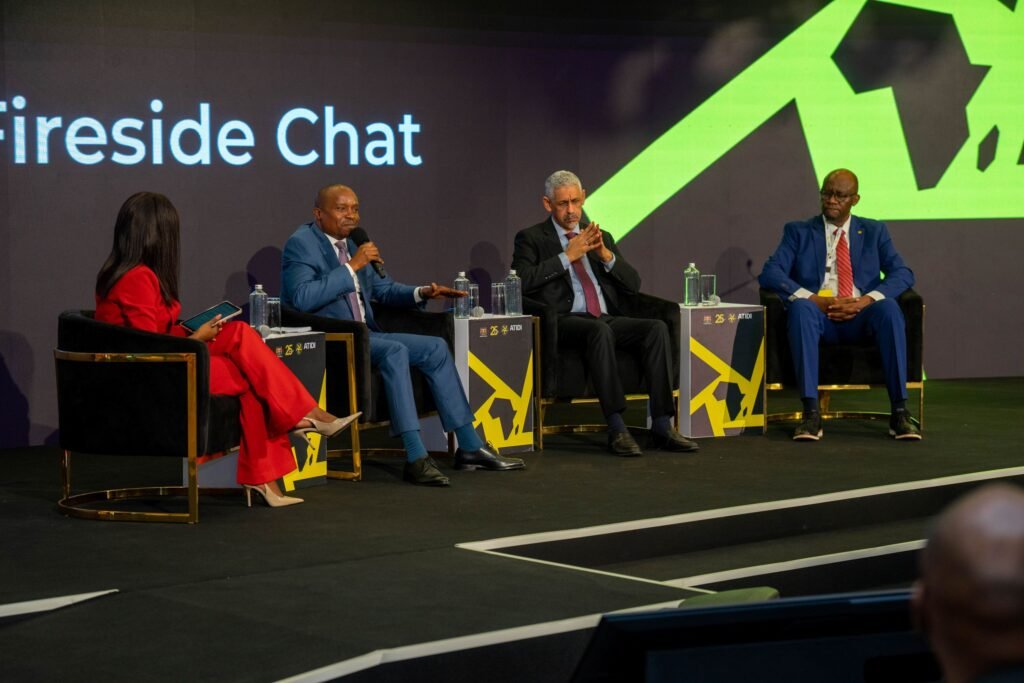
African Development Bank President Dr. Sidi Ould Tah said institutions such as ATIDI are essential in correcting persistent misperceptions about African markets.
“The challenge before us is not a lack of capital or opportunities, but a persistent mispricing of African risk, and this is leading to excessive cost of capital on the continent,” he said.
The African Development Bank has increased its participation in ATIDI’s capital five-fold, becoming the institution’s largest institutional shareholder while supporting efforts to expand ATIDI’s membership.
Dr. Tah said the future of Africa’s development depends on institutions that can combine public resources with private investment.
Through guarantees and blended finance, he argued, every dollar of public funding can mobilise significantly larger volumes of private capital.
ATIDI’s growing influence is supported by strong financial performance. In 2025, the institution recorded significant growth across key indicators. Its total exposure increased to USD 9.2 billion, up from USD 8.9 billion in 2024.
Profit for the year increased by 20% to USD 71.4 million, while total assets grew by 20% to USD 1.06 billion. Total equity also increased by 12% to USD 883 million.
ATIDI CEO Manuel Moses said the results reflected the organisation’s resilience amid global economic uncertainty.
“Against a backdrop of continued global uncertainty and the lingering effects of the COVID pandemic, ATIDI delivered another year of resilient growth in 2025, with strong results across insurance revenue, investment income and total equity,” he said.
“Against a backdrop of continued global uncertainty and the lingering effects of the COVID pandemic, ATIDI delivered another year of resilient growth in 2025, with strong results across insurance revenue, investment income and total equity,” he said.
The institution has also expanded its continental footprint, growing from seven founding members to 24 African countries, 13 institutional members and one non-African member state.
It remains one of Africa’s highest-rated insurers, maintaining an investment-grade rating with major global credit rating agencies since its establishment.
As Africa seeks to accelerate industrialisation, expand intra-African trade and develop critical infrastructure, the ability to manage risk will become increasingly important.
The future of investment on the continent will not only depend on identifying opportunities. It will depend on creating systems that give investors confidence to commit capital over the long term.
ATIDI’s journey demonstrates that risk management is not simply about protecting investments after problems occur. It is about creating the conditions for investment to happen.
At a time when Africa is seeking greater financial sovereignty, institutions that can transform uncertainty into confidence will become central pillars of development.
ATIDI’s message after 25 years is clear: Africa does not only need more capital. It needs stronger institutions capable of making capital work for Africa.