Uganda’s tourism sector is growing globally in visibility, recognition, and earnings. But behind the optimism lies a structural problem the industry can no longer ignore, infrastructure is not keeping pace with tourism ambition.
In 2024, the country welcomed 1,371,895 international visitors and generated approximately $1.28 billion in tourism receipts, marking a 25.9% increase in earnings over the previous year. The “Pearl of Africa” brand is gaining momentum.
Yet beneath the optimism lies a structural constraint that quietly shapes the sector’s real performance, infrastructure is not keeping pace with tourism growth.
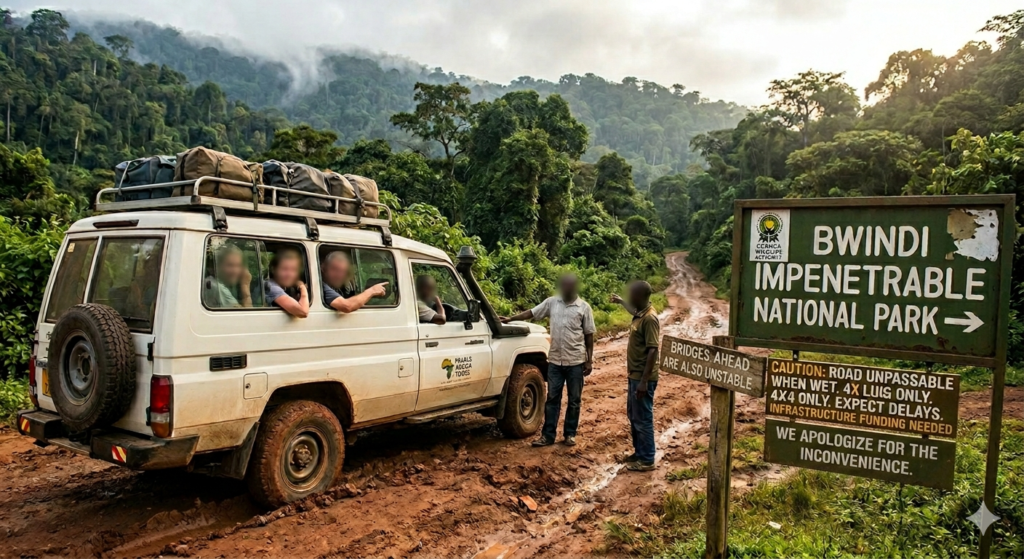
From long and costly journeys to national parks, to limited domestic air connectivity and uneven road networks, Uganda’s tourism economy is increasingly constrained not by a lack of attractions, but by the cost and complexity of access.
The result is a persistent paradox, Uganda may be rich in tourism assets, but constrained in accessibility economics.
Uganda’s major tourism destinations remain widely dispersed, and the distances are compounded by transport conditions.
Bwindi Impenetrable National Park in the southwest, home to mountain gorillas, remains one of the country’s most globally recognised attractions. Kidepo Valley National Park in the northeast is frequently described by operators as one of Africa’s most remote but rewarding wilderness experiences. Murchison Falls National Park, Uganda’s largest protected area, still requires several hours of road travel from Kampala.
For tourism operators, these distances are not just geographic, they are economic variables that directly affect pricing and competitiveness.
Writing in the Daily Monitor, Asuman Kabuzi, a researcher in tourism management at Makerere University Business School, highlights how infrastructure directly shapes sector costs.
“Poor road infrastructure increases operational costs for tourism businesses. Lodges face higher expenses in transporting supplies, while tour operators spend more on fuel and vehicle repairs. These costs are often passed on to tourists, making Uganda less competitive compared to neighbouring destinations with better infrastructure.” he said.
The Uganda Tourism Board (UTB) acknowledges infrastructure as a key constraint in its sector planning frameworks, citing transport and connectivity gaps as factors affecting visitor experience and competitiveness.
At a policy level, tourism is increasingly being framed not only as marketing and conservation, but as infrastructure-driven economic production requiring coordinated investment across transport, energy, and ICT systems. This reflects a broader shift, access is now part of the tourism product itself.
At a high-level engagement with the tourism private sector, Uganda Tourism Association (UTA) leadership noted renewed optimism in government engagement.
UTA leadership stated that government commitment to policy reform and infrastructure investment provides “renewed confidence to advance toward the shared goal of USD 4 billion in tourism earnings by 2030.”
But the same industry body has consistently warned that infrastructure gaps remain one of the biggest barriers to achieving that target.
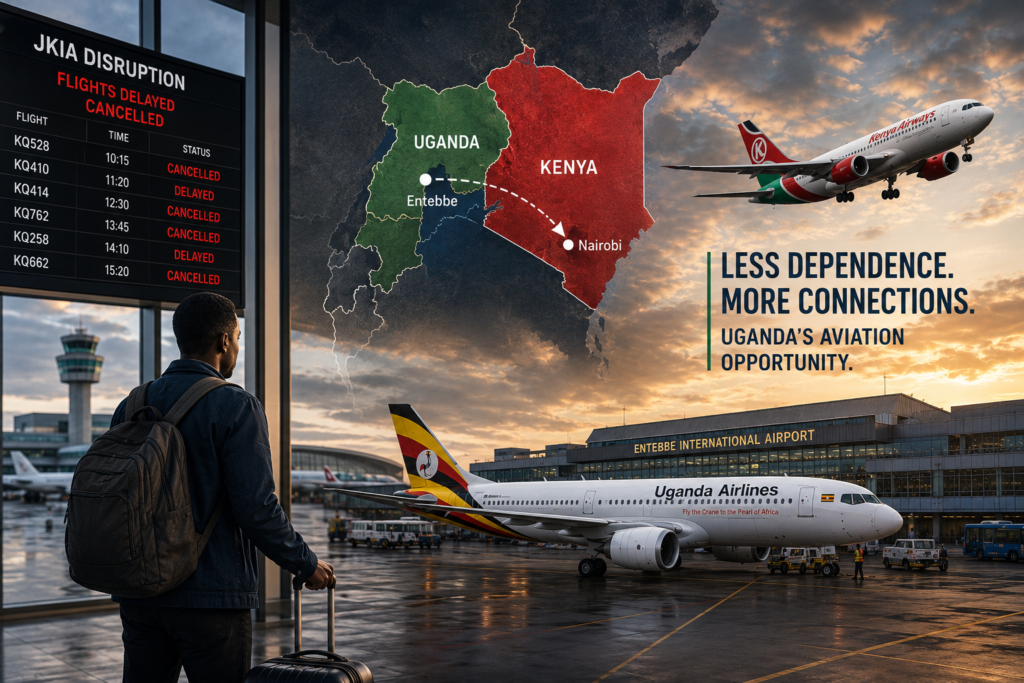
While Uganda’s international gateway at Entebbe International Airport continues to expand, domestic air travel remains limited relative to tourism demand.
The Uganda Civil Aviation Authority manages several park airstrips, but industry stakeholders argue that scheduled domestic flight networks remain underdeveloped for a country seeking to scale high-value tourism.
This forces heavy reliance on road transport even for premium tourism packages, a structural inefficiency that limits how competitively Uganda can price its tourism products regionally.
Across East Africa, tourism competition is increasingly shaped by infrastructure efficiency as much as wildlife diversity.
Kenya has developed a highly integrated safari circuit anchored on Nairobi, enabling relatively fast access to major parks. Rwanda has positioned itself as a premium destination with short travel distances, strong infrastructure, and high efficiency in visitor movement.
Uganda, by contrast, offers greater ecological diversity but longer and more complex travel logistics.
This difference increasingly shapes how destinations are priced and marketed globally.
Transport remains one of the least visible but most significant drivers of Uganda’s tourism pricing structure.
Because most circuits require long road transfers, tour operators factor in fuel costs, vehicle maintenance, driver hours, and accommodation logistics into package pricing. The Association of Uganda Tour Operators has repeatedly identified this as a competitiveness constraint.
A 2025 International Labour Organisation (ILO) market systems analysis of Uganda’s tourism sector further found that transport infrastructure challenges and high internal travel costs continue to limit the efficiency of multi-destination tourism circuits.
Uganda’s National Development Plan IV positions tourism as a priority sector expected to grow earnings from $1 billion to $4 billion.
However, sector stakeholders have repeatedly raised concerns about the gap between ambition and financing levels.
Despite this, some infrastructure investments are emerging. The Kabale–Lake Bunyonyi and Kisoro–Mgahinga road projects, supported by African Development Bank financing, are part of efforts to improve access to southwestern tourism circuits. Government officials have argued that such infrastructure is essential to unlocking regional tourism potential.
Uganda’s tourism challenge is increasingly not about attraction development but economic efficiency.
The ILO analysis shows that Uganda performs relatively well in per-visitor spending due to high-value experiences such as gorilla trekking. However, lower visitor volumes compared to regional peers limit total earnings.
Kenya’s higher volumes and Tanzania’s balanced growth model illustrate a key lesson: tourism competitiveness depends not only on value per visitor, but on how efficiently a country moves people through its tourism system.
Uganda’s tourism sector now sits inside a structural contradiction.
The country has some of Africa’s most diverse natural attractions, yet its tourism experience is still shaped by long distances, uneven transport systems, and high internal logistics costs.
Uganda is not struggling to attract attention. It is struggling to convert that attention into seamless, scalable, and competitively priced tourism experiences.
Until infrastructure investment aligns with sector ambition, the “Pearl of Africa” will remain a strong brand operating on a structurally constrained delivery system.
And in tourism economics, that gap is not cosmetic. It is decisive.
Industry stakeholders increasingly argue that Uganda’s next tourism growth phase will depend less on destination marketing and more on integrated infrastructure investment, including roads, domestic aviation, digital connectivity, and tourism logistics systems capable of reducing travel friction and improving visitor movement efficiency.