For generations, agriculture in Uganda has been presented primarily as a production question. We have asked how to increase yields, get more young people into farming, improve access to inputs and put more land under commercial production. The assumption has been straightforward: if Uganda produces more, farmers will earn more, the economy will grow and agricultural wealth will follow.
But Uganda’s agricultural challenge may not be that simple. The country already produces enormous quantities of agricultural commodities. Coffee, milk, maize, fruits, cocoa and other products move from farms into domestic, regional and international markets every day. Agriculture contributes about 26 percent of GDP and supports roughly two-thirds of Uganda’s working population. Yet the economic value generated by much of this production is not necessarily captured by the people and businesses closest to the point of production.
This raises a more important question than how much Uganda produces.
Where is the value captured?
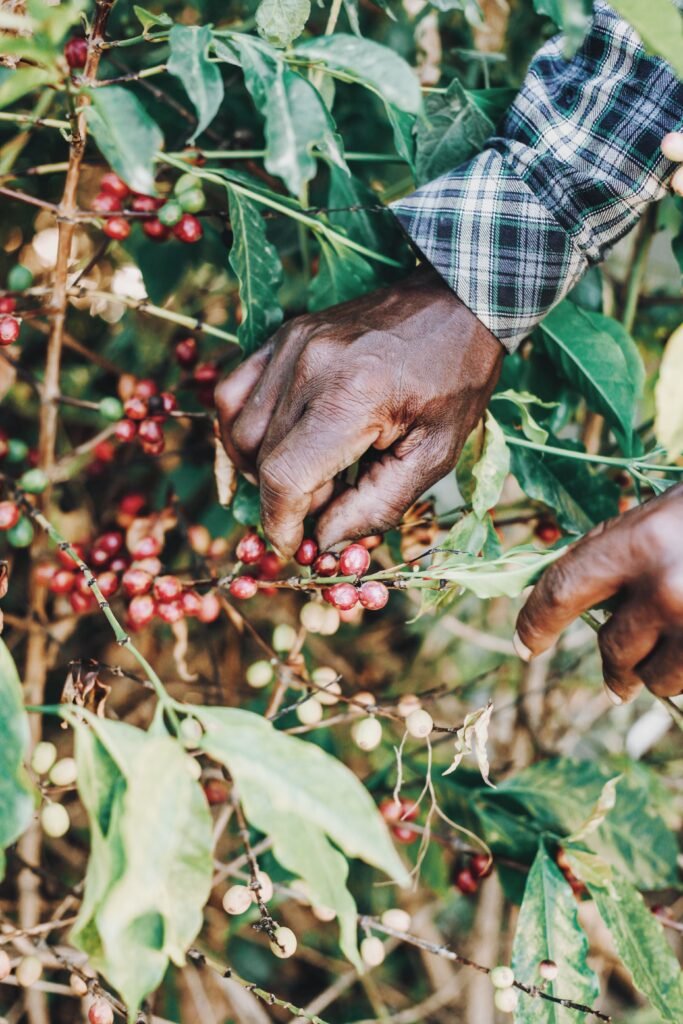
A farmer may grow coffee, but the coffee’s economic journey does not end when it leaves the farm. It is processed, graded, stored, financed, transported, exported, roasted, packaged, branded and eventually sold to a consumer. At each stage, the product can become more valuable, and at each stage a different business can capture part of that value.
The farmer is therefore only one participant in a much larger economic system. This is the opportunity Uganda has not fully exploited.
The country has spent years trying to become better at producing agricultural commodities. The next stage of transformation should be about becoming better at building businesses around those commodities.
That distinction is critical because wealth in agriculture is not created only by what comes out of the soil. It is also created by what businesses do with it afterwards.
Take coffee. Uganda has established itself as one of Africa’s leading coffee exporters, generating billions of dollars in export earnings in recent years. That success demonstrates the strength of the country’s agricultural production. But it also reveals the next opportunity.
There is a significant difference between exporting coffee beans and building a coffee industry. The first makes Uganda a producer and supplier. The second creates opportunities for Ugandan businesses to participate in processing, roasting, packaging, branding, distribution and the relationship with the final consumer.
A farmer growing coffee earns from production. An entrepreneur who builds a company around that coffee can potentially earn from several stages of the same value chain.
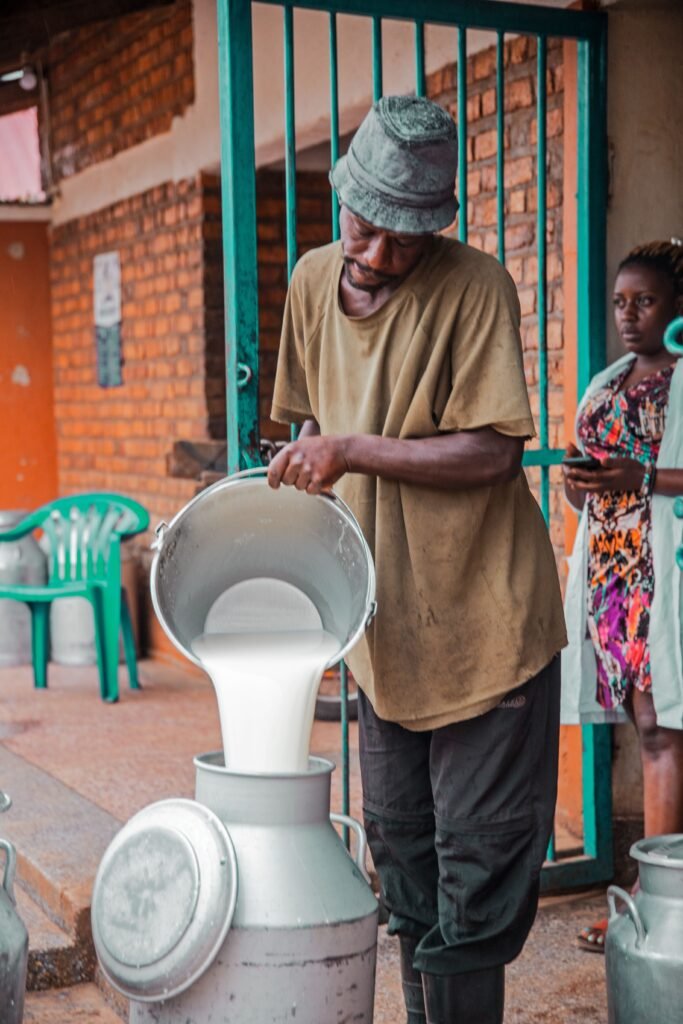
The same logic extends beyond coffee. A farmer selling raw milk is participating in agriculture. A business that collects that milk, processes it into yoghurt or cheese, packages it, builds a trusted brand and distributes it to consumers is also participating in agriculture—but through a different and potentially much larger commercial opportunity.
A farmer growing fruit creates value. A processor turning that fruit into juice concentrates or branded beverages creates another layer of value.
A farmer producing cocoa creates a commodity. A company turning that cocoa into finished chocolate products is capturing value further along the chain.
This is why Uganda’s agricultural opportunity cannot be reduced to the question of whether farmers are producing enough.
The bigger question is whether Ugandan entrepreneurs are building enough businesses around what farmers produce.
That is where the meaning of agripreneurship needs to expand. An agripreneur does not necessarily have to be the person holding the hoe or owning thousands of acres. An agripreneur can be the person who sees a problem between the farm and the market and builds a business to solve it.
If farmers cannot find reliable buyers, there is an opportunity to build a market-access business. If agricultural products lose value because they cannot be stored properly, there is an opportunity in storage and cold-chain infrastructure. If farmers struggle to access finance, there is an opportunity for agricultural financial services. If producers cannot reach consumers efficiently, there is an opportunity in logistics and distribution. If Ugandan commodities leave the country with little differentiation, there is an opportunity to build brands and finished products that compete for higher-value markets.
In each case, the entrepreneur is not necessarily producing the commodity. They are building the system that allows the commodity to generate greater economic value.
This is where Uganda’s agricultural wealth conversation needs to move. For too long, we have looked at agriculture as a sector made up largely of farmers. But agriculture is much bigger than farming. It includes the businesses that supply farmers, finance them, aggregate their produce, store it, transport it, process it, package it, market it and connect it to consumers.
Once agriculture is viewed this way, the opportunity becomes much larger.
A young Ugandan does not need to own a large piece of land to build an agricultural company. They could build a platform connecting thousands of farmers to buyers. They could create a processing business that purchases from smallholder farmers. They could build a logistics company serving agricultural producers. They could develop technology that helps businesses manage agricultural supply chains. They could create a consumer brand from locally produced commodities.
The farm remains at the centre of the system, but it is no longer the entire system.
Technology will make this broader agricultural economy even more important. Digital marketplaces, mobile payments, artificial intelligence, satellite monitoring and climate information services are already creating possibilities for businesses that can connect producers, information, finance and markets more efficiently. But even here, the opportunity is not simply to put technology on a farm. It is to use technology to solve the structural problems that prevent agricultural value from moving efficiently from producer to consumer.
This is particularly important as Uganda seeks to transform into a US$500 billion economy. Such an economy cannot be built simply by producing and exporting more raw commodities. At some point, Uganda has to capture more of the value created from what it produces.
That means processing more of its agricultural output. It means developing manufacturing around agricultural commodities. It means building stronger logistics systems, financial services, export businesses and consumer brands. It means creating companies capable of taking Ugandan agricultural products beyond the farm gate and competing in regional and global markets.
The opportunity, therefore, is not simply to make agriculture more productive.
It is to make agriculture more valuable. And that requires a different kind of entrepreneur.
The next generation of agricultural wealth creators may not look like the traditional farmer. Some will own farms and become highly productive commercial producers. Others will build processing plants. Others will create agricultural finance companies. Others will build logistics networks, technology platforms, export businesses or consumer brands.
What will connect them is not necessarily ownership of land. It will be their ability to identify where value is being lost and build businesses that capture it.
That is perhaps the most important shift in how Uganda should think about its agricultural future.
The question should no longer be only how many tonnes of coffee, milk, maize or fruit we can produce.
We should be asking how many companies we can build around those tonnes. How many Ugandan brands can emerge from Ugandan farms? How many processing industries can be built around Ugandan commodities? How many entrepreneurs can connect Ugandan producers to global consumers? And how much of the value created along that journey can remain within Uganda?
Because the real agricultural opportunity is not simply in producing what the world wants.
It is in owning more of the journey between the farm and the consumer. That is where Uganda’s next agricultural fortunes may be built.
And that is why Uganda’s next millionaires may not necessarily be farmers. istockThey may be the entrepreneurs who understand that the greatest opportunity in agriculture begins where production ends.