
Uganda does not need to convince Italy to buy its coffee. Italy is already one of its largest export markets. The bigger opportunity is to turn that established trade into businesses that create more value locally, from processing and roasting to packaging, branding and technology.
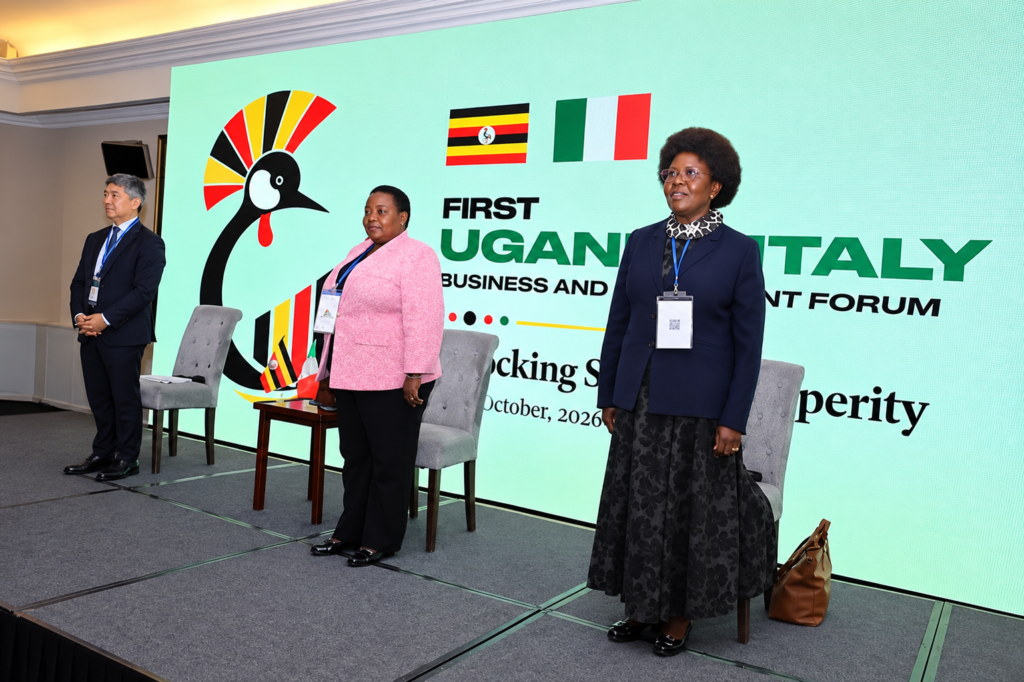
That opportunity will feature at the Uganda-Italy Business and Investment Forum in Rome on October 13, 2026. Organised by the Embassy of Uganda in Italy, with support from UNIDO ITPO Italy and other partners, the forum is intended to connect businesses, investors and technology providers. Agribusiness and agro-processing are among its priority sectors.
For Uganda’s coffee entrepreneurs, the forum presents an opportunity to explore partnerships that extend beyond selling green coffee beans.
Uganda’s coffee exports provide a substantial foundation for that ambition. In the 12 months to May 2026, the country exported 8.6 million 60-kilogramme bags worth US$2.3 billion. Italy accounted for 26% of Uganda’s coffee exports in May, making it the country’s largest destination that month.
The market is already there. The challenge is building Ugandan businesses capable of capturing more of the opportunities along the supply chain.
Coffee offers several entry points for agricultural entrepreneurs, but moving into higher-value activities requires more than access to international buyers.
Processing, roasting and packaging require equipment, reliable electricity, working capital, quality assurance and established distribution channels. Building a recognisable coffee brand also requires consistent quality and the ability to reach consumers.
For smaller enterprises and cooperatives, partnerships can help bridge some of these gaps.
Italy’s established coffee industry offers potential access to roasting equipment, processing expertise, packaging technology and international market networks. Ugandan entrepreneurs could use partnerships with Italian businesses to improve their operations, develop products and explore new markets.
However, the commercial benefits will depend on the terms of those partnerships and the capacity of local businesses to retain expertise, build their own brands and compete independently.
The distinction matters. Exporting more coffee does not automatically mean Ugandan businesses are capturing more value from it.
Ugandan coffee producers and cooperatives have already begun exploring opportunities with Italian businesses.
At SIGEP World 2026 in Rimini, Uganda’s coffee industry showcased its products to international buyers and companies. Discussions included roasting equipment, sustainable roasting at origin and farmer training.
Such engagements illustrate the potential for cooperation beyond the conventional relationship between coffee producers and overseas buyers.
For a Ugandan coffee processor, an Italian partnership could provide access to machinery and technical expertise. A cooperative could explore improved post-harvest handling and quality control, while a local roaster could seek equipment and distribution partnerships to expand its business.
Technology companies could also find opportunities in traceability, digital payments and supply-chain management.
Uganda’s Ambassador to Italy, Elizabeth Paula Napeyok, has emphasised the importance of expanding economic cooperation beyond raw commodity exports towards processing, packaging, branding and other forms of value addition.
For agripreneurs, the challenge is translating that ambition into commercially viable enterprises.
Uganda’s coffee exports have grown in both volume and earnings, but international prices remain subject to fluctuations.
In May 2026, the average export price fell to approximately US 4.10 per kilogramme compared with US 5.10 a year earlier. Such changes expose businesses that depend primarily on selling unprocessed coffee to international buyers.
Moving into processing or roasting can create additional revenue opportunities, but it also introduces new costs and commercial risks. Equipment, packaging, labour, marketing and distribution all affect profitability.
The difference between the export price of green coffee and the retail price of a packaged product should therefore not be mistaken for the profit retained by a Ugandan entrepreneur. Establishing how much value local businesses actually capture requires examining their production costs, margins and access to consumers.
For entrepreneurs considering expansion, the central question is not simply whether processing adds value, but whether the resulting business can operate profitably and sustainably.
This is where access to technology, finance, skills and reliable markets becomes critical.
The Rome forum provides an opportunity to connect Uganda’s existing coffee trade with a broader investment and enterprise agenda.
For Ugandan entrepreneurs, the potential outcomes extend beyond securing another export contract. They include acquiring processing technology, developing locally owned brands, improving product quality and establishing partnerships that support long-term business growth.
But attracting foreign investment is only part of the equation. The lasting impact will depend on whether Ugandan businesses acquire the skills, technology and commercial capacity to participate more actively in the coffee value chain.
Uganda already has an established market in Italy and a growing coffee export industry. The next stage of that growth could be measured not only in bags exported and foreign exchange earned, but also in the number of viable local processing businesses, the growth of Ugandan coffee brands and the jobs created beyond the farm.
For the country’s agripreneurs, the opportunity lies in building businesses around an export commodity that Uganda already produces at scale.