
Uganda is about to find out whether having more dollars is the same thing as having a stronger currency. As the country moves closer to commercial oil production, billions of dollars could begin flowing through an economy that already depends heavily on foreign exchange from exports, tourism, remittances and investment.
The question is whether those oil dollars will fundamentally strengthen the Uganda shilling,or simply make it stronger for a while.
The debate was captured recently by Bank of Uganda Deputy Governor Prof. Augustus Nuwagaba in an X post arguing that “a strong currency starts with a strong and productive economy.” His broader point was that the shilling’s strength cannot be judged only by its exchange rate against the dollar. It ultimately depends on what Uganda produces, exports and how much purchasing power its currency retains.
Oil puts that argument to a real-world test. The Bank of Uganda expects the shilling to come under appreciation pressure as oil production increases foreign-exchange inflows. In its May 2026 Monetary Policy Report, the central bank said commercial oil production was expected to bring a “significant and anticipated boost” to foreign-exchange inflows, alongside mining investment and tourism.
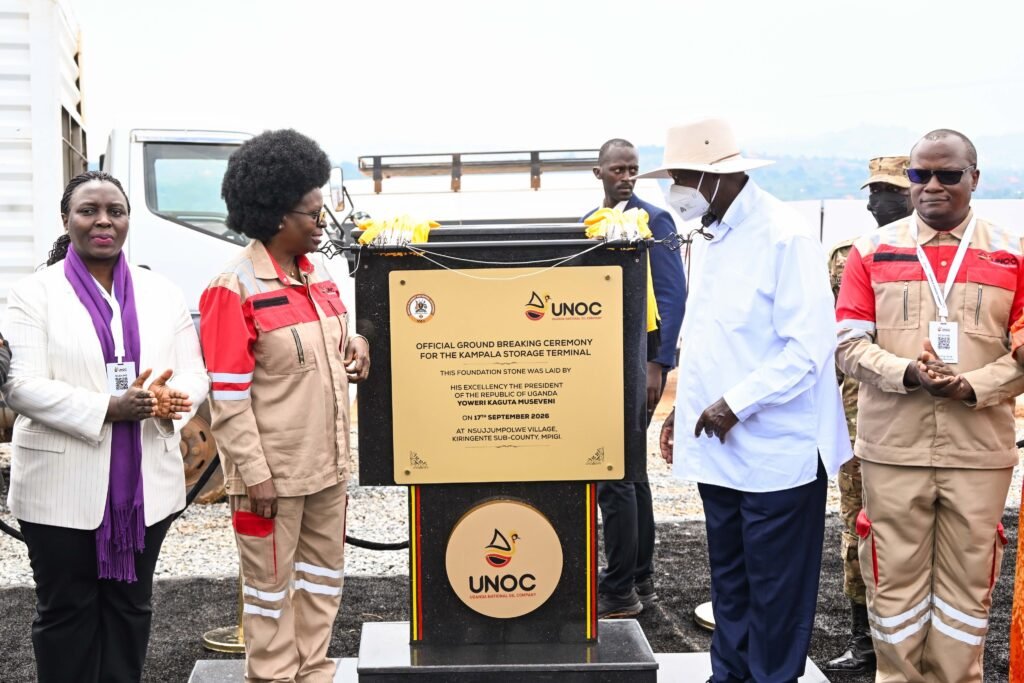
Uganda’s oil infrastructure is already moving toward that moment. By June 30, Tilenga was 74% complete, Kingfisher 79%, while the 1,443-kilometre East African Crude Oil Pipeline had reached 90% overall progress, according to the Uganda Investment Authority. When those projects begin generating export earnings, the basic economics are clear: more dollars entering Uganda can mean fewer shillings are needed to buy a dollar.
That would be good news for importers and consumers. A stronger shilling can reduce the local cost of imported fuel, machinery, vehicles and other goods.
But it creates a different problem for exporters. A Ugandan coffee exporter earning US dollars ultimately converts those earnings into shillings to pay local workers and suppliers. If the shilling appreciates sharply, each dollar brings back fewer shillings. Uganda could therefore gain foreign exchange from oil while simultaneously making some of its other exports less competitive.
That is why the oil question is not simply whether the shilling will appreciate. It is whether Uganda can manage that appreciation without weakening the productive sectors that earn foreign exchange.
Uganda already has a sizeable foreign-exchange cushion. Reserves stood at US$6.1 billion at the end of April 2026, more than 50% higher than a year earlier and equivalent to about four months of import cover.
But Uganda also has a continuing appetite for dollars. The Bank of Uganda estimates around US$1.6 billion in external debt amortisation and foreign-interest payments in FY2026/27.
And an oil boom can increase dollar demand as well as dollar supply. Higher government spending, investment and incomes can generate greater demand for imported machinery, fuel, vehicles and consumer goods. In other words, oil could bring Uganda more dollars while simultaneously giving Ugandans more reasons to spend them.
The exchange rate will depend on that balance. But the bigger issue is what happens to the oil money after it enters the economy. Uganda’s economy is already growing. Preliminary figures show real GDP expanded by 6.4% in FY2025/26, with agriculture growing 6.5%, industry 6.4% and services 5.5%. The economy reached about Shs250.4 trillion in nominal terms.
That gives Uganda a foundation to build on. If oil revenues are used to improve infrastructure, energy, manufacturing, agricultural productivity, logistics and technology, the country can convert a finite resource into productive capacity. Those investments can help Ugandan firms produce more and export more, creating new sources of foreign exchange.
That would make the oil dollars more valuable than the exchange-rate boost they initially create. But if the oil boom mainly increases consumption and imports, the outcome could be very different.
The shilling could strengthen because Uganda has more dollars, while the underlying economy remains dependent on importing what it consumes and exporting a relatively narrow range of products.
That is the scenario behind the concern economists describe as Dutch disease: a resource boom can push up the currency and make other tradable sectors less competitive.
For households, therefore, a stronger shilling is not automatically the ultimate goal. What matters is whether it translates into sustained purchasing power. For businesses, it matters whether cheaper imported machinery and inputs help them expand. For exporters, it matters whether the exchange rate remains competitive enough to keep Ugandan products attractive abroad.
And for the country as a whole, the crucial question is whether Uganda can use oil to create more producers, more exporters and more sources of foreign exchange.
That is where Nuwagaba’s X argument becomes particularly relevant. Uganda does not need oil simply to have more dollars. It needs oil to help build an economy that can continue earning dollars from agriculture, manufacturing, minerals, tourism and services long after the oil eventually runs out.
So yes, Uganda’s oil era could make the shilling stronger. But that is the easier part. The harder test is whether the oil dollars make Uganda more productive. If they do, the shilling’s strength could have a foundation. If they do not, Uganda may simply have a stronger currency for as long as the oil dollars keep coming.