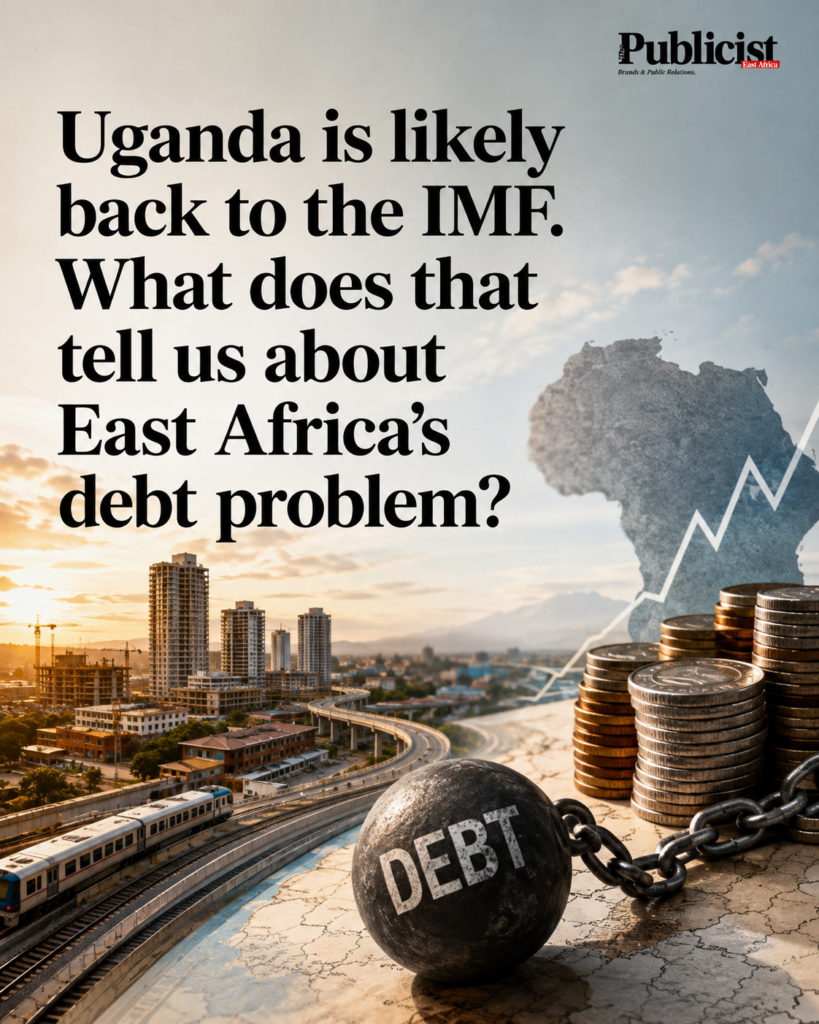
Uganda’s negotiations with the International Monetary Fund (IMF) are about more than whether the country needs another financial programme. They offer a window into a broader shift across East Africa, governments still have ambitious development plans, but financing those ambitions is becoming more expensive and less forgiving.
Across the region, governments are still building roads, railways, power projects, industrial parks and other infrastructure. But borrowing costs have risen, debt repayments are consuming more government revenue, and refinancing existing obligations is becoming almost as important as raising new money.
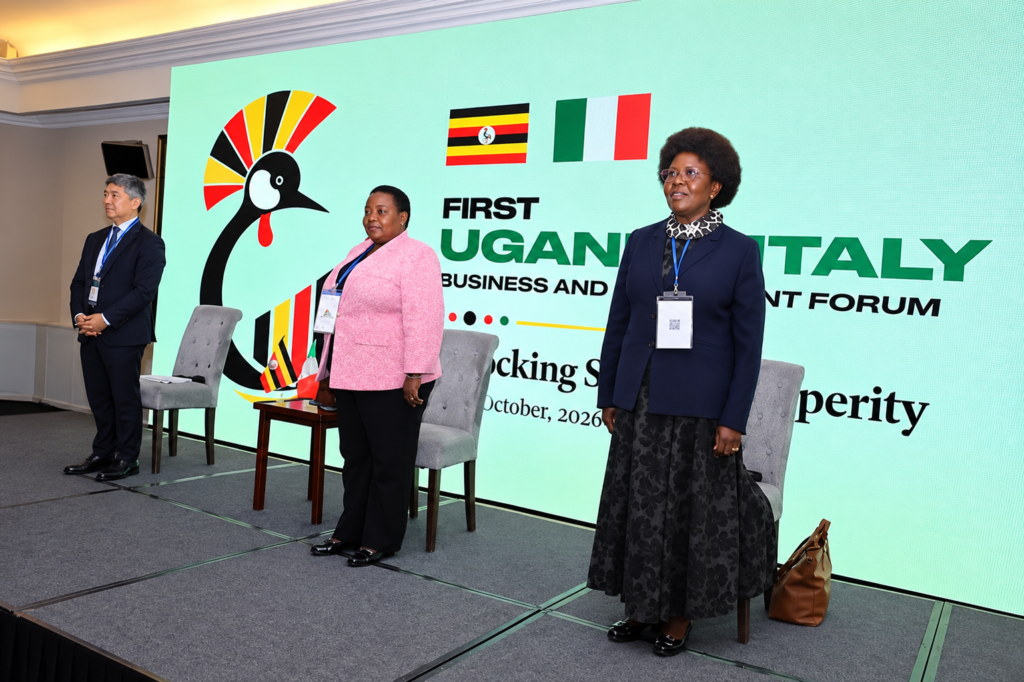
That is what makes Uganda’s IMF discussions significant. On August 17, the IMF confirmed that a staff team will visit Uganda in September to discuss a possible new support programme. Uganda’s previous IMF programme expired in 2024, and no new programme has yet been agreed.
The timing is particularly important. Uganda is approaching commercial oil production, which should eventually provide a new source of export earnings and government revenue. But those revenues are still ahead, while the government must finance today’s development needs and service yesterday’s borrowing. That tension sits at the heart of Uganda’s fiscal challenge, and increasingly at the heart of East Africa’s financing challenge.
Uganda’s public debt stood at about 52.4% of GDP in FY2024/25, according to IMF figures, with the ratio projected to rise into the mid-to-high 50s over the medium term. On its own, that does not suggest an immediate crisis. But debt-to-GDP tells only part of the story.
The more revealing number is the cost of servicing the debt. Interest payments are projected at about 4.5% of GDP in FY2026/27 and are expected to absorb roughly 29% of domestic revenue. That means nearly three out of every ten shillings collected domestically could go towards interest payments before government allocates revenue to new priorities.
The more important question, therefore, is not simply how much Uganda owes, but how much of its future revenue has already been committed to servicing that debt.
Economic growth can create additional fiscal room, but only if government revenue grows quickly enough to keep pace with debt servicing and expenditure demands.
Oil could eventually ease that pressure. But Uganda has to manage the difficult period between financing today’s obligations and receiving tomorrow’s revenues. That is the fiscal transition now facing the country.
Kenya illustrates why East Africa’s debt problem cannot be reduced to headline debt ratios. Kenya’s public debt rose to around 72% of GDP in FY2022/23 before subsequently declining. Yet the country remains classified as being at high risk of debt distress under the IMF-World Bank debt sustainability assessment.
The difference lies partly in the structure and cost of borrowing. Interest rates, repayment schedules, currency exposure, creditor composition and the strength of domestic revenues can determine how much pressure a given debt burden creates.
For Kenya, domestic debt carries significant interest costs, while external borrowing exposes the government to foreign-exchange and refinancing risks. That makes refinancing increasingly important.
Governments are not only asking whether they can raise another loan. They must also consider whether existing obligations can be refinanced at lower cost, with longer maturities and lower exposure to exchange-rate and rollover risks. This is becoming part of development finance itself.
East Africa cannot develop without borrowing. The region still needs electricity generation, transport infrastructure, industrial capacity and other investments that domestic revenues alone cannot easily finance. The problem is what governments borrow for, and whether the economic value created by those investments justifies the cost of financing them.
A loan that expands electricity generation, improves transport links, reduces logistics costs or increases exports can create productive capacity and eventually strengthen government revenues. But the margin for poor investment decisions becomes smaller when borrowing costs rise. Governments therefore need to ask harder questions before taking on major obligations.
Will the railway generate enough freight? Will the airport generate enough economic activity? Will the energy project reduce production costs or increase exports? Will an industrial park attract enough private investment to justify its financing costs? These are no longer simply questions about development planning. They are questions about debt sustainability.
For much of the past two decades, East African governments benefited from concessional loans, bilateral financing and multilateral support for major infrastructure projects. But as governments supplement those resources with more expensive domestic and commercial borrowing, the consequences of weak project selection become greater.
Rwanda demonstrates why debt levels must be considered alongside the structure of financing. Its public debt is projected at around 72.9% of GDP in 2026, higher than Uganda’s and Tanzania’s. Yet Rwanda has substantial external financing, including multilateral support, meaning its financing conditions differ from those of countries more heavily dependent on commercial borrowing.
The debt burden is still significant. Rwanda’s new 36-month IMF Extended Credit Facility arrangement also underlines the importance of fiscal discipline as the country continues to pursue ambitious development goals.
Tanzania, meanwhile, has more fiscal room. The IMF projects its public debt at about 47.4% of GDP in FY2026/27, with a fiscal deficit of roughly 2.9% of GDP.
That gives Dar es Salaam more room to finance development and absorb shocks. But it does not eliminate the need for discipline. Tanzania is also borrowing to fund infrastructure and investment, while facing the same regional challenge of rising capital needs and tighter financing conditions.
The comparison is useful because it shows why there is no single debt threshold that determines whether a country is safe or vulnerable.
What matters is the combination of how much a government owes, who it owes, the cost of borrowing, when repayments fall due and how much revenue is available to service the debt.
This is the bigger regional story. East Africa’s infrastructure ambitions have expanded faster than the traditional financing model can comfortably support. Governments want faster industrialisation, deeper regional trade, better urban infrastructure, reliable energy and larger transport networks. Those ambitions require more capital at a time when capital is becoming more expensive. The danger is not simply excessive borrowing.
It is the possibility of a cycle in which governments borrow to finance development, then borrow again to refinance earlier obligations, while an increasing share of domestic revenue is consumed by debt service.
At that point, debt begins to undermine the development it was supposed to finance.
Uganda’s projected 29% interest-to-domestic-revenue burden is therefore significant beyond Uganda. It illustrates what happens when the cost of financing begins to reduce the fiscal space available for future investment.
The region cannot simply stop borrowing. It still needs infrastructure to connect markets, increase productivity, attract investment and create jobs. The answer is to become more selective about the debt taken on.
Governments will need to pay greater attention to interest rates, repayment periods, currency risks and creditor composition. More importantly, they will need to be more rigorous about the economic returns expected from major projects. For years, the central question was, What can government build?
Increasingly, it needs to become, What can government build that will generate enough economic value to justify the cost of financing it?
That question will determine whether East Africa’s current borrowing cycle becomes the foundation for faster economic transformation or a constraint on future public spending.
Uganda’s IMF discussions therefore tell us something bigger than the state of Uganda’s finances.
Kenya is managing high debt-service and refinancing pressures. Rwanda is balancing ambitious development plans with a high debt burden and continued external financing. Tanzania has more fiscal room but still needs to manage borrowing carefully.
Their circumstances are different. Their financing challenge is increasingly similar.
East Africa still needs capital. But access to capital is no longer the only challenge. The cost of that capital, the structure of borrowing, the timing of repayments and the economic value created by the borrowing are becoming equally important.
For Uganda, the oil transition makes the question particularly urgent. The country must manage today’s obligations while preparing for tomorrow’s revenues. The challenge is to ensure that those future revenues expand fiscal space and productive capacity rather than simply servicing obligations accumulated in the past.
The question facing the region is ultimately straightforward: Can East Africa finance the infrastructure it needs without allowing yesterday’s debt to consume tomorrow’s budget?