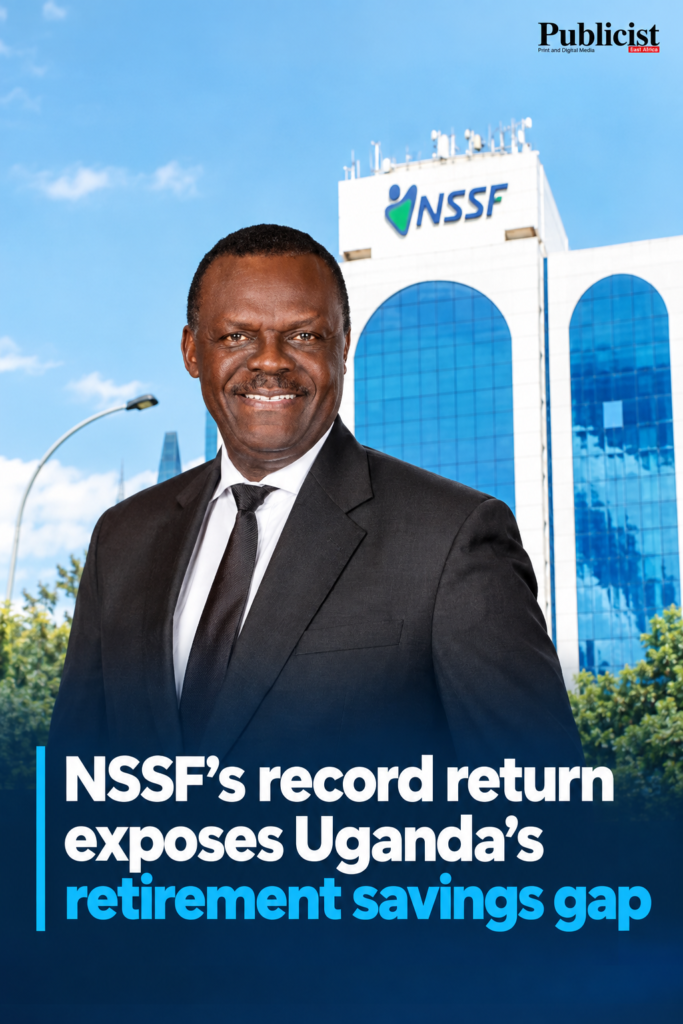
Uganda’s National Social Security Fund has delivered its biggest return in four decades, but the record payout also highlights a much larger question: how many Ugandans are saving consistently enough to benefit from long-term investment?
For the financial year ended June 2026, NSSF declared an interest rate of 22.53%, translating into Shs5.44 trillion credited to members’ accounts. Assets under management rose 26.4% to Shs32.87 trillion, while member contributions increased 13% to Shs2.42 trillion. Total income climbed 85% to Shs6.51 trillion.
Yet the reach of the system remains limited relative to Uganda’s labour force.
NSSF has 3.65 million registered members, but registration, accounts with balances and active contributions are different measures. Current reporting puts active contributors at about 2.4 million, meaning millions of workers remain outside regular formal retirement saving.
NSSF Managing Director Patrick Ayota said in October 2025 that Uganda’s labour force was estimated at more than 20 million people, with only about 2.4 million then contributing to the Fund. He said NSSF was targeting 50% social-security coverage by 2035, equivalent to about 15 million active members.
The gap reflects the structure of Uganda’s labour market as much as attitudes towards saving.
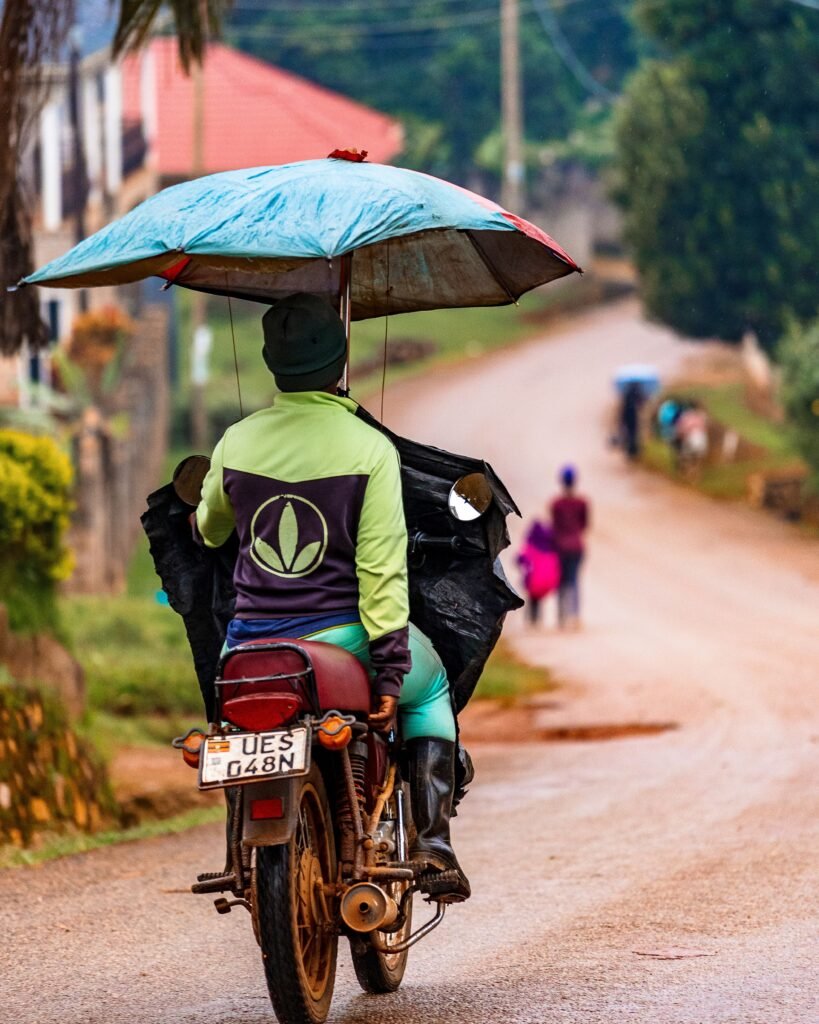
A large share of workers earn outside conventional payroll systems. Traders, farmers, boda-boda riders, freelancers and other informal workers may have daily, seasonal or irregular incomes, while household priorities often include food, rent, school fees, healthcare, business capital and debt.
Ugandans do save, but much of that saving is directed towards immediate economic activity. The latest Uganda National Household Survey found that 77% of household enterprises use their own or household savings as their main source of start-up capital. That demonstrates the role of savings in household businesses, although it does not necessarily mean those households can afford regular retirement contributions.
NSSF has therefore been trying to extend formal saving beyond the traditional employer-payroll model.
Its Smartlife Flexi product allows informal workers, self-employed people and others outside mandatory NSSF arrangements to make voluntary contributions. Savers can choose how much and when to contribute, with deposits starting from Shs5,000.
The Fund has also targeted specific informal sectors. In 2025, it partnered with the United Boda Boda Riders Cooperative Union, with a target of reaching up to one million riders.
NSSF said in September 2026 that Smartlife had attracted more than 135,000 savers, who had accumulated over Shs180 billion since its launch.
The numbers show why expanding participation matters beyond individual retirement accounts. With almost Shs33 trillion under management, NSSF has become one of Uganda’s largest pools of domestic long-term capital.
At the end of June 2026, about 76.5% of the portfolio was in fixed income, 18.4% in equities and 5.1% in real estate. Finance Minister Henry Musasizi has described NSSF as a source of “patient domestic capital” that can support long-term financing and economic transformation.
There is, however, an important distinction behind the 22.53% headline.
NSSF’s Shs6.51 trillion total income included about Shs3.88 trillion in realised income: roughly Shs3.49 trillion in interest income, Shs369 billion in dividends and Shs16 billion from real estate. Another Shs2.62 trillion came from unrealised gains, largely reflecting increases in the value of investments that had not yet been sold.
That does not invalidate the return credited to members. It does, however, show why a single year’s 22.53% rate should not automatically be treated as a normal annual return.
The more consequential question for Uganda may therefore be how many workers can build consistent retirement savings over decades.
NSSF’s record return shows what a large pool of long-term savings can generate. The bigger challenge is widening participation so that more Ugandans have money earning returns when the next rate is announced.