Anne Juuko knows what it means to take over a bank at an awkward time. In March 2020, she became Chief Executive of Stanbic Bank Uganda. Within weeks, Uganda was in lockdown, businesses were struggling and banks were restructuring loans for customers who suddenly could not operate normally.
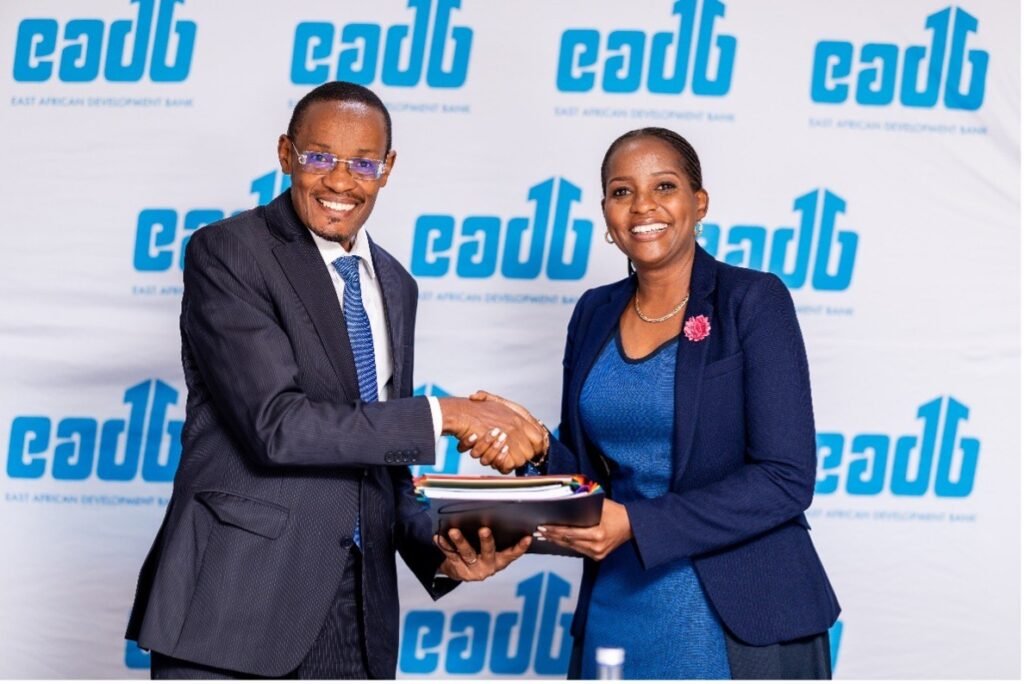
Six years later, Juuko is back in the chief executive’s chair. Only this time, the brief is much bigger. The Governing Council of the East African Development Bank (EADB) has appointed the Ugandan banker Director General, effective October 2, 2026, putting her at the helm of a regional development finance institution that has been operating for almost six decades.
For Juuko, the appointment is another step in a career that has steadily moved from Uganda into the wider African financial sector. But her four years at Stanbic Bank Uganda remain an important part of the story.
Juuko became Stanbic Bank Uganda’s first female chief executive in March 2020. Before that, she had held senior positions within Standard Bank Group in Uganda and Namibia, including Global Markets at Stanbic Uganda and Corporate and Investment Banking at Standard Bank Namibia. Her earlier career included roles at Citibank in Uganda and Kenya.
Her return to Kampala to run Stanbic coincided almost exactly with the arrival of Covid 19. The immediate challenge was keeping the bank growing while helping businesses and individual customers navigate an economic shock few had planned for.
By the closing stages of Juuko’s tenure, Standard Bank’s regional leadership was publicly pointing to the results.
In December 2023, Patrick Mweheire, then Standard Bank Group Regional Chief Executive for East Africa and himself a former Stanbic Bank Uganda chief executive, told Daily Monitor that the group was proud of the “exceptional job” Juuko had done.
He pointed to the bank’s performance through the pandemic and the difficult economic environment that followed. More tellingly, he said Standard Bank wanted to retain Juuko and see her take on greater responsibilities within the group.
The numbers provided some context. For 2023, Juuko’s final full year as chief executive, Stanbic Uganda Holdings, driven largely by the bank she ran, reported profit after tax of Shs412 billion, up from Shs357 billion the previous year. Customer deposits grew to Shs6.3 trillion, while total assets reached Shs9.3 trillion.
Her tenure was about more than the balance sheet. Stanbic was also pushing deeper into financing for small businesses and women owned enterprises. Through Stanbic4Her alone, nearly Shs80 billion had been disbursed to women, while more than 50,000 women had received capacity building support by the time the 2023 results were released. The bank also reported financing reaching thousands of SACCOs and millions of their members.
When Juuko’s four year term at Stanbic Uganda ended, she did not leave Standard Bank Group. She moved to Nairobi as Regional Head of Global Markets for East Africa, taking her from running one of Uganda’s biggest financial institutions to responsibilities spanning several markets in the region.
Now she is back in charge of a bank, although EADB is a very different proposition.
A commercial bank has customers, depositors and shareholders to serve. A development bank has another question to answer: where can its capital make the biggest difference to the economies it was created to support?
That distinction matters because Juuko arrives at EADB at an interesting moment.
The bank reported profit before tax of $16.93 million in 2025, up 51 percent from $11.20 million the previous year. Loan disbursements increased by 140 percent and outstanding loans grew by 52 percent.
Total assets stood at $520.2 million at the end of 2025, while the loan book expanded from $128.5 million to $194.8 million. New loan approvals reached $152.9 million and actual disbursements increased from $38.2 million to $91.6 million.
So Juuko is not walking into an institution standing still. She is inheriting a lender that has been putting more money to work, at precisely the time East Africa needs more long term capital.
Infrastructure has to be built. Manufacturers need financing to expand. Agriculture needs investment beyond seasonal credit. Businesses need capital to grow across borders. The energy transition and climate adaptation will require financing on a scale that governments and conventional commercial lenders cannot carry alone.
And the traditional sources of that money are becoming harder to rely on. Concessional financing is tightening globally, while much commercial bank lending remains relatively short term. That leaves development finance institutions such as EADB with a bigger role to play in attracting private capital and structuring financing for projects that may take years to produce returns.
Juuko appears to understand the size of that assignment. She said it was a privilege to join an institution with almost sixty years of history, adding that she wanted to build on that foundation and deliver greater impact for future generations.
Her priorities include deepening EADB’s development finance role, finding new sources of long term capital and building partnerships capable of expanding the bank’s reach across the region.
EADB Governing Council Chairperson Yusuf Murangwa, Rwanda’s Minister of Finance and Economic Planning, described Juuko as a financial sector leader with a strong record of delivering growth across multiple African markets.
He also pointed to her knowledge of regional economies, capital markets and development finance as EADB enters its next phase.
That experience is perhaps what makes the appointment particularly interesting.
Juuko’s career has taken her from Citibank to Standard Bank’s capital markets businesses, corporate and investment banking, the top job at Uganda’s largest commercial bank and then a regional role spanning several East African markets.
EADB gives her a bigger canvas.
The measure of success will not simply be whether the bank makes more money or grows its balance sheet. Development banks ultimately have to show what their money does after it leaves the building.
For Juuko, that means turning more than two decades of banking and capital markets experience into financing for factories, businesses, infrastructure and other investments capable of making a measurable difference across East Africa.
It is a considerably bigger brief than the one she took on at Stanbic Bank Uganda in March 2020.
And that is what makes Anne Juuko’s return to the CEO’s chair worth watching.