For years, Uganda’s internet debate has focused on getting more people connected. The next debate should be about how people get connected, how much they pay and who is allowed to provide that access.
That conversation has become urgent after the Uganda Communications Commission (UCC) announced enforcement against unlicensed public Wi-Fi operators. The regulator says approximately 4,000 unlicensed providers are offering public Wi-Fi across the country, largely by purchasing fibre, fixed wireless or 5G fixed wireless connections from licensed operators and reselling access without a licence. UCC estimates that the activity costs government about Shs148 billion in annual tax revenue.
The regulator’s concerns go beyond taxes. It says unlicensed operators can leave consumers without adequate protection or a reliable complaints mechanism, while unapproved equipment can create network interference and safety risks. UCC has also raised concerns about data privacy, cybersecurity and the ability to trace activity on networks operating outside the regulatory framework.
The law therefore matters. But so does the market that has emerged around it. UCC says licensed operators charge an average of about Shs2,000 for 1GB, including taxes and other costs, while unlicensed hotspots are selling access at around Shs1,000 per GB. The cheaper price does not make the service lawful, but it does reveal something important about Uganda’s digital economy: there is a market for connectivity at a price many people can afford.
Uganda has seen this demand before. Almost a decade ago, government experimented with public Wi-Fi through the National Information Technology Authority-Uganda’s MYUG initiative. Launched around 2016–17, the service used internet capacity that was not being used by government offices after working hours. Users could access free Wi-Fi from 6pm to 6am on weekdays, with extended weekend access.
By 2019, NITA-U said MYUG had expanded from 164 locations to 284 locations across Kampala, Wakiso and Entebbe, with ambitions to reach 500. The programme had recorded 5.1 million internet sessions in one month, although the figure did not represent unique users.
The demand was visible on the streets. At the time young people were gathering around buildings in Nansana at night to access MYUG because some could not afford internet bundles according to reports by the Daily Monitor. For them, the attraction was simple: free internet.
The programme also exposed the challenge of delivering reliable public connectivity at scale. Coverage remained uneven and concentrated largely around the Kampala metropolitan area. A later assessment recorded 284 MYUG sites and 257,463 registered users, while noting that the initiative had not sufficiently addressed underserved communities elsewhere.
Government continued with the idea. In 2022, officials said 600 free Wi-Fi hotspots had been installed across Kampala and regional cities, with plans for further expansion. The model was intended to allow government to use the network during working hours and citizens to access it outside those hours.
What has changed since then is who is responding to the demand. Instead of government alone providing public access, thousands of small operators have emerged to sell connectivity in neighbourhoods where consumers are willing to pay for cheaper data. Their businesses may be operating outside the law, but their existence provides a useful signal to policymakers: people are looking for alternatives to conventional data pricing.
That is why the next phase of the debate should not end with enforcement. There are encouraging signs that UCC is considering what comes next. On October 20, the commission met representatives of the Kampala City Traders Association and Wi-Fi hotspot operators and announced a multi-stakeholder committee to examine possible licensing arrangements and develop a lawful framework for eligible resellers.
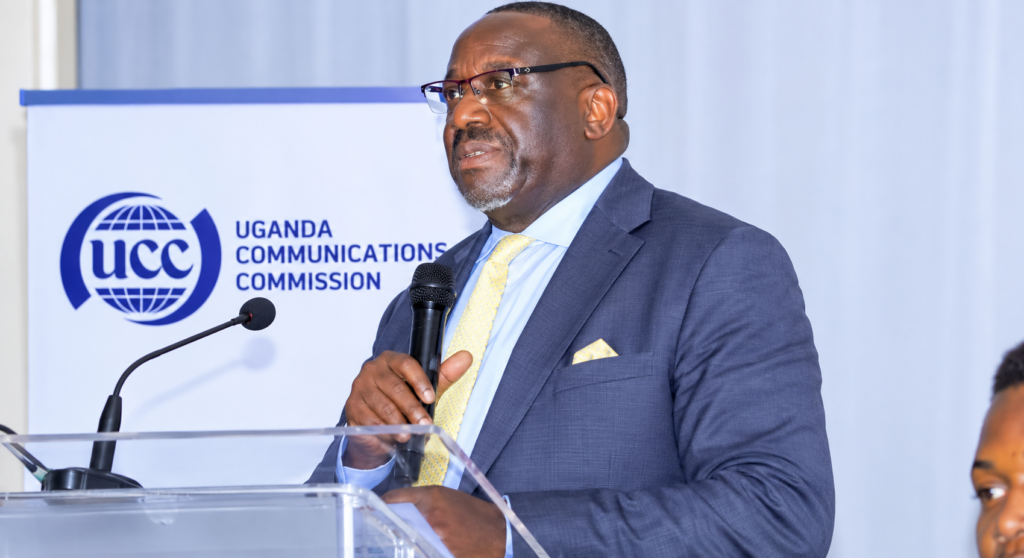
UCC Executive Director George William Nyombi Thembo had already indicated earlier in October that the regulator was taking time to understand the business before proceeding with further enforcement. In an interview with New Vision, he said UCC knew what the operators were doing but that they would have to meet licensing requirements, with routers and switches subject to inspection.
The significance of that approach is that it leaves room for regulation without necessarily destroying the market.
Uganda could create a formal community and public Wi-Fi industry in which small entrepreneurs become legitimate last-mile connectivity providers under clear rules, telecom companies supply wholesale bandwidth, and UCC establishes standards for equipment, security, service quality and consumer protection.
Such a model would recognise the different roles already emerging in the market. Large telecommunications companies would continue to provide the underlying networks, while smaller licensed operators could distribute connectivity within communities. Consumers would have more choices, businesses would have a legal route to operate, and government would have greater oversight of a service that is already being widely used.
The challenge will be designing regulation that is practical enough for small operators to comply with. A neighbourhood hotspot serving a limited number of customers should not necessarily face the same regulatory burden as a major telecommunications company. If licensing is too expensive, complicated or restrictive, Uganda risks pushing the same businesses back underground. If it is too weak, the concerns UCC has raised around security, consumer protection, taxation and network interference remain unresolved.
This is also where the discussion becomes important for Uganda’s growing digital economy. Internet access is no longer simply about browsing. A creator needs connectivity to upload videos, livestream, use cloud-based editing tools, communicate with clients, access AI platforms, publish on YouTube and TikTok and run a digital business. A student needs it for research and learning. A small trader increasingly needs it for payments, marketing and communication with customers.
The cost of connectivity therefore affects who can participate in the digital economy and how often they can do so.
For the Ongea Digital Creators Summit, this creates a broader question than whether illegal Wi-Fi operators should obey the law. They should. The more useful question is what Uganda builds after enforcement.
Can the country create a legal public Wi-Fi model that is affordable enough for a student, reliable enough for a creator, secure enough for a business and sustainable enough for an entrepreneur?
Uganda already has two valuable lessons to work with. The MYUG experience demonstrated that there was strong demand for public connectivity, while the rise of informal hotspots has shown that entrepreneurs can identify and serve that demand where a commercial opportunity exists.
The opportunity is to bring those lessons together. That does not necessarily mean making Wi-Fi free everywhere. It means creating a system in which affordable, secure and legal connectivity can reach places where conventional data services remain expensive or difficult to access.
A tiered licensing system could allow small hotspot operators to formalise their businesses without imposing the same requirements placed on major network operators. Wholesale arrangements could allow them to buy bandwidth legally from licensed providers. Approved equipment and cybersecurity standards could address UCC’s technical concerns, while consumer-protection requirements could give users a clear avenue for complaints and redress.
Public Wi-Fi could then become part of Uganda’s wider digital infrastructure, particularly in universities, markets, transport hubs, trading centres, libraries and other high-demand public spaces.
The test of the current crackdown, therefore, should not only be how many illegal routers are removed.
It should be whether Uganda can replace an informal connectivity economy with a better legal one.
Nyombi Thembo’s recent engagement with hotspot operators suggests that UCC is beginning to consider that possibility. The formation of a multi-stakeholder committee to explore licensing arrangements provides an opportunity to move the debate from enforcement alone towards building a sustainable market.
Uganda has already tried free Wi-Fi. It now has thousands of informal operators showing where demand exists. The opportunity is to turn that demand into infrastructure.
If the country can get the balance right between regulation, affordability, consumer protection and entrepreneurship, public Wi-Fi could become more than a convenience. It could become an important layer of the digital economy, connecting the students, creators, traders and digital workers who will shape Uganda’s next phase of growth.
The goal should not be Wi-Fi at any cost. It should be affordable connectivity, built legally and sustainably, where Ugandans need it most.