A Ugandan business importing goods from Kenya may have to convert Uganda shillings into US dollars before converting the dollars into Kenya shillings to pay its supplier. Each conversion comes with a cost, even though the transaction involves two neighbouring countries.
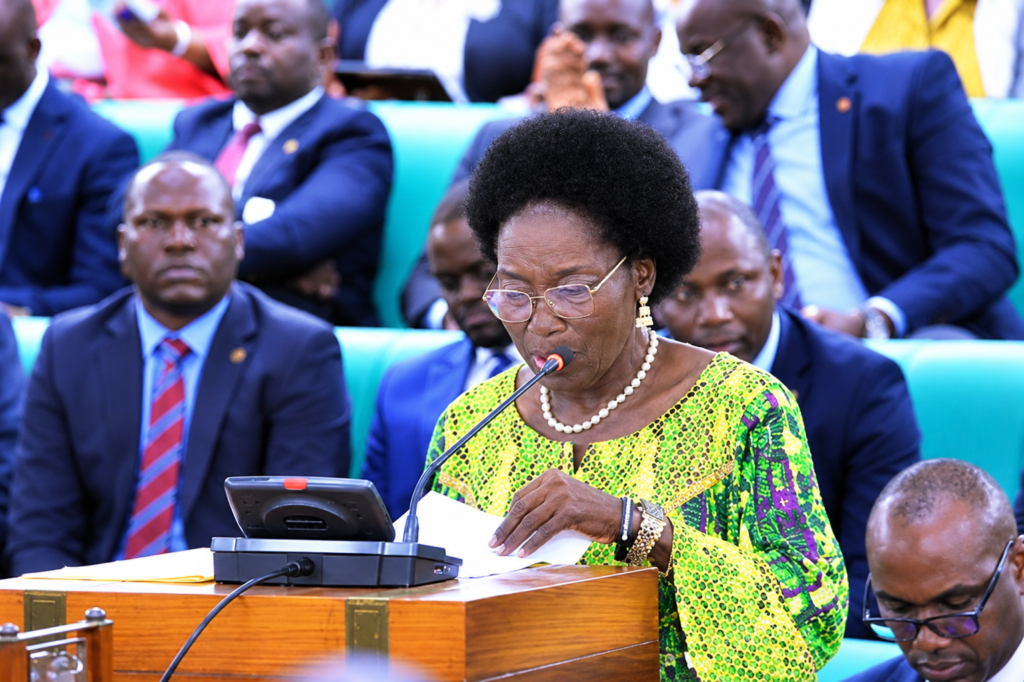
East African governments want to make such transactions easier. On November 3, 2026, First Deputy Prime Minister and Minister for East African Community Affairs Rebecca Kadaga told Parliament that the East African Community (EAC) was developing an integrated payment and settlement system to reduce reliance on the US dollar in regional trade.
The proposed system would allow businesses and individuals to transfer money between member states using local currencies through banks, mobile money and other authorised digital payment channels. Kadaga said the initiative would lower transaction costs, deepen regional trade and lay the foundation for the proposed East African Monetary Union.
The economic opportunity is significant. According to the EAC’s second-quarter 2026 statistics bulletin, regional trade reached US 52.3 billion, a 37 percent increase from US 38.2 billion during the corresponding quarter of 2025. Intra-EAC exports grew by 33.2 per cent to US$3.2 billion.
Uganda’s own trading relationship with the bloc is equally important. The Ministry of Finance’s September 2026 Performance of the Economy Report shows that EAC countries supplied 45.5 per cent of Uganda’s merchandise imports in August, worth US 1.05 billion. However, Ugandan exported only US 319.99 million to the region, resulting in a trade deficit of US$730.27 million.
These figures reveal both the opportunity and the difficulty. A regional payment system could make transactions cheaper, but Uganda’s growing dependence on regional imports also means that banks need reliable access to the currencies required to pay suppliers.
East Africa already has the East African Payment System (EAPS), which connects the real-time gross settlement systems of Uganda, Kenya, Tanzania and Rwanda. It enables commercial banks to transfer funds and settle transactions in participating national currencies. However, Burundi, South Sudan, the Democratic Republic of Congo and Somalia are not yet fully integrated.
Its adoption also raises questions. Bank of Uganda show that 21,648 EAPS payments moved into and out of Uganda in the year to June 2026, a 12.5 per cent decline from the previous year. Although the number of Uganda shilling-denominated payments fell by 8.9 per cent, their total value increased by 60.5 per cent to Shs982.4 billion. This indicates larger transactions, but does not establish widespread adoption among smaller businesses.
During the parliamentary debate, Shadow Minister for EAC Affairs Hakim Kizza identified currency liquidity as a major obstacle. He called for a central bank-backed facility to ensure commercial banks have sufficient supplies of Kenya shillings, Tanzania shillings and other regional currencies. Without such access, traders may continue converting through the US dollar, even when local-currency settlement is technically available.
Uganda’s trade imbalance makes this concern particularly relevant. When imports from neighbouring countries substantially exceed exports, the flow of regional currencies may not be sufficient to support payments in both directions. Expanding manufactured exports, agricultural processing and regional services will therefore be important to making local-currency transactions sustainable.
Nevertheless, reducing dollar dependence should not be confused with abandoning the currency. Uganda still relies on international markets for petroleum products, machinery and industrial equipment, many of which are priced in US dollars. The more practical objective is to eliminate unnecessary dollar conversions in regional transactions while retaining access to international financial markets.
For Uganda, success will depend on three priorities: reliable regional currency liquidity, wider participation by banks and authorised digital payment providers, and stronger exports to neighbouring markets. Governments must also harmonise payment regulations and address non-tariff barriers that continue to make regional trade expensive.
The EAC has a growing commercial market, but its financial infrastructure must catch up. A Ugandan exporter should be able to receive payment from a Kenyan customer without unnecessary currency conversions, just as a local manufacturer should be able to pay a Tanzanian supplier affordably.
Reducing dependence on the US dollar will not happen simply by introducing a new payment platform. It will require East Africa to build a stronger regional market, produce more for one another and make trading in local currencies commercially practical.