Uganda was supposed to produce its first commercial oil by July 31, 2026. That deadline has passed, and First Oil has now been pushed to before the end of June 2027.
Yet this is not a story of an oil project that is still being built from scratch. Tilenga has drilled hundreds of wells, Kingfisher is nearing production readiness, EACOP is largely complete and more than $12 billion has already been invested across the projects.
So what exactly is holding back Uganda’s first commercial barrel?
The answer increasingly lies in the final integration of a complex system. Uganda’s oil project has moved from being primarily a construction challenge to a systems-integration and commissioning challenge, where each part must work with the others before production can begin.
By the end of June 2026, Tilenga was about 74% complete, with 234 wells drilled, while Kingfisher was 79% complete. EACOP had reached about 90% completion, with more than 1,443 kilometres of the 1,443-kilometre pipeline welded across Uganda and Tanzania.
The scale of progress makes the delay harder to explain at first glance. But the individual milestones do not produce oil on their own.
Crude must first be produced from the Tilenga and Kingfisher fields, processed through their facilities, moved through the feeder systems to Kabaale, metered and then transferred into EACOP for export to Tanga in Tanzania. A delay in one part of that chain can hold up the entire system.
The Petroleum Authority of Uganda has linked the latest delay partly to disruptions caused by the conflict in the Middle East, which affected the movement of specialised equipment required for the projects. Some equipment had to be rerouted, adding time to a development where the final stages depend heavily on precise sequencing and commissioning.
That is the critical issue now.
EACOP is expected to be ready to receive crude by mid-December 2026, while First Oil is targeted before the end of June 2027. The gap between those two milestones raises an important accountability question: what still has to happen between pipeline readiness and the first commercial barrel?
The answer will determine whether the latest timeline holds. Tilenga and Kingfisher are ultimately expected to produce about 230,000 barrels of oil per day at peak, while Uganda has around 6.5 billion barrels of oil in place, of which about 1.4 billion barrels are currently considered recoverable. The projects are expected to produce over at least 20 years.
This is why First Oil matters beyond the symbolism of finally becoming an oil producer.
Uganda’s fiscal plans have already begun to anticipate petroleum revenues. The IMF expects oil-related budget revenues, net of oil-sector expenditure, to begin in financial year 2026/27 and eventually peak at about 2.8% of GDP in FY2032/33. It had also projected economic growth above 8% in FY2026/27 and FY2027/28 following the start of oil production.
A delay does not remove those potential benefits, but it pushes them further into the future.
The wider economy is also waiting. By the end of June 2026, the petroleum industry employed 22,234 people, including 18,958 Ugandans. Ugandan companies had captured about 30% of the cumulative value of approved Tier One contracts, worth roughly $2.3 billion.
First Oil is expected to mark a shift from a construction-heavy industry towards sustained production, creating new demand for local suppliers, maintenance, logistics, technical services and other businesses supporting the operating phase.
The regional stakes are equally significant. Uganda’s crude is being developed around an export system that crosses two countries, with EACOP connecting the oil fields to the Tanzanian coast. Its construction is estimated to cost about $4 billion and the pipeline is expected to operate for roughly two decades once production begins.
The latest delay also exposes a vulnerability that is easy to overlook. Uganda’s oil industry is connected to global supply chains long before its crude reaches the international market. Specialised equipment, contractors, shipping routes and international logistics can influence the timetable of a project thousands of kilometres away.
Uganda has been waiting for this moment for nearly two decades, since commercial discoveries were made in the Albertine Graben. The project has passed through exploration, appraisal, licensing, investment decisions, land acquisition, drilling and major infrastructure construction.
The question is therefore no longer whether Uganda has oil or whether it can build the infrastructure to produce it.
The real test is whether all the moving parts can now be commissioned as one system and deliver a commercial barrel consistently.
That puts the focus firmly on the next six to nine months. Government and the project partners will need to make clear what remains unfinished, which components are on the critical path, when EACOP will be ready to receive crude and what must happen before oil can move from the fields to the export terminal.
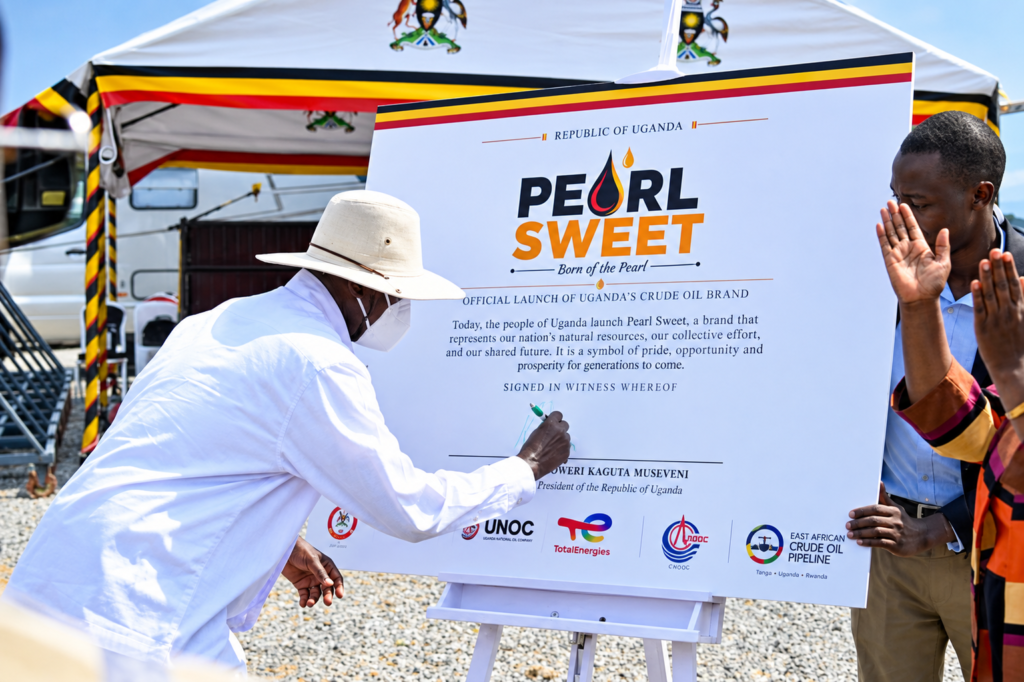
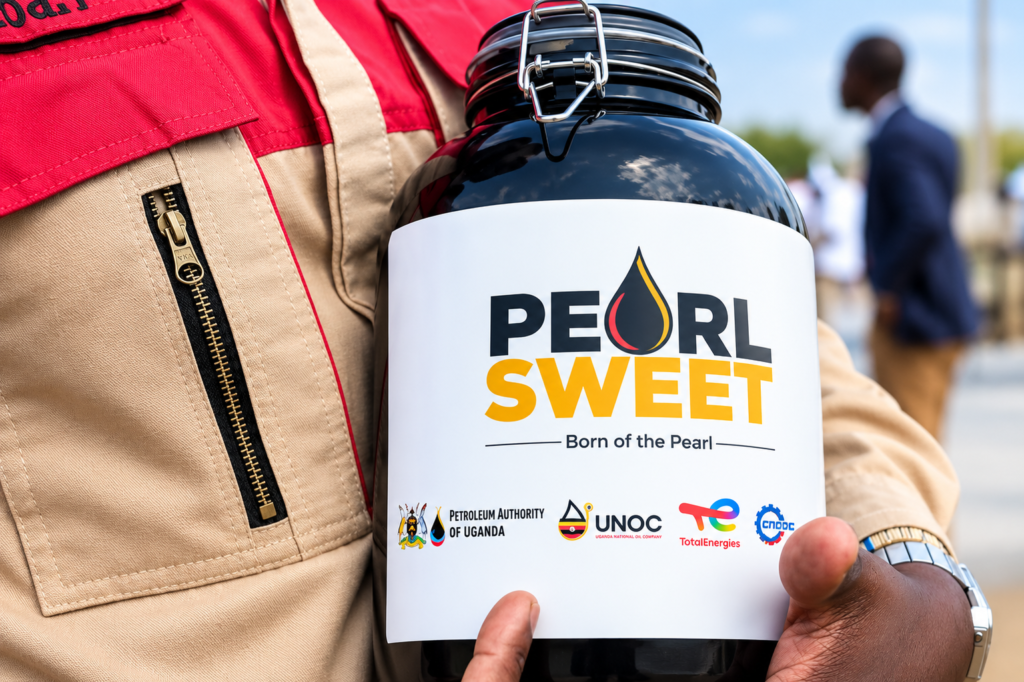
Uganda has already given its crude a name, Pearl Sweet. After years of investment and anticipation, the symbolism is fitting. Uganda is no longer waiting to discover its oil. It is waiting to prove that it can move it.