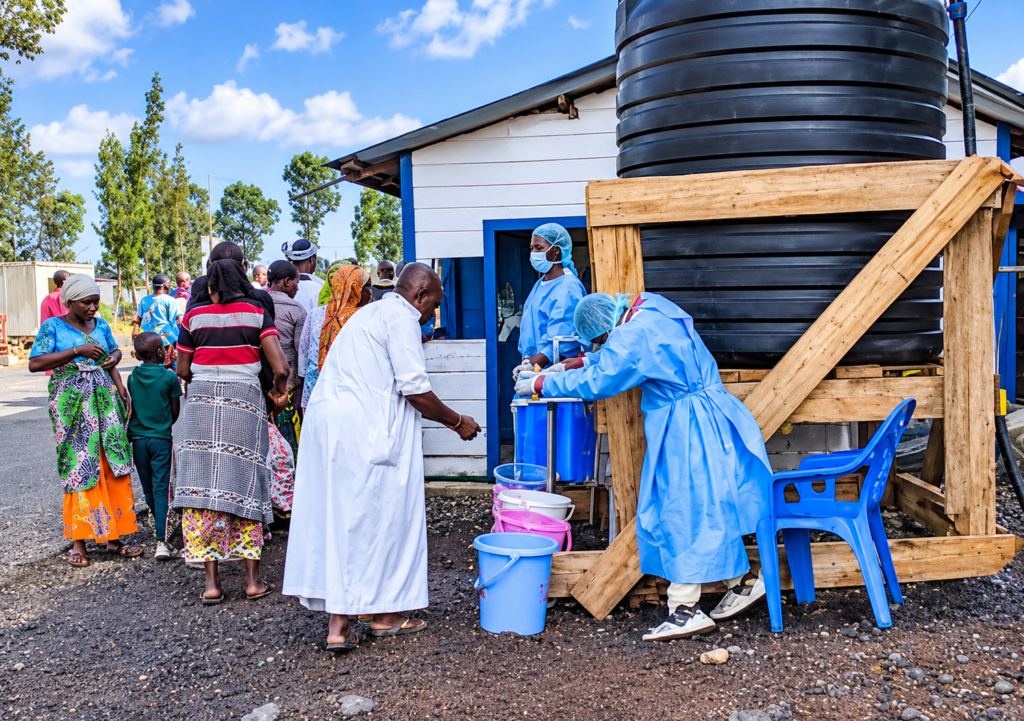
Uganda may have brought its 2026 Ebola outbreak under control, but the threat has not disappeared. Across the border in the Democratic Republic of Congo (DRC), thousands of people continue to be infected with Bundibugyo virus disease, keeping neighbouring countries on alert.
The World Health Organization (WHO), in an update published on 17 November 2026, reported more than 11,000 cases and 5,400 deaths in the DRC. More detailed figures from the European Centre for Disease Prevention and Control (ECDC), based on data up to 14 November, put the total at 11,376 confirmed cases and 5,568 deaths. The outbreak has affected eight provinces, with transmission continuing in several areas.
Uganda experienced this threat first-hand in May 2026 when it confirmed an outbreak of Bundibugyo virus disease following cross-border transmission involving Congolese nationals seeking treatment in Ugandan hospitals. The Ministry of Health recorded 20 confirmed cases and two deaths, alongside one probable case and one probable death. The outbreak was declared over on 28 July after local transmission was interrupted.
In an update on 25 October, Health Minister Dr Chris Baryomunsi confirmed that Uganda had not recorded another confirmed case since the outbreak ended. He also announced that all 60 contacts identified in connection with a Kenyan traveller’s Ebola case had completed their 21-day monitoring period without developing symptoms.
However, the minister cautioned that the end of local transmission did not mean the risk had ended, given Uganda’s close connections with the DRC through trade, travel and family relationships.
The concern is particularly pronounced in Kasese and Bundibugyo, where communities regularly cross into neighbouring Congolese areas for business, healthcare and family engagements. According to UNICEF, Kasese shares approximately 54 kilometres of porous border with the DRC, making it difficult for authorities to monitor all movement through formal and informal routes.
The International Organization for Migration (IOM) has identified 17 priority entry points in Kasese for strengthened screening and surveillance, including 13 informal crossings. This mapping provides an important indication of the scale of the monitoring challenge and where additional resources may be needed.
Much of Uganda’s preparedness depends on whether infections can be identified and reported before they spread. Village Health Teams (VHTs), teachers and local leaders are therefore central to the response, particularly in communities far from major health facilities.
In a UNICEF field report published in July, Nason Mugisa, a VHT member from Mpondwe-Lhubiriha Town Council, explained how community reporting works, “When someone develops signs and symptoms, we verify the information, alert the surveillance team and ETU immediately.”
Kasese has 876 villages served by 4,380 VHTs, according to the same UNICEF report. These volunteers conduct household visits, community awareness sessions and health education activities, helping residents recognise symptoms and report suspected infections.
Dr Amon Bwambale, Kasese District Health Officer, acknowledged the importance of continued vigilance, saying that
“We are achieving what we are achieving because of support from partners like UNICEF. But as long as the outbreak continues in the DRC, we cannot put our guns down.”
UNICEF’s latest report of 17 November also identifies informal crossings, patient referrals, transport movements and access to hard-to-reach communities as continuing preparedness challenges. The interventions extend beyond surveillance to include infection prevention, sanitation, child protection and psychosocial support.
Uganda is also strengthening cooperation with the DRC, recognising that protecting its population requires improving disease detection and treatment on both sides of the border.
At a high-level bilateral meeting in Kampala on 4 November, the two governments reaffirmed their commitment to implementing a memorandum of understanding signed in June 2026 to strengthen cross-border health security.
Uganda has supported the establishment of three Ebola treatment units in the DRC, in Aru, Chomia and Butembo, with a fourth under construction. It has also deployed three mobile laboratories that have conducted more than 5,000 diagnostic tests over three months.
Dr Baryomunsi said the partnership was ultimately about protecting people by ensuring diseases are detected earlier, information is shared faster and responses are better coordinated. Prof Steve Ahuka, the DRC’s National Incident Manager, also recognised Uganda’s support in strengthening treatment and diagnostic capacity in affected areas.
These investments are important, but their effectiveness will depend on how well national agreements translate into action at district and community levels. Health officials need reliable information-sharing arrangements, functional referral systems, trained personnel and adequate protective equipment to respond when suspected cases emerge.
Sustaining these interventions will require continued financing. UNICEF’s preparedness activities in Uganda receive support from the Governments of the United States and Iceland and the Mastercard Foundation, alongside government and other implementing partners.
The wider regional response also faces financial pressure. IOM recently reported that it had received US 50.2 million against US11O million million requirement for its multi-country Ebola preparedness and response plan, leaving a funding gap of US$59.8 million. Its work includes mapping population movements, strengthening screening and supporting referral systems along high-risk routes.
For Uganda, the challenge is ensuring that surveillance and community engagement do not weaken when emergency funding declines. The Ministry of Health and district authorities need to demonstrate how many frontline workers have received specialised training, whether high-risk health facilities have adequate protective equipment and how quickly suspected patients can be transported and tested.
Uganda’s successful interruption of local transmission in 2026 demonstrates the value of coordinated public health action. However, with transmission continuing in the DRC, the country’s preparedness cannot depend on screening at major border posts alone. It must extend to villages, markets, schools and health facilities where cross-border movement is part of everyday life.
For communities in Kasese and Bundibugyo, this means being able to continue trading, accessing healthcare and maintaining family connections while knowing that suspected infections will be detected and handled promptly.
The next outbreak may not emerge at a formal border crossing. Uganda’s ability to contain it will depend on whether the health system and communities can recognise the first warning signs, report them quickly and respond before the virus spreads.