
Amidst persistent whispers and misinformation, the Uganda National Oil Company (UNOC) has stepped forward to set the record straight on the nation’s eagerly anticipated journey to first oil production. Tony Otoa, UNOC’s Chief of Corporate Affairs, has for the first time directly addressed circulating rumours of Uganda “secretly exporting” crude oil via trucks, offering crucial clarity on the unique characteristics of Uganda’s oil and the rigorous path to commercialisation.
Otoa’s public clarification, disseminated via his social media platforms, firmly dispels these unfounded claims, providing an authoritative voice from the heart of Uganda’s promising oil and gas sector.
“There has been talk about Uganda exporting its crude oil. This is a false narrative considering our waxy oil profile and the impossibility of it moving in trucks as suggested,” Otoa stated, emphasising the technical and economic impracticalities of such an endeavour.
Why Trucks Are Not An Option
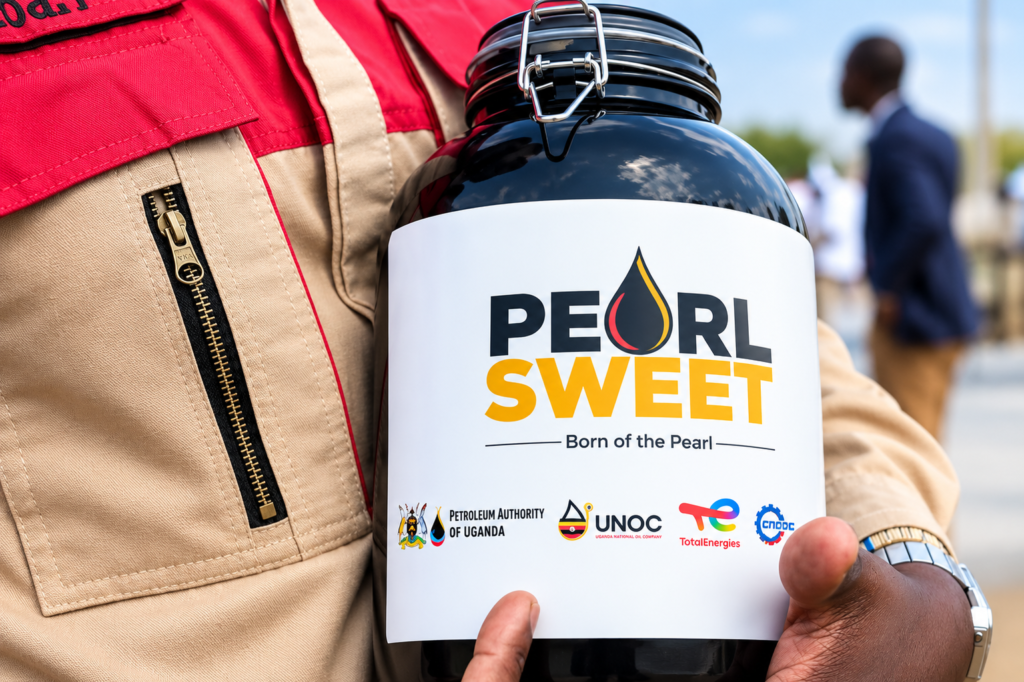
According to Otoa, Uganda’s crude oil, primarily from the Albertine Graben, is characterised by its ‘waxy’ nature. This crucial detail means it solidifies at ambient temperatures, making conventional road transportation via trucks economically unviable and technically impossible without constant, costly heating.
Otoa elaborated on this point, drawing a stark comparison: “If trucks were to be used, you would need thousands of them to make economic sense. Tullow Oil tried it in Kenya and discontinued it for lack of economic viability despite the liquid nature of the Kenyan oil in the Turkana region.”
The implications, Otoa asserted, are clear: Uganda’s crude oil cannot be transported in its raw form without significant energy input to maintain its fluidity, yet this is not cost-effective for large-scale export via road.
“To transport Uganda’s oil in a tanker, it needs to be heated to a point that makes it worthwhile, which is not only very expensive but also impossible because it’s not cost-worthy,” Otoa stated.
He explained that this technical reality reinforces UNOC’s long-standing position that Uganda’s crude oil can only be transported efficiently and economically through a dedicated pipeline or other specialised modes designed for waxy crude.
Paving the Way for First Oil with EACOP
This clarification from UNOC underscores the critical importance of the ongoing East African Crude Oil Pipeline (EACOP) project.
The 1,443-kilometre heated pipeline, stretching from Uganda’s Albertine Graben to the Tanzanian port of Tanga, is not merely an option but the sole viable infrastructure for the large-scale export of Uganda’s waxy crude oil.
Its completion, anticipated in mid-2026, remains the undisputed gateway to Uganda’s commercial oil production and entry into the global oil market.
The commitment to the pipeline is a testament to the long-term strategic vision for Uganda’s oil and gas sector, focusing on sustainable and economically sound infrastructure rather than short-term, unfeasible alternatives.
As the nation prepares for its first oil, therefore, UNOC’s transparent communication plays a vital role in managing public expectations and ensuring a clear understanding of the complex realities and monumental efforts involved in bringing this strategic resource to market.
This clarity from UNOC provides reassurance to stakeholders and the public that Uganda’s journey to becoming a crude oil exporter is progressing through established, technically sound, and economically viable channels, with first oil production firmly on the horizon, secured by the ongoing development of world-class infrastructure.