WPP Scangroup‘s board survived a dramatic shareholder challenge at the company’s Annual General Meeting in Nairobi on Monday, but the outcome has done little to silence growing concerns about the future direction of East Africa’s largest listed marketing services group.
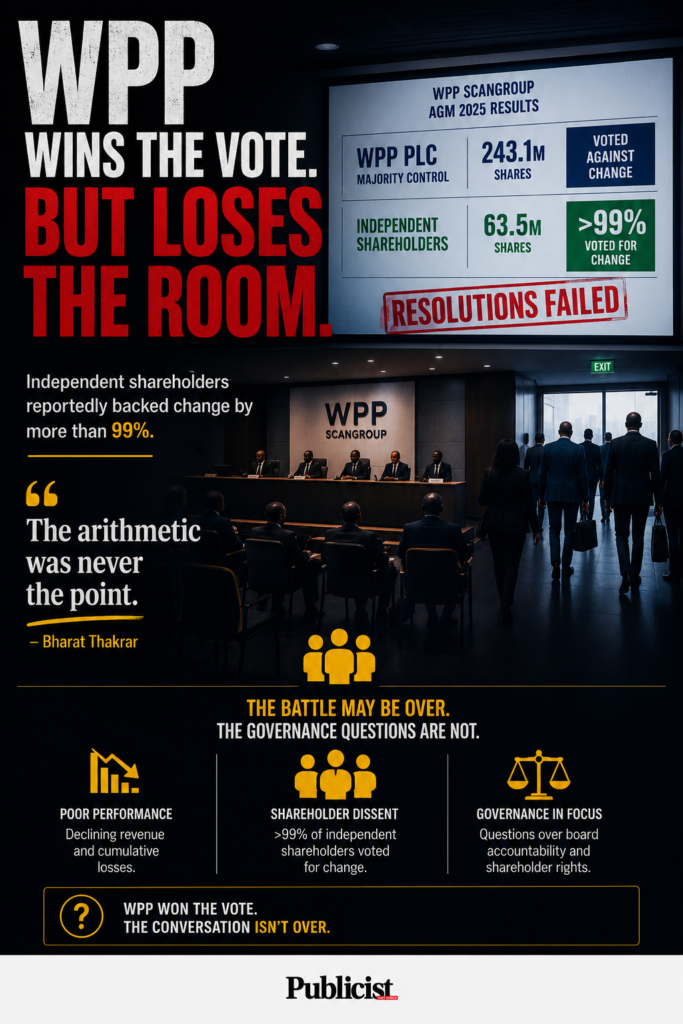
The resolutions seeking changes to the board failed after WPP plc, the London-listed communications giant, exercised its controlling stake and voted against them.
Yet what happened after the vote may prove more significant than the vote itself.
In a strongly worded statement issued shortly after the AGM, former Scangroup chairman and founder Bharat Thakrar argued that while the board had won procedurally, it had failed to secure the confidence of independent shareholders.
According to figures released by the shareholder group, WPP’s voting block accounted for approximately 243.1 million shares, while independent shareholders accounted for approximately 63.5 million shares.
Of those independent shares, the group claims that more than 99% were cast in favour of change.
“The arithmetic was never the point,” Thakrar said, arguing that the vote had become a public record of shareholder dissatisfaction rather than a contest that could realistically be won.
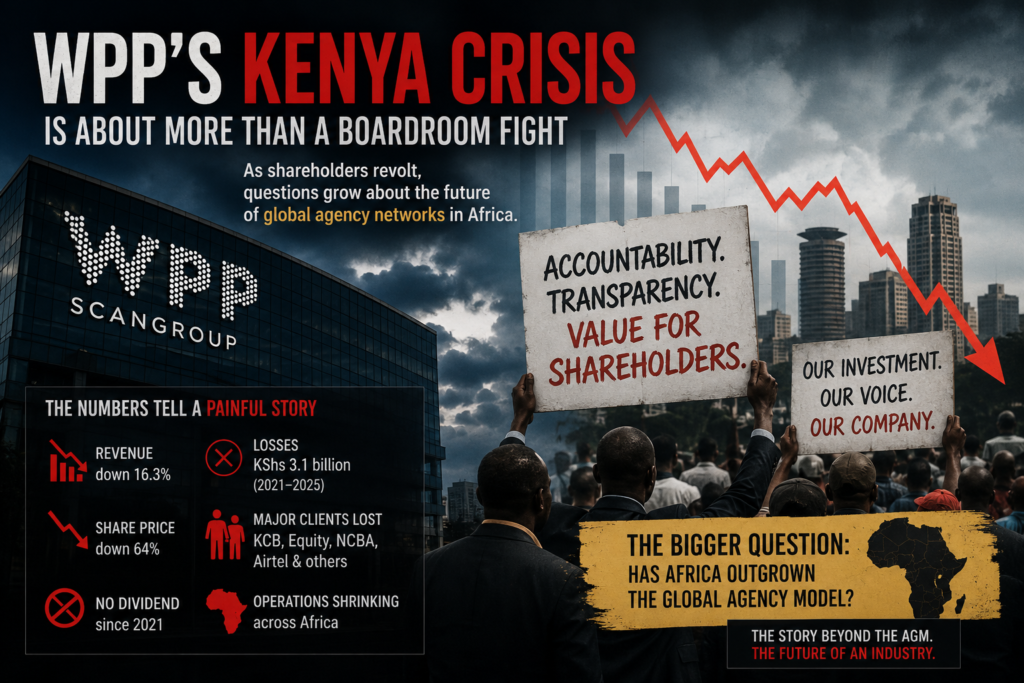
The result concludes weeks of increasingly public debate surrounding the performance of WPP Scangroup, with shareholders citing declining revenues, cumulative losses, falling share value, the loss of major clients and the absence of dividends in recent years.
The campaign also reignited wider conversations about the role of multinational communications networks in African markets and the balance between majority shareholder control and minority shareholder interests.
For many observers, the significance of the AGM extends beyond the immediate outcome.
At issue is whether the overwhelming support reportedly secured among independent shareholders represents a temporary protest or a deeper signal of frustration with the company’s strategic direction.
The shareholder group points to what it describes as a prolonged period of underperformance, including billions of Kenyan shillings in cumulative trading losses, declining cash reserves, a shrinking regional footprint and the departure of key clients.
The board and majority shareholder, however, retain the legal authority and shareholder mandate to continue steering the company.
That reality means the immediate governance battle may be over. The reputational debate is not.
Indeed, Monday’s vote leaves WPP Scangroup facing a different challenge: how to rebuild confidence among investors who appear increasingly divided from the company’s controlling shareholder. For a business whose core trade is reputation, influence and stakeholder engagement, the optics are difficult to ignore.
The AGM may have delivered a clear legal outcome. Whether it delivered a convincing endorsement of the company’s leadership is likely to remain the subject of debate long after shareholders have left the meeting room.What is certain is that the conversation has evolved beyond a routine boardroom dispute.
It has become a test case for corporate governance, shareholder accountability and the future of multinational agency networks operating in African markets, and while WPP won the vote, the wider questions raised by shareholders remain firmly on the table.