The East African Community (EAC) has long championed the vision of a unified Common Market, a cornerstone of which is the free movement of persons, services, and capital. However, a stark reality has emerged: despite a 12% growth in intra-EAC services trade over the past five years, the mobility of skilled professionals remains strikingly low.
With less than 30,000 professionals moving and working across borders annually, less than 0.01% of the region’s skilled workforce, it is clear that significant barriers persist.
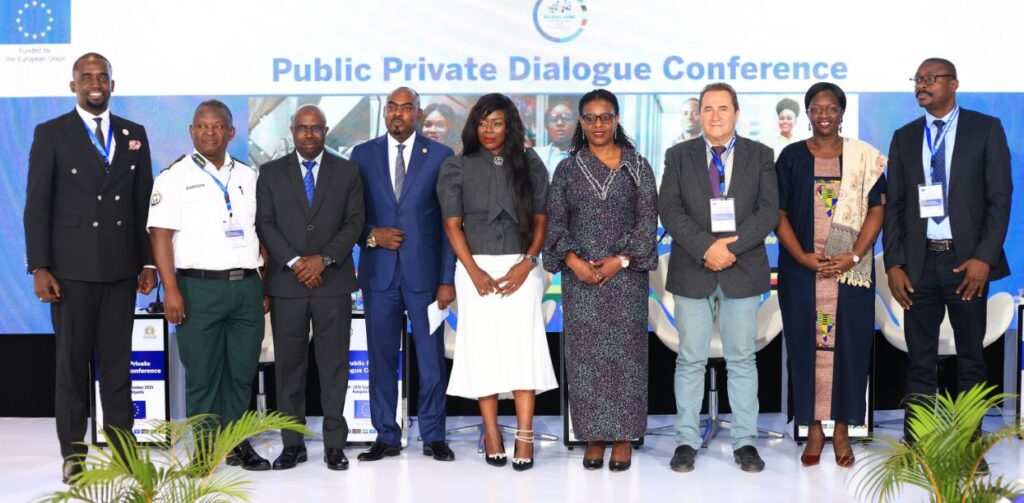
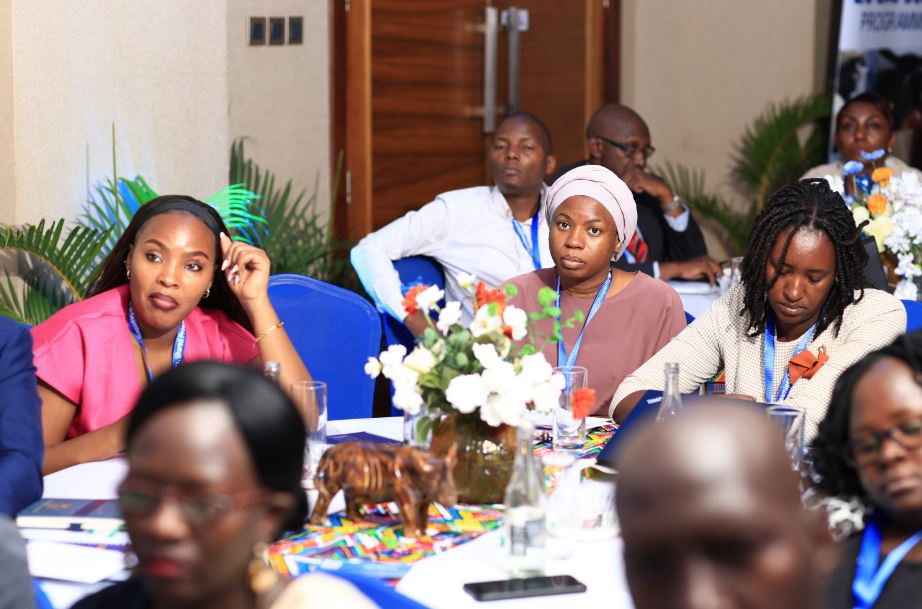
This paradox was the central focus of the inaugural Public-Private Dialogue (PPD) on the Mobility of Business Persons, held on Thursday, September 11, 2025, in Kampala, Uganda, under the theme ‘Seamless Borders, Shared Prosperity: Advancing the Free Movement of Service Suppliers in the EAC.’
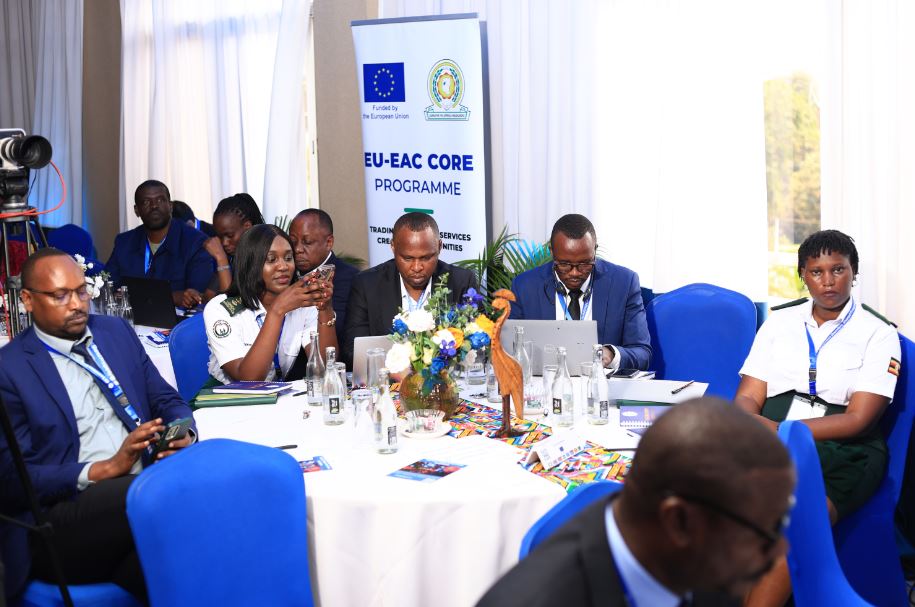
This two-day landmark event convened Public and Private Sector Representatives, specifically from the European Union, immigration authorities, and representatives of the Ministries of Internal Affairs, East African Affairs, Trade and Labour, Service sector regulators, and business entities across all EAC Partner States.
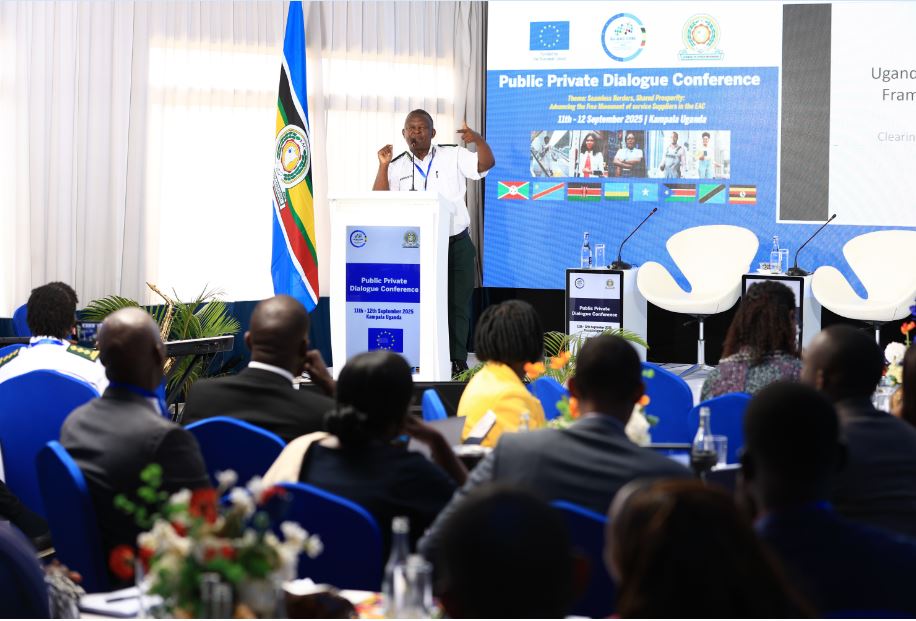
The dialogue was attended by delegations from the Democratic Republic of the Congo, Burundi, Kenya, Rwanda, Somalia, South Sudan, Uganda, and Tanzania.
The main objective of the dialogue is to create a dynamic platform for public and private sector stakeholders to collaboratively address longstanding barriers to cross-border mobility and develop actionable solutions that drive regional integration and economic growth.
Keynote speakers included: Ms. Staicy Apio Wagala, the Team Lead at EAC-EU CORE Programme, Hon. Fred Mukasa Mbidde, the Chairperson of the East African Committee on Communication, Trade and Investments, Mr. Marcellino Bwesigye, the Assistant Commissioner at the Directorate of Citizenship and Immigration Control, Mr. Sam Osige, the Assistant Commissioner at the Ministry of East African Affairs, who represented the Minister for East African Affairs Hon. James Magode Ikuya, Ramathan Abubaker, the President East African Law Society, Mrs. Kiara Binta Nkuranga, President, Uganda National Association of Builders, Suppliers, and Engineering Contractor (UNABSEC), among others.
The European Union delegation was led by Mr. Luis Lechiguero, the Programme Officer, Green Transition and Private Sector, who emphasised that business mobility is a cornerstone of regional integration.
“Seamless movement of business persons is not just a policy aspiration; it is a catalyst for innovation, job creation, and shared prosperity across East Africa,” said Ms. Annette Ssemuwemba, Deputy Secretary General of the East African Community.
“This dialogue marks a pivotal step towards breaking down barriers and unlocking the full potential of our region’s service sectors, she added, noting that, “We are especially grateful for the support of the EU-EAC CORE Programme, whose partnership is vital to realising these ambitions. We invite all stakeholders to join us in shaping a more integrated and prosperous EAC.”
In his remarks read for him by Mr. Osige, Hon. Magode called upon all member states to implement the East African Common Market Protocol, saying it is the simplest solution to all the challenges faced in the region.
“To overcome mobility challenges across the region, the East African Common Market Protocol should be ratified”, he said, adding, “To achieve smooth business mobility, we also need to harmonise travel documents, adopt Unified Work Permit Protocols, and embrace digital solutions like the EAC E-Passport and other documents, to reduce the procedural difficulties of mobility.”
A Region on the Move
Despite the existence of Mutual Recognition Agreements (MRAs) for professions like engineering, accountancy, legal practice, and architecture, their implementation remains uneven in East Africa.
A telling statistic from the dialogue revealed that only 40% of eligible professionals successfully use these agreements to work in another Partner State, highlighting a significant gap between policy and practice.
Ssemuwemba noted that the solution for this challenge is leveraging digital tools like E-Gates, enhancing awareness about the need for business mobility, and taking collective action as East African citizens.
She also called for the eradication of administrative and procedural barriers to mobility, calling upon all member states to implement the commitments they made when they signed the East African Community charter.
Breaking Down the Walls and Key Challenges
The dialogue identified several critical challenges that governments and stakeholders must address to advance the free movement of service suppliers.
These barriers, which were highlighted by Mr. Bwesigye and were at the heart of the discussions, include:
Immigration and Security
Bwesigye said that there’s a need to balance openness for business with national security concerns, requiring robust systems for identity verification and data sharing. He said, “Uganda has a clear policy to fast-track East African integration using the national regulatory framework on immigration and compliance, which makes it easier to clear service suppliers.”
Labour Market Protection
He observed that the challenge of safeguarding local employment without imposing excessive restrictions that could stifle economic growth and innovation should also be considered.
Recognition of Qualifications
He called for a seamless solution to easy and proper identification of professionals and citizens across the region.
He noted that gaps in the mutual recognition of professional and academic qualifications often lead to skills mismatches and underemployment.
Administrative and Regulatory Complexity
He stressed the existence of cumbersome processes and inconsistent regulations that cause delays and frustrations for business professionals, saying they should be removed.
Limited Awareness
According to Bwesigye, the lack of outreach and user-friendly information portals means that many professionals and businesses are unaware of their rights and opportunities within the Common Market. He called upon member states to intensify awareness campaigns across the region.
Bwesigye, who also urged member states to pay special attention to the informal sector, called upon participants to widen the scope of business mobility to sectors like agriculture, education, entertainment, religion and refugees.
A Co-Created Way Forward
With the invaluable support of the European Union through the EU-EAC CORE Programme, the EAC Secretariat is committed to overcoming these hurdles.
The Dialogue served as a unique platform for business leaders, government officials, and regulators to co-create practical solutions.
Participants explored international best practices, drawing lessons from successful models such as the European Union’s “Points of Single Contact” system and the APEC Business Travel Card.
Like Mukasa Mibidde, who called for the elimination of non-tariff barriers and a one-stop border post, reiterated, “Failure to integrate is unforgivable,” so, the “ultimate goal is to design a tailored solution that directly addresses the needs of the EAC’s liberalised service sectors, which are vital for job creation and societal well-being.”
This strong partnership between the EU and the EAC highlights how shared values and strategic collaboration can drive sustainable development, prosperity, and unity across borders, turning the policy aspiration of a truly integrated EAC into a tangible reality for citizens to live the ‘East African Dream!’