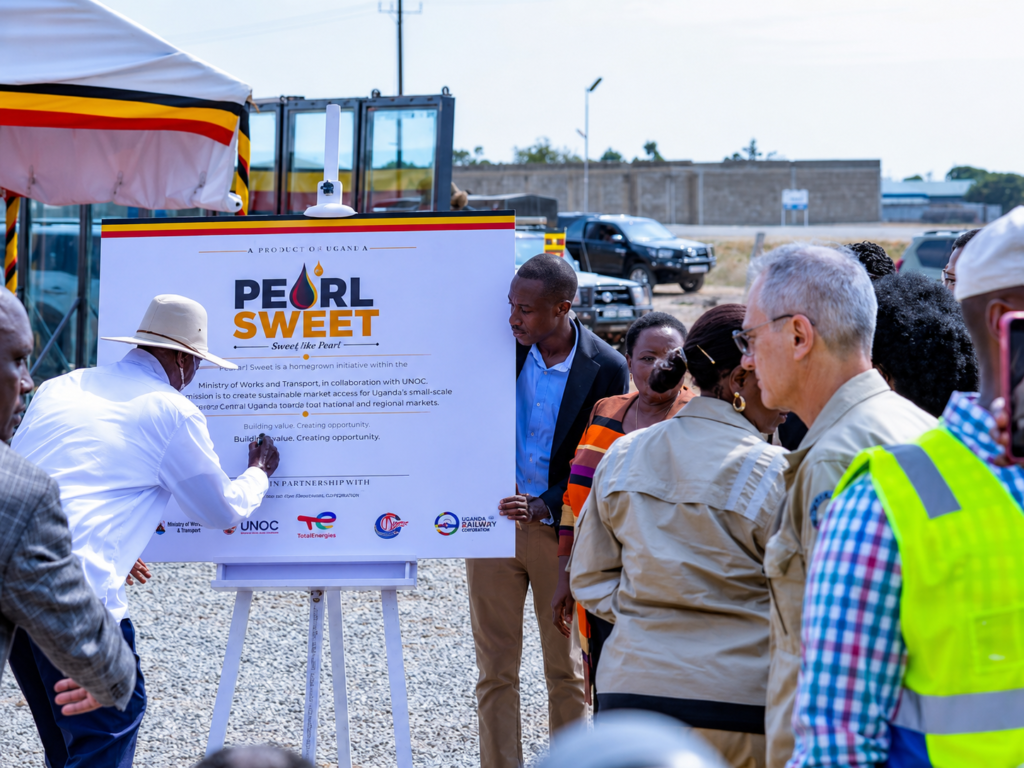
Uganda’s oil has spent nearly two decades underground, in boardrooms, financing negotiations and political speeches. On Wednesday, it finally got a name.
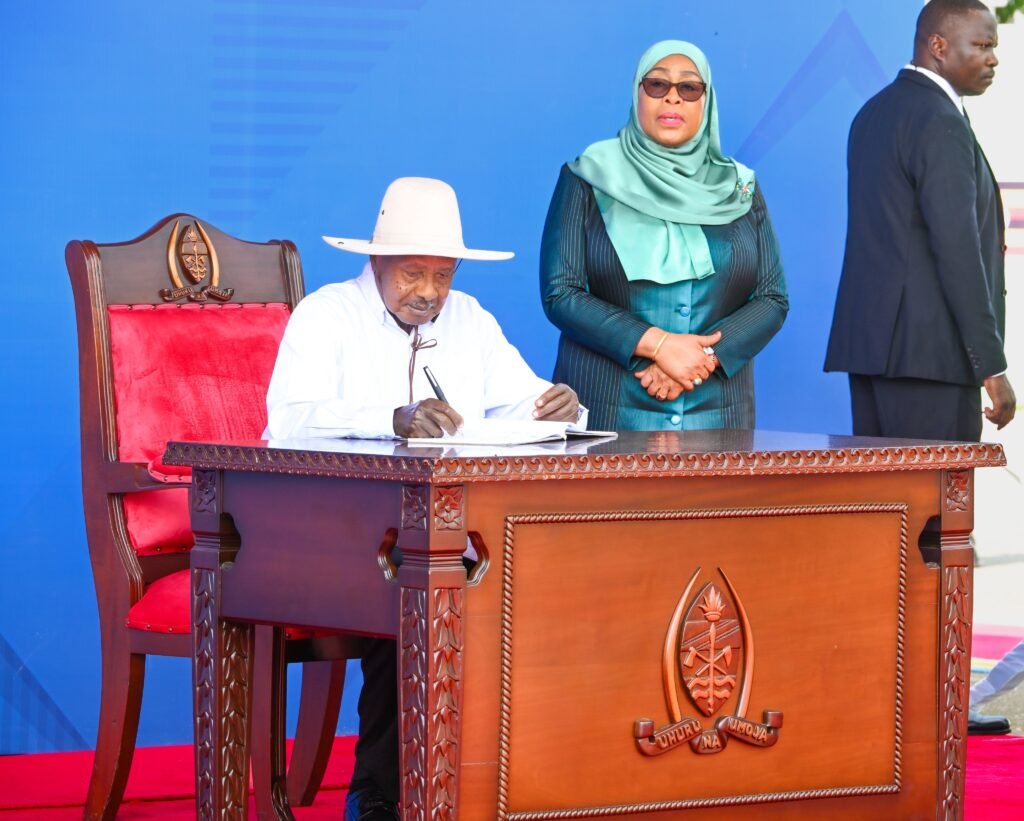
President Yoweri Museveni unveiled Pearl Sweet, the commercial identity under which crude from Uganda’s Lake Albert fields will be taken to the international market.
There was a lighter moment when Museveni recalled first hearing the proposed name.
“I asked them, does the petroleum contain sugar?” he said, explaining that Energy Ministry Permanent Secretary Irene Batebe had to take him through the petroleum meaning of “sweet.”
There is no sugar, of course. Sweet crude is industry language for oil with relatively low sulphur content. Uganda’s crude has been reported at about 0.16% sulphur, one of the characteristics that could make it attractive to refiners.
But the naming ceremony masks a much bigger question: what will the world actually pay for Pearl Sweet?
Uganda has discovered about 6.5 billion barrels of petroleum resources, with roughly 1.65 billion barrels considered recoverable. Tilenga and Kingfisher are expected to produce about 230,000 barrels per day at peak, according to project and government figures.
Reuters puts the upstream ownership at 56.67% for TotalEnergies, 28.33% for CNOOC and 15% for Uganda through the Uganda National Oil Company.
That 15% matters. Uganda is not simply waiting for taxes and royalties. UNOC has an ownership interest and, together with the joint venture partners, is moving into the business of finding buyers and marketing the crude internationally.
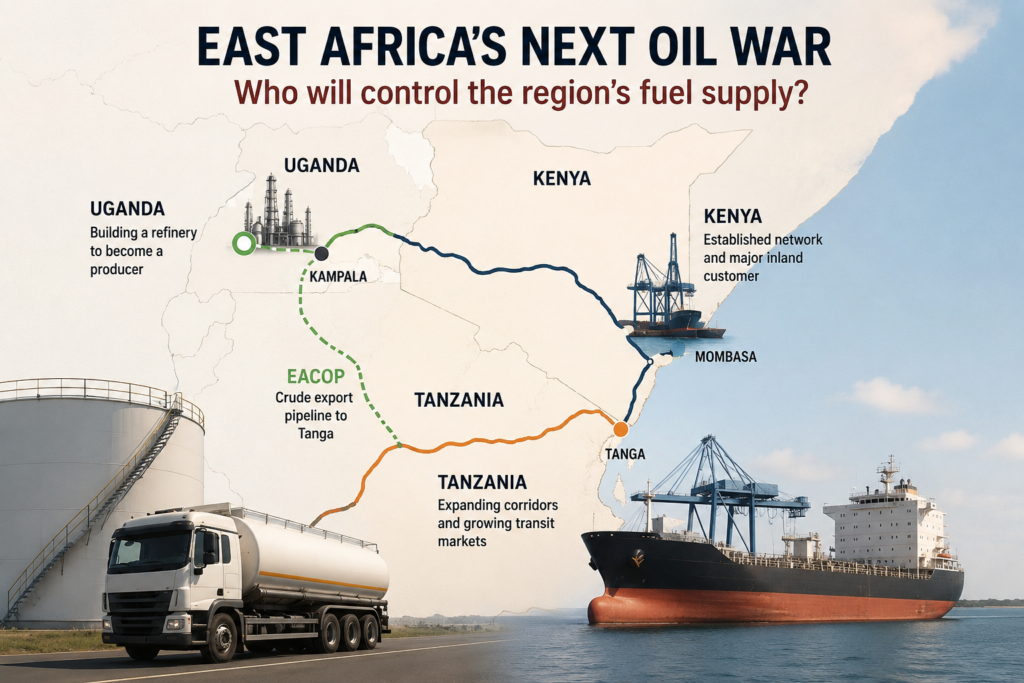
And Pearl Sweet is an unusual barrel. It is low in sulphur but also waxy, with a pour point of around 40°C. That characteristic is one reason the 1,443-kilometre East African Crude Oil Pipeline from Hoima to Tanzania’s coast has to be electrically heated.
Reuters reports that the crude has similarities to waxy sweet grades from Chad, Sudan and South Sudan. Those comparisons will matter when traders and refiners decide where Pearl Sweet should be priced against competing barrels.
That is where the next phase of Uganda’s oil story gets interesting.
For years, the conversation has been about wells, pipelines, compensation, financing and First Oil. Soon it will be about buyers, cargoes, refinery demand and dollars per barrel.
At peak production of 230,000 barrels a day, Uganda’s fields would theoretically produce nearly 84 million barrels over a full year if that level were sustained. At an illustrative oil price of $60 a barrel, that is crude with a gross market value of about $5 billion.
That is emphatically not what Uganda would earn. Production levels vary, Uganda owns only part of the projects, and transport costs, operating expenses, royalties, taxes, partner interests and the actual price Pearl Sweet commands all come before anyone talks about national proceeds.
But it shows what is at stake. Energy Minister Dr Monica Musenero said the name was intended to capture both the crude’s technical qualities and Uganda’s identity as the Pearl of Africa. The harder task now belongs to the market.
Museveni, meanwhile, is already talking about what happens to the money. At Wednesday’s ceremony, he cautioned against spending petroleum revenues on consumption and luxury, arguing that they should instead finance productive infrastructure and long-term national assets.
That may ultimately be the bigger test. Uganda has had years to watch what oil did, and sometimes failed to do, for other African producers. First Oil alone will not make the country’s petroleum experiment a success.
The first cargoes will tell us whether refiners want Pearl Sweet and what they are willing to pay for it. The years after that will tell us whether Uganda managed to turn a finite resource into something more lasting.
Pearl Sweet has been born. The market will determine its price. Uganda will determine its legacy.