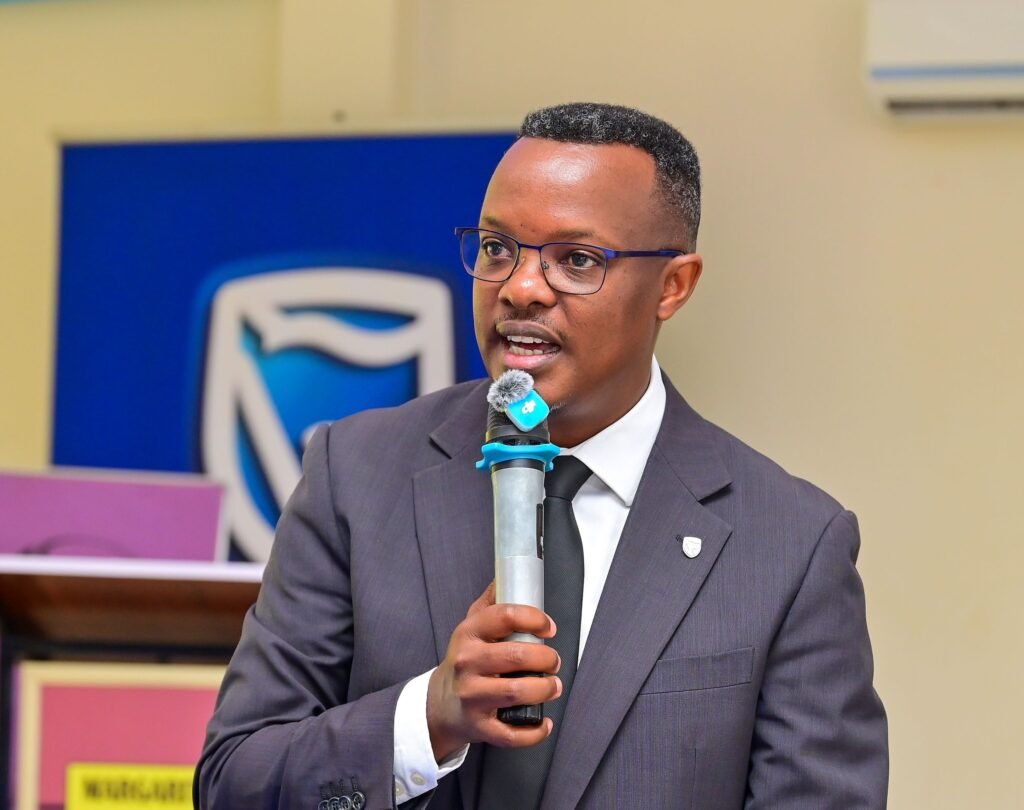

As Uganda’s banking sector navigates a new era of regulatory reform and technological advancement, Centenary Bank, under the leadership of Fabian Kasi as Managing Director, is emerging not just as a compliant institution but as a central engine for the nation’s economic growth.
While other banks are adapting to new requirements, Centenary Bank’s mission-driven model, deeply rooted in financial inclusion and social welfare, positions it to thrive under the stringent new frameworks of the Bank of Uganda.
Its operations are a powerful case study in how a bank can successfully align its business strategy with national development goals.
Leader in Financial Inclusion
At its core, Centenary Bank is a catalyst for financial inclusion, directly addressing the need for broader access to financial services highlighted in the new Environmental, Social, and Governance (ESG) Framework.
With a vast network of over 70 branches and 192 ATMs, the largest of any commercial bank in Uganda, Centenary Bank has made a strategic choice to serve a customer base of over 2 million individuals, many of whom reside in rural areas and were previously unbanked.
By extending its reach to smallholder farmers, traders, and small and medium-sized enterprises (SMEs), Centenary Bank directly contributes to the formalisation of the economy.
Its services, including microloans and savings products, empower these grassroots entrepreneurs to invest in their businesses, boost productivity, and create jobs.
This focus on the “S” (social) component of the ESG framework is not a new requirement for the bank; it is the very foundation of its existence, making it a natural leader in this new regulatory landscape.
Meeting Regulatory Standards with Purpose
Centenary Bank’s robust financial health and strong corporate governance place it in an ideal position to meet the new regulatory standards without a hitch.
Minimum Paid-Up Capital
The bank has demonstrated its resilience and stability by comfortably meeting the new Shs150 billion minimum paid-up capital requirement set by the Bank of Uganda.
While other institutions have considered mergers or downgrades, Centenary Bank’s strong financial position underscores its ability to withstand macroeconomic shocks and protect depositors.
Corporate Governance
The bank’s commitment to its mission necessitates robust governance. The new Financial Institutions (Corporate Governance) Regulations 2024 reinforce the need for comprehensive board structures and oversight.
Centenary Bank’s long-standing focus on ethical leadership and a clear mission ensures that its board is well-equipped to guide the institution while maintaining its core social mandate.
Responsible Digital Lending
In a sector now governed by the Uganda Microfinance Regulatory Authority (UMRA’s) digital lending regulations, Centenary Bank has integrated its services through platforms like CenteMobile and CenteAgent.
By providing digital access responsibly and transparently, the bank aligns with the regulatory aim of protecting consumers from predatory practices, further cementing its role as a trusted partner in the digital economy.
Centenary Bank’s operations exemplify how a financial institution can be both a profitable, resilient business and a powerful driver of inclusive, sustainable growth.
By prioritising financial inclusion and aligning its business model with national development goals, Centenary Bank is not just navigating Uganda’s evolving banking landscape; it is actively shaping it.
Its success is a testament to the fact that purpose and profit can, and should, go hand in hand.