
In a significant step toward regional integration and economic prosperity, a delegation of senators from the Kenyan National Agriculture Committee visited Uganda’s Ministry of Agriculture, Animal Industry and Fisheries (MAAIF) in Entebbe on Tuesday this week.
The high-level visit was mainly aimed at strengthening agricultural cooperation between the two East African powerhouses.
The collaboration underscores a renewed commitment to leverage shared strengths and harmonise policies to unlock greater benefits for farmers and businesses in both nations, a move that also bolsters the aspirations of total integration through the East African Community (EAC).
Focusing on Policy Harmonisation and Mutual Benefit
The Kenyan delegation was led by Hon. David Wafula Wakoli, Chairman of the National Agriculture Committee, who lauded the Ugandan Ministry of Agriculture for its warm reception and collaborative gesture. He noted that the meeting served as a platform to identify key areas where unified action can drive efficiency and reduce barriers to trade.
Receiving the delegation on behalf of Rtd. Maj. Gen. David Kasura-Kyomukama, the MAAIF Permanent Secretary, Mr. Stephen Byantwale, the Commissioner for Crop Production at MAAIF, underscored the importance of this bilateral engagement, saying;
“The two countries stand to benefit from harmonised policies and initiatives, especially in areas of seed certification, fertiliser distribution, and international trade, among others.”
Byantwale asserted that this harmonisation is critical for several reasons, some of which include:
Boosting Intra-Regional Trade
He noted that standardised policies reduce border friction and operational costs for traders, significantly increasing the volume and speed of agricultural exports and imports between the two countries.
Ensuring Quality and Safety
Byantwale stressed that harmonising seed certification standards ensures that farmers in both nations have access to high-quality, disease-free planting materials, boosting productivity and food security.
Optimising Inputs
He explained that coordinating policies on fertiliser and seed distribution can lead to joint procurement strategies, potentially lowering the cost of essential inputs for farmers in both Uganda and Kenya.
A Stronger East African Agricultural Bloc
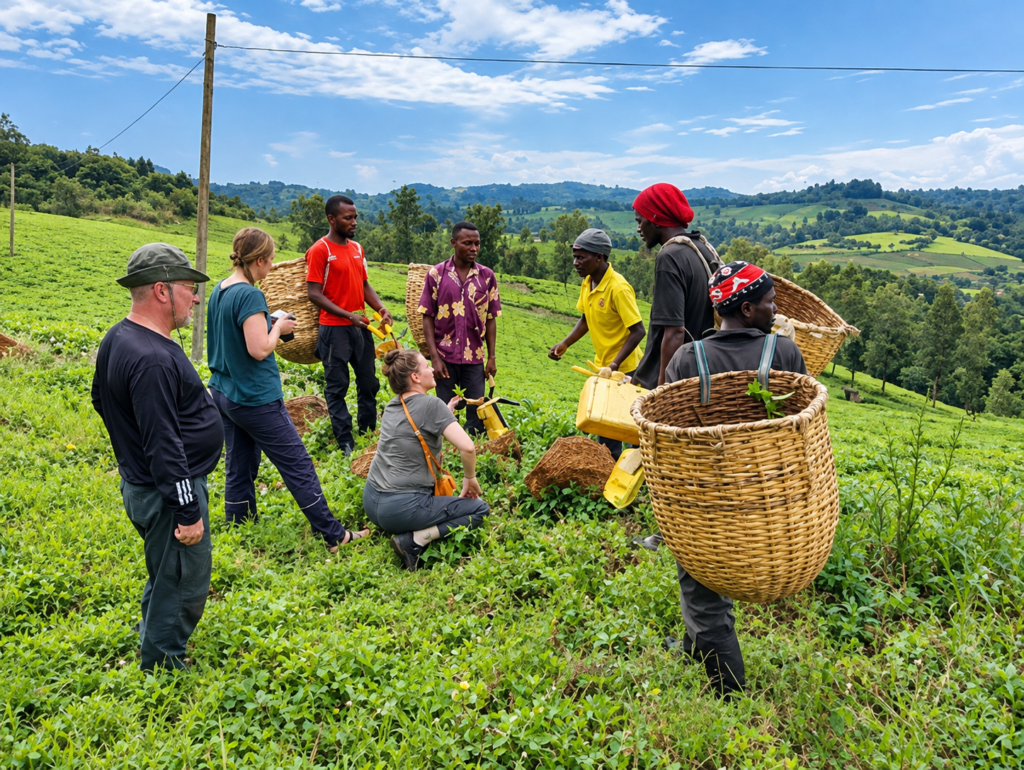
This specific focus on agriculture is strategic, given that the sector is the backbone of the economies of both Uganda and Kenya, providing livelihoods for the majority of their populations.
By addressing crucial bottlenecks like inconsistent certification and trade hurdles, the collaboration is setting the stage for a stronger, more resilient East African agricultural bloc.
The visit affirmed that deeper East African cooperation is not just a political ideal but a pragmatic necessity for sustainable economic growth.
As Mr. Byantwale noted, such initiatives are vital for leveraging regional strengths to compete more effectively on the global stage.
He revealed that the next steps will involve technical teams from both countries working together to translate the shared goodwill into tangible, harmonised policies that deliver real value to the millions of people depending on agriculture for their sustenance and prosperity.